Japanese
English
- 有料閲覧
PPV購入案内
1,650円 (1,500円+税10%) こちらは、244ページから248ページの文献です。購入には医書.jp本会員登録が必要です。
会員登録完了後に改めて上記「購入サイトへ」を選択してください。
または「購入サイトへ」選択後に「購入ログイン」、「新規会員登録」の順に進んでください。
会員登録について詳しくはをご確認ください。
- Abstract 文献概要
- 1ページ目 Look Inside
- 参考文献 Reference
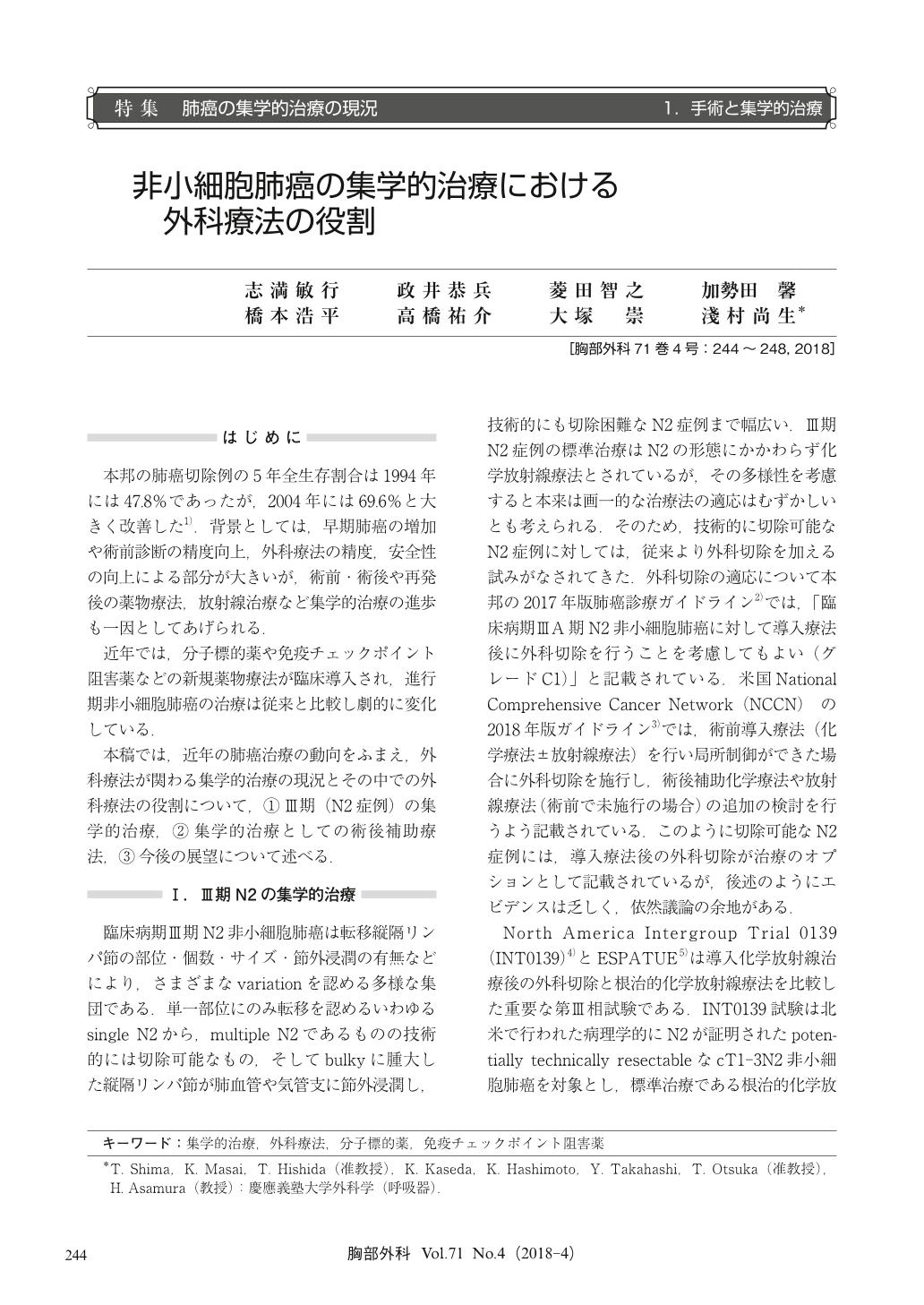
本邦の肺癌切除例の5年全生存割合は1994年には47.8%であったが,2004年には69.6%と大きく改善した1).背景としては,早期肺癌の増加や術前診断の精度向上,外科療法の精度,安全性の向上による部分が大きいが,術前・術後や再発後の薬物療法,放射線治療など集学的治療の進歩も一因としてあげられる.
Recent improvement of outcomes for resected non-small cell lung cancer (NSCLC) has been contributed not only by increased detection of early-stage disease and improvement of preoperative diagnosis/perioperative management but also by improvement of multimodality treatment.
The introduction of newly developed systemic therapies including molecular targeted agents and immune checkpoint inhibitors dramatically changed clinical outcomes of advanced NSCLC. Accordingly, the role of surgery during the multimodality treatment will be changed more than ever.
In this article, we overviewed the current status of the multimodality treatment for clinical stageⅢ(N2)disease and postoperative adjuvant therapy and discussed the role of surgery during these situations. We also discussed the future perspectives of the role of surgery during the multimodality treatment for advanced NSCLC.
© Nankodo Co., Ltd., 2018