Japanese
English
- 有料閲覧
PPV購入案内
1,320円 (1,200円+税10%) こちらは、366ページから371ページの文献です。購入には医書.jp本会員登録が必要です。
会員登録完了後に改めて上記「購入サイトへ」を選択してください。
または「購入サイトへ」選択後に「購入ログイン」、「新規会員登録」の順に進んでください。
会員登録について詳しくはをご確認ください。
- Abstract 文献概要
- 1ページ目 Look Inside
- 参考文献 Reference
- サイト内被引用 Cited by
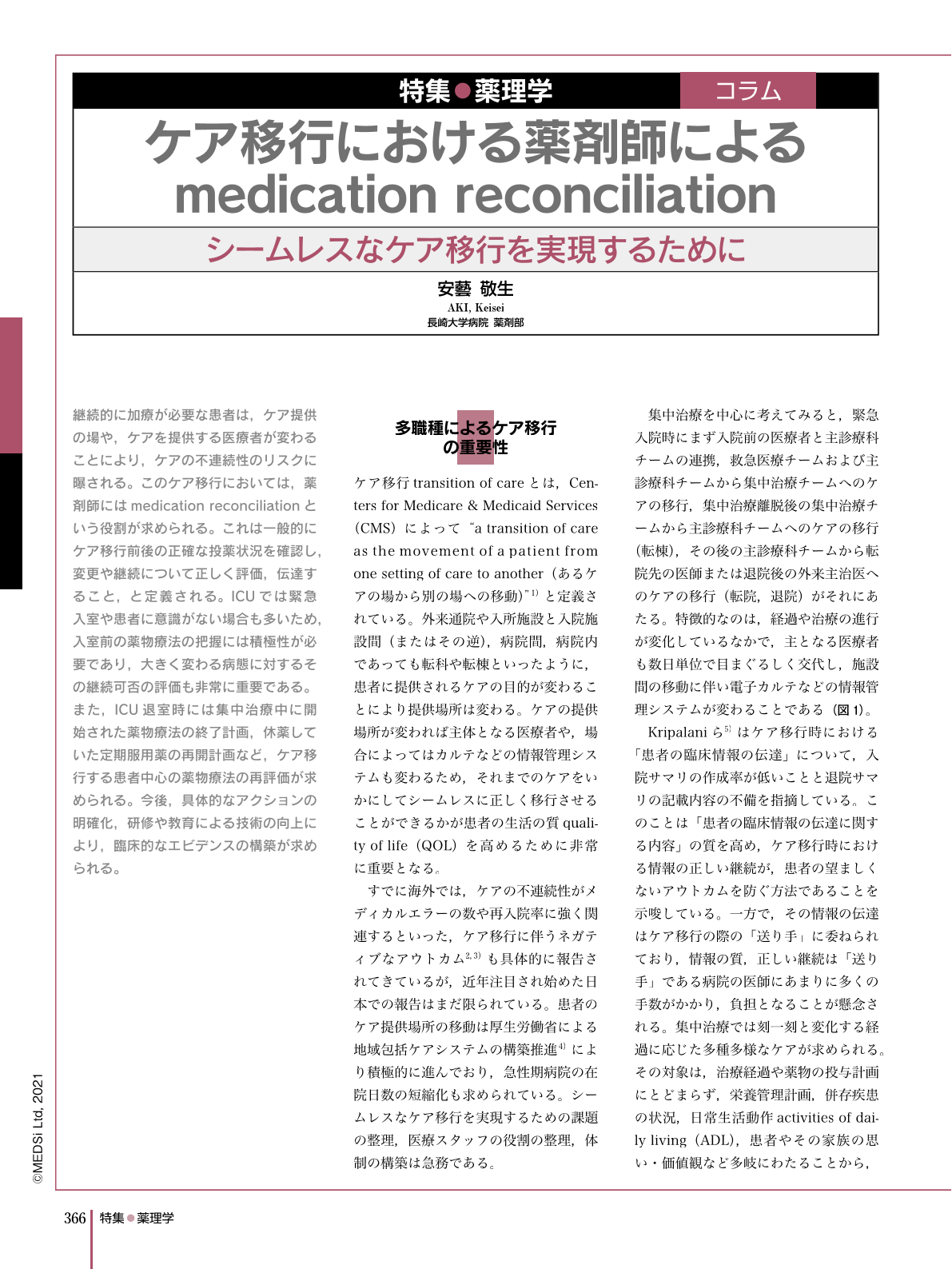
継続的に加療が必要な患者は,ケア提供の場や,ケアを提供する医療者が変わることにより,ケアの不連続性のリスクに曝される。このケア移行においては,薬剤師にはmedication reconciliationという役割が求められる。これは一般的にケア移行前後の正確な投薬状況を確認し,変更や継続について正しく評価,伝達すること,と定義される。ICUでは緊急入室や患者に意識がない場合も多いため,入室前の薬物療法の把握には積極性が必要であり,大きく変わる病態に対するその継続可否の評価も非常に重要である。また,ICU退室時には集中治療中に開始された薬物療法の終了計画,休薬していた定期服用薬の再開計画など,ケア移行する患者中心の薬物療法の再評価が求められる。今後,具体的なアクションの明確化,研修や教育による技術の向上により,臨床的なエビデンスの構築が求められる。
Patients in need of continuous care are at risk of discontinuity of care due to changes in the location of care and the medical staff. During care transitions, pharmacists are required to play the role of “medication reconciliation”, which is defined as confirming the exact medications before and after transitions of care and assessing the need for change, continuation or dosage adjustment. In the intensive care unit, there are many patients admitted emergently, often with disturbance of consciousness, leading to more frequent medication discrepancies. When discharging patients from the intensive care unit, pharmacists should amend the medications. Standardization of behavior, development of training and education are necessary to improve outcomes.
Copyright © 2021, MEDICAL SCIENCES INTERNATIONAL, LTD. All rights reserved.