Japanese
English
- 有料閲覧
PPV購入案内
1,320円 (1,200円+税10%) こちらは、593ページから606ページの文献です。購入には医書.jp本会員登録が必要です。
会員登録完了後に改めて上記「購入サイトへ」を選択してください。
または「購入サイトへ」選択後に「購入ログイン」、「新規会員登録」の順に進んでください。
会員登録について詳しくはをご確認ください。
- Abstract 文献概要
- 1ページ目 Look Inside
- 参考文献 Reference
Point
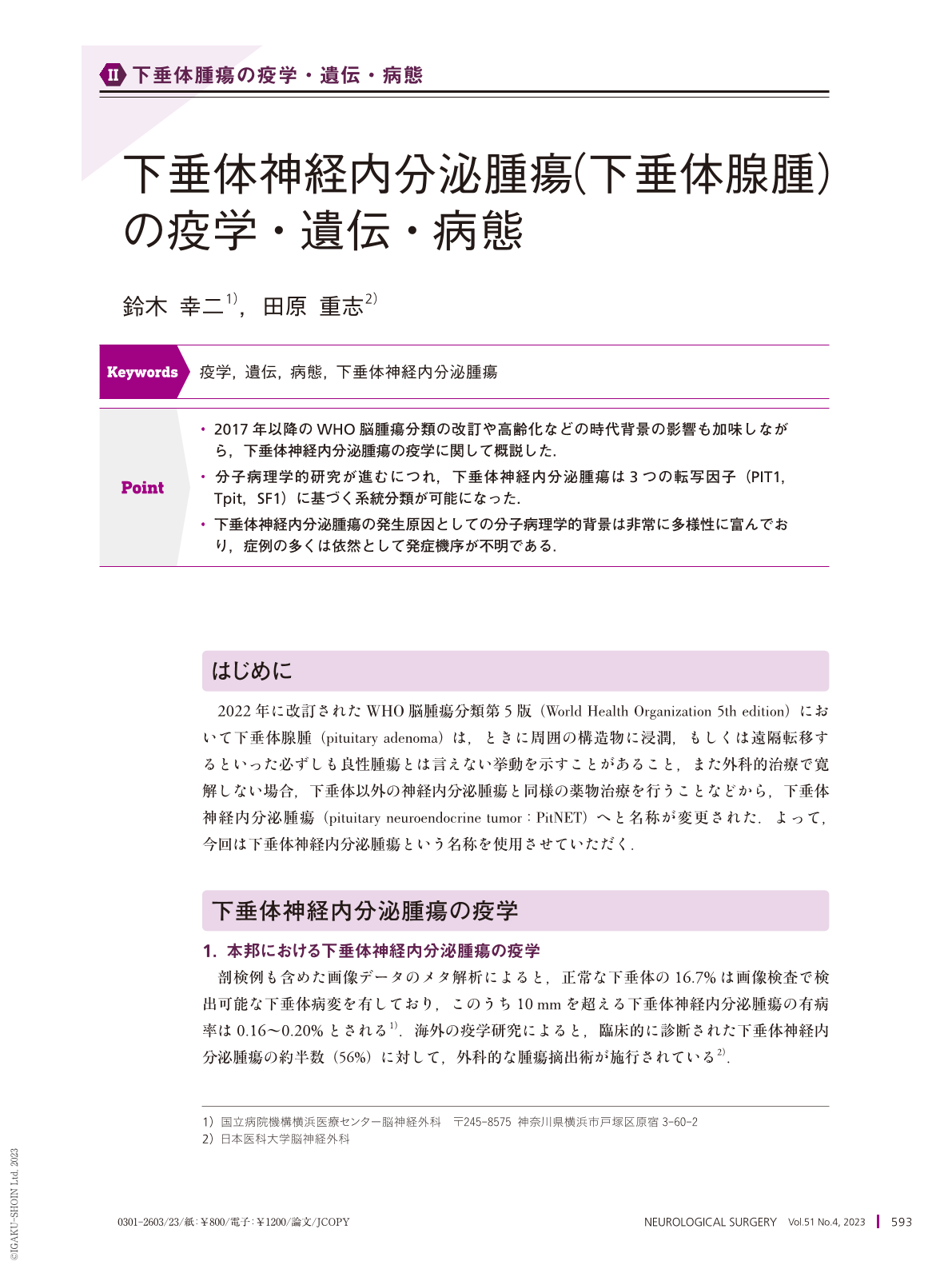
・2017年以降のWHO脳腫瘍分類の改訂や高齢化などの時代背景の影響も加味しながら,下垂体神経内分泌腫瘍の疫学に関して概説した.
・分子病理学的研究が進むにつれ,下垂体神経内分泌腫瘍は3つの転写因子(PIT1,Tpit,SF1)に基づく系統分類が可能になった.
・下垂体神経内分泌腫瘍の発生原因としての分子病理学的背景は非常に多様性に富んでおり,症例の多くは依然として発症機序が不明である.
As the molecular pathology of pituitary cell development and the process of tumorigenesis in this organ continues to advance, it is recommended that pituitary neuroendocrine tumors(PitNETs)be classified based on three lineage-specific transcription factors(PIT1, Tpit, and SF1).
In the hyperaging society of Japan, the number of cases traditionally classified as nonfunctioning PitNETs is increasing, and it is possible that some of these tumors may be associated with tumors that are known to exhibit aggressive behavior.
The molecular pathological background of PitNET development is highly variable, and its pathogenesis in many cases remains unclear. As genomic analysis of PitNETs progresses, it is becoming increasingly clear that abnormalities in germline and somatic cell genomes contribute to our understanding of their etiology but do not explain most of them. Epigenetic modifications, such as deoxyribonucleic acid methylation and histone modifications(methylation and acetylation), are thought to be intricately related to tumorigenesis.
Copyright © 2023, Igaku-Shoin Ltd. All rights reserved.