Japanese
English
- 有料閲覧
PPV購入案内
1,320円 (1,200円+税10%) こちらは、265ページから277ページの文献です。購入には医書.jp本会員登録が必要です。
会員登録完了後に改めて上記「購入サイトへ」を選択してください。
または「購入サイトへ」選択後に「購入ログイン」、「新規会員登録」の順に進んでください。
会員登録について詳しくはをご確認ください。
- Abstract 文献概要
- 1ページ目 Look Inside
- 参考文献 Reference
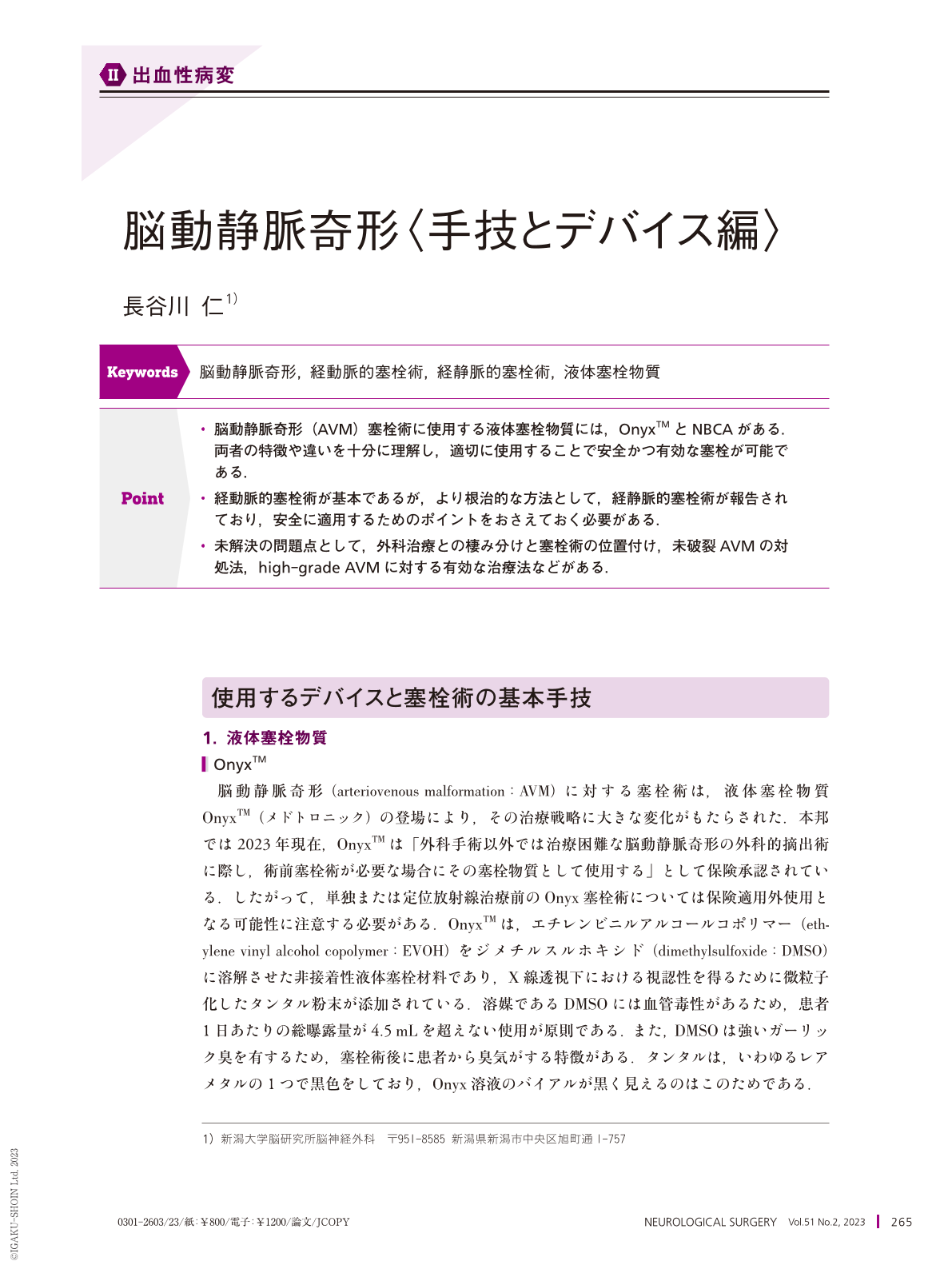
Point
・脳動静脈奇形(AVM)塞栓術に使用する液体塞栓物質には,OnyxTMとNBCAがある.両者の特徴や違いを十分に理解し,適切に使用することで安全かつ有効な塞栓が可能である.
・経動脈的塞栓術が基本であるが,より根治的な方法として,経静脈的塞栓術が報告されており,安全に適用するためのポイントをおさえておく必要がある.
・未解決の問題点として,外科治療との棲み分けと塞栓術の位置付け,未破裂AVMの対処法,high-grade AVMに対する有効な治療法などがある.
Endovascular embolization using liquid materials is a safe and effective treatment option for cerebral arteriovenous malformations(AVM). Onyx and n-butyl cyanoacrylate, currently available in Japan, have specific features. Appropriate embolic agents should be selected based on their characteristics. Transarterial embolization(TAE)is the standard endovascular treatment approach. However, there have been some recent reports regarding the efficacy of transvenous embolization(TVE). TVE is potentially curative for small AVM with hemorrhagic onset, inaccessible arterial feeders, deep location, and/or a single draining vein. In specific cases, TVE may provide a higher chance of complete obliteration of the AVM than TAE. Some unsolved problems need further clarification, such as the relative positions of liquid embolization against direct surgery, dealing with unruptured AVM, and effective treatment for high-grade AVM.
Copyright © 2023, Igaku-Shoin Ltd. All rights reserved.