Japanese
English
- 有料閲覧
PPV購入案内
1,320円 (1,200円+税10%) こちらは、588ページから596ページの文献です。購入には医書.jp本会員登録が必要です。
会員登録完了後に改めて上記「購入サイトへ」を選択してください。
または「購入サイトへ」選択後に「購入ログイン」、「新規会員登録」の順に進んでください。
会員登録について詳しくはをご確認ください。
- Abstract 文献概要
- 1ページ目 Look Inside
- 参考文献 Reference
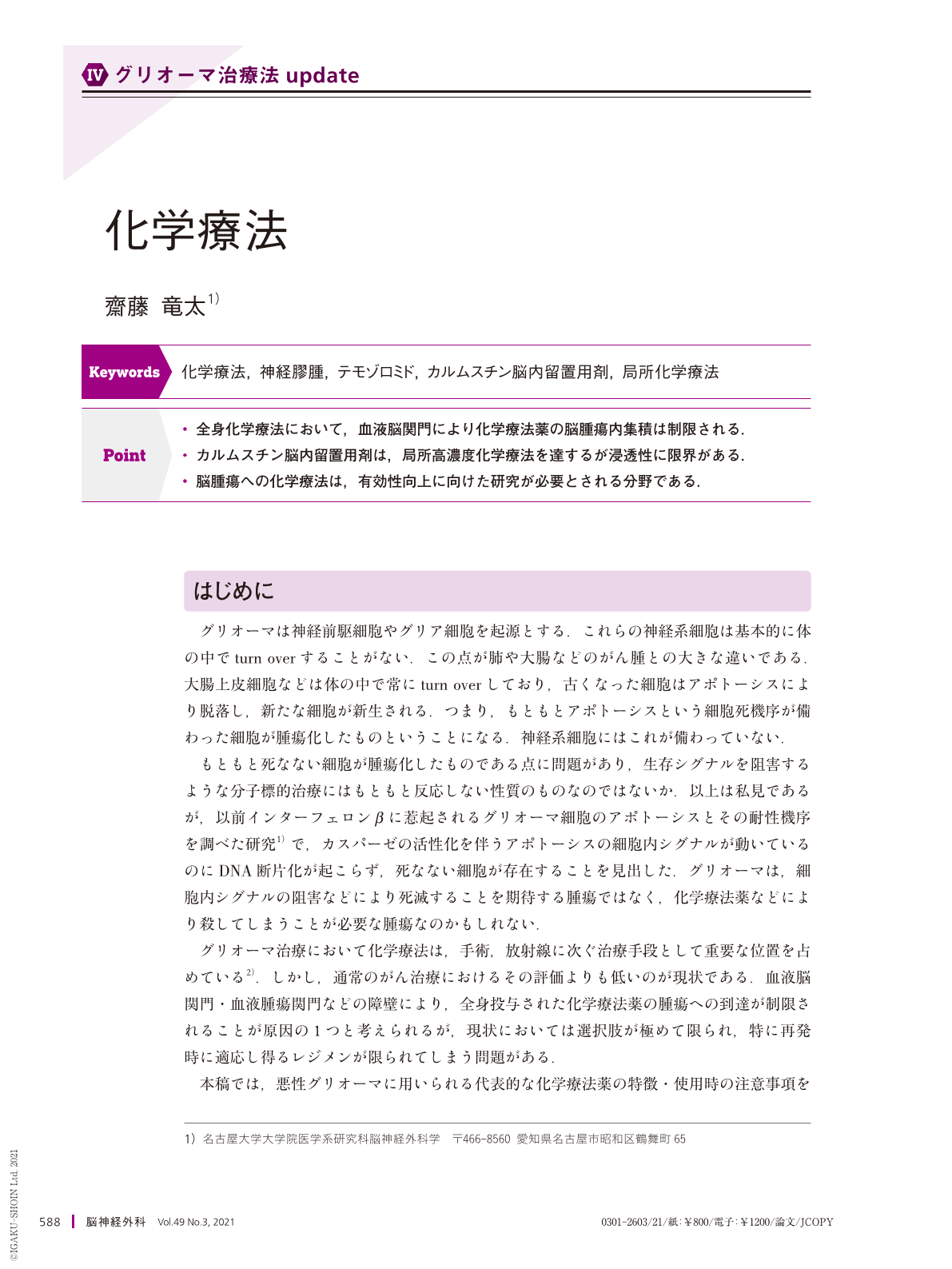
Point
・全身化学療法において,血液脳関門により化学療法薬の脳腫瘍内集積は制限される.
・カルムスチン脳内留置用剤は,局所高濃度化学療法を達するが浸透性に限界がある.
・脳腫瘍への化学療法は,有効性向上に向けた研究が必要とされる分野である.
Chemotherapeutic treatment of malignant gliomas is extremely challenging. Tumor accumulation of systemically-administrated chemotherapy is always hindered by the blood-brain barrier(BBB). Although temozolomide administered orally or intravenously represents the standard of care for malignant gliomas, its efficacy is unsatisfactory. Local chemotherapy bypasses the BBB and, therefore, achieves a high drug concentration at the site the drug is administered. Carmustine wafers are clinically available local chemotherapeutic agents. However, their efficacy is limited because of limited drug penetration into the tumor. Combined with the highly chemoresistant features of glioma itself, ongoing chemotherapy is far from satisfactory in terms of efficacy. This review covers several important issues regarding temozolomide chemotherapy, including the reactivation of hepatitis B virus, assessment of MGMT promoter methylation, and pseudo-progression. Local chemotherapy for newly diagnosed resectable glioblastoma cases using carmustine wafers is currently under investigation with a randomized phase 3 trial (JCOG 1703), which will also be discussed. In addition, recent progress in convection-enhanced delivery of chemotherapeutics against gliomas has also been reported. Development of an alternative strategy to effectively deliver drugs to the tumor site may improve the efficacy of chemotherapy against gliomas in the near future.
Copyright © 2021, Igaku-Shoin Ltd. All rights reserved.