Japanese
English
- 有料閲覧
PPV購入案内
1,320円 (1,200円+税10%) こちらは、8ページから14ページの文献です。購入には医書.jp本会員登録が必要です。
会員登録完了後に改めて上記「購入サイトへ」を選択してください。
または「購入サイトへ」選択後に「購入ログイン」、「新規会員登録」の順に進んでください。
会員登録について詳しくはをご確認ください。
- Abstract 文献概要
- 1ページ目 Look Inside
- 参考文献 Reference
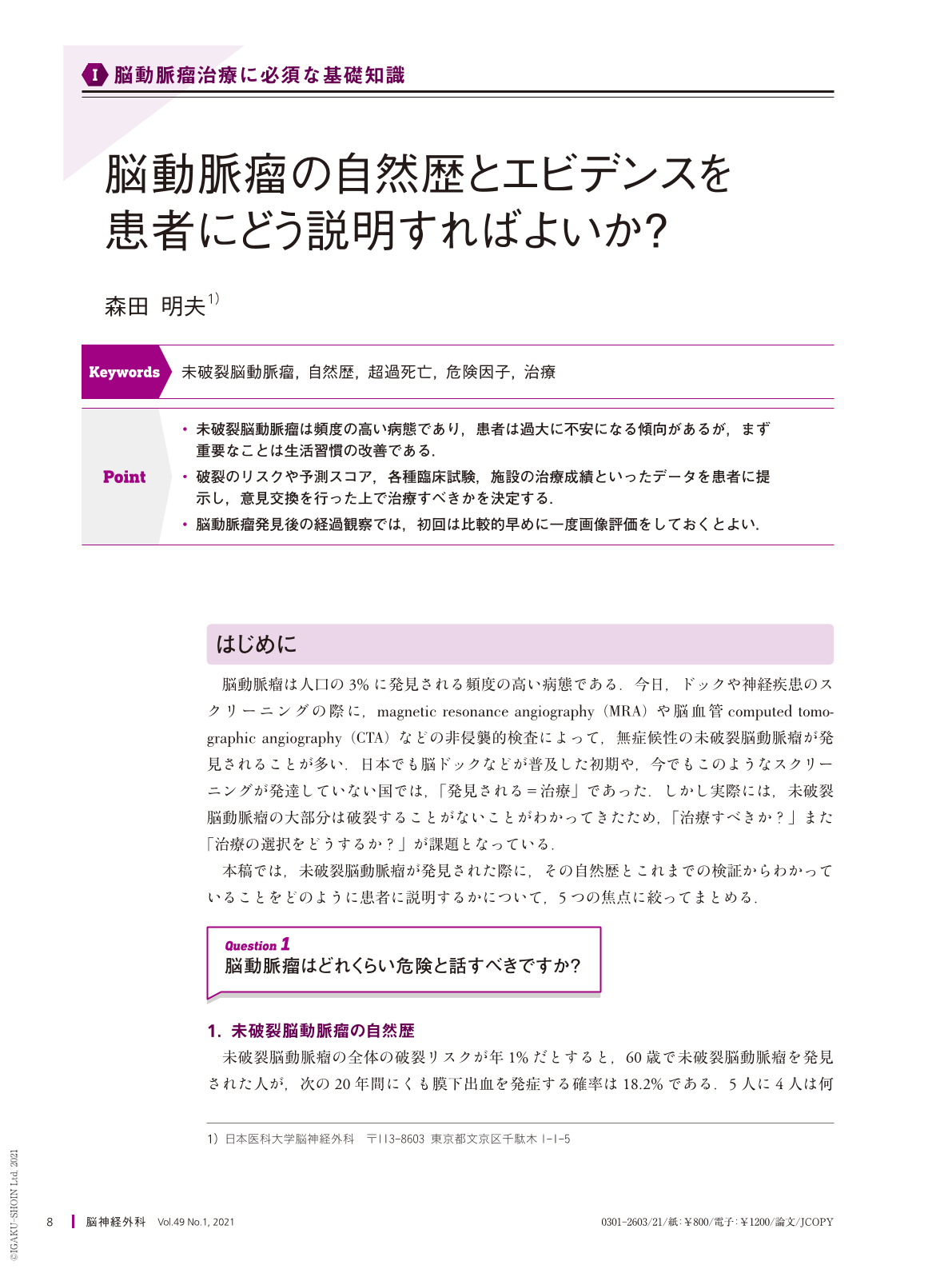
Point
・未破裂脳動脈瘤は頻度の高い病態であり,患者は過大に不安になる傾向があるが,まず重要なことは生活習慣の改善である.
・破裂のリスクや予測スコア,各種臨床試験,施設の治療成績といったデータを患者に提示し,意見交換を行った上で治療すべきかを決定する.
・脳動脈瘤発見後の経過観察では,初回は比較的早めに一度画像評価をしておくとよい.
Unruptured intracranial aneurysms are rare and occur in approximately 3% of adults. Explaining the natural course of aneurysms and risk communication are challenging because most patients are asymptomatic and patients' perceived risk often exceeds the actual risk. This article discusses the following five aspects of risk communication on the natural course of the disease and treatment decisions: 1) the natural course of cerebral aneurysms, 2) how aneurysms should be followed upon if no interventions are planned, 3) how to explain treatment risks, 4) whether follow-ups are needed after treatment, and 5) lifestyle-related behaviors to prevent rupture. Discussions with patients should be carefully planned to avoid increased stress and fear. Long-term follow-up data of patients who did not undergo interventions indicated that only 25% of patients with aneurysms experienced a fatal rupture; most die from other causes. Patients with aneurysms require education on lifestyle-related risk factors such as hypertension, smoking, and lack of daily exercise.
Copyright © 2021, Igaku-Shoin Ltd. All rights reserved.