Japanese
English
- 有料閲覧
PPV購入案内
1,320円 (1,200円+税10%) こちらは、1143ページから1149ページの文献です。購入には医書.jp本会員登録が必要です。
会員登録完了後に改めて上記「購入サイトへ」を選択してください。
または「購入サイトへ」選択後に「購入ログイン」、「新規会員登録」の順に進んでください。
会員登録について詳しくはをご確認ください。
- Abstract 文献概要
- 1ページ目 Look Inside
- 参考文献 Reference
Ⅰ.緒 言
急性期脳主幹動脈閉塞に対する血栓回収療法の有効性が示され3),本邦においても積極的に治療が行われるようになった.しかし,脳血管内治療医が複数在籍しチームで対応できる施設はまだ少なく11,14),当施設のように日本脳神経血管内治療学会専門医が1名で対応している施設では,治療症例数の増加とともに脳血管内治療医の業務負担が増大している.さらに,治療適応の最終的な決定は脳血管内治療医によってなされることが多く,救急担当医から脳血管内治療医へのコンサルト数も増加している.勤務時間内外にかかわらず発生する血栓回収コールは,脳血管内治療医の体力的・心理的な負担となっている.本研究では,地域中核病院において血栓回収療法の適応の可能性について脳血管内治療医がコールを受けた症例を調査した.そして,脳血管内治療医が1名で対応している地域中核病院における血栓回収コールの現状を明らかにすることを目的とした.
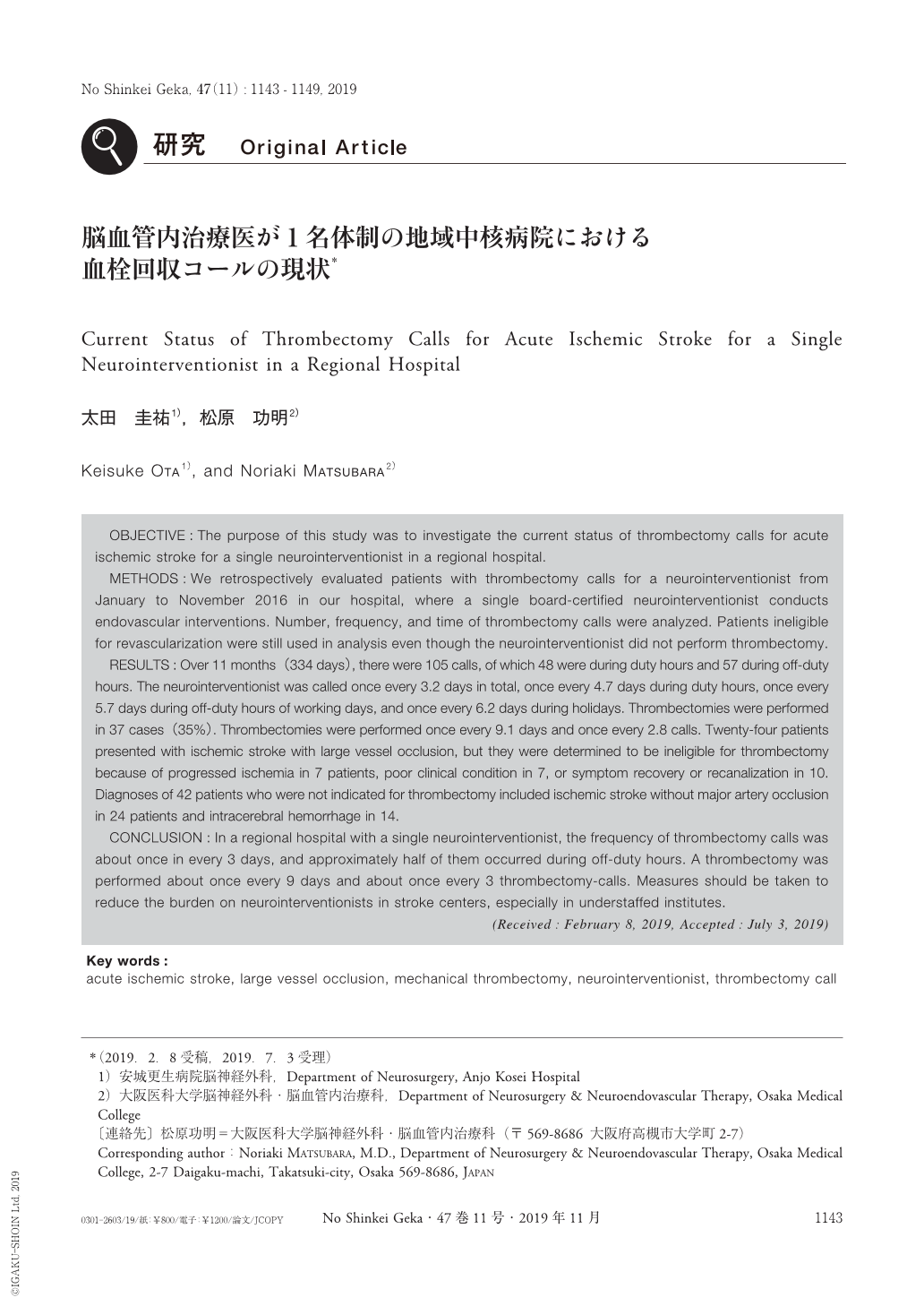
OBJECTIVE:The purpose of this study was to investigate the current status of thrombectomy calls for acute ischemic stroke for a single neurointerventionist in a regional hospital.
METHODS:We retrospectively evaluated patients with thrombectomy calls for a neurointerventionist from January to November 2016 in our hospital, where a single board-certified neurointerventionist conducts endovascular interventions. Number, frequency, and time of thrombectomy calls were analyzed. Patients ineligible for revascularization were still used in analysis even though the neurointerventionist did not perform thrombectomy.
RESULTS:Over 11 months(334 days), there were 105 calls, of which 48 were during duty hours and 57 during off-duty hours. The neurointerventionist was called once every 3.2 days in total, once every 4.7 days during duty hours, once every 5.7 days during off-duty hours of working days, and once every 6.2 days during holidays. Thrombectomies were performed in 37 cases(35%). Thrombectomies were performed once every 9.1 days and once every 2.8 calls. Twenty-four patients presented with ischemic stroke with large vessel occlusion, but they were determined to be ineligible for thrombectomy because of progressed ischemia in 7 patients, poor clinical condition in 7, or symptom recovery or recanalization in 10. Diagnoses of 42 patients who were not indicated for thrombectomy included ischemic stroke without major artery occlusion in 24 patients and intracerebral hemorrhage in 14.
CONCLUSION:In a regional hospital with a single neurointerventionist, the frequency of thrombectomy calls was about once in every 3 days, and approximately half of them occurred during off-duty hours. A thrombectomy was performed about once every 9 days and about once every 3 thrombectomy-calls. Measures should be taken to reduce the burden on neurointerventionists in stroke centers, especially in understaffed institutes.
Copyright © 2019, Igaku-Shoin Ltd. All rights reserved.