Japanese
English
- 有料閲覧
PPV購入案内
1,320円 (1,200円+税10%) こちらは、803ページから809ページの文献です。購入には医書.jp本会員登録が必要です。
会員登録完了後に改めて上記「購入サイトへ」を選択してください。
または「購入サイトへ」選択後に「購入ログイン」、「新規会員登録」の順に進んでください。
会員登録について詳しくはをご確認ください。
- Abstract 文献概要
- 1ページ目 Look Inside
- 参考文献 Reference
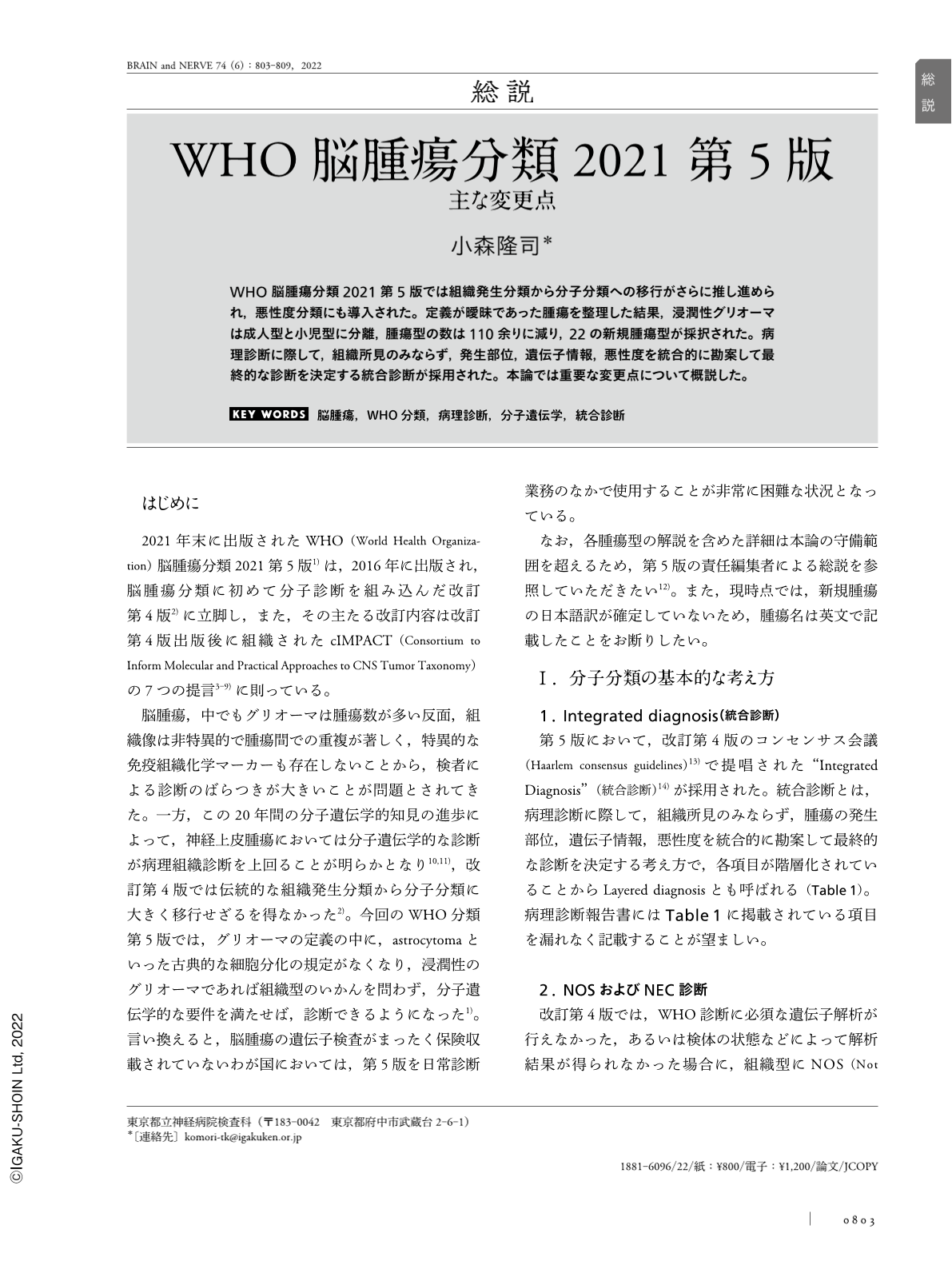
WHO脳腫瘍分類2021第5版では組織発生分類から分子分類への移行がさらに推し進められ,悪性度分類にも導入された。定義が曖昧であった腫瘍を整理した結果,浸潤性グリオーマは成人型と小児型に分離,腫瘍型の数は110余りに減り,22の新規腫瘍型が採択された。病理診断に際して,組織所見のみならず,発生部位,遺伝子情報,悪性度を統合的に勘案して最終的な診断を決定する統合診断が採用された。本論では重要な変更点について概説した。
Abstract
The 2021 WHO classification of tumors of the central nervous system, 5th edition (WHO CNS 5) is built on the previous, revised 4th edition, published in 2016, which incorporated molecular information into the diagnosis of brain tumors for the first time, breaking with the century-old histogenetic classification. WHO CNS 5 also adopted a series of recommendations of “the Consortium to Inform Molecular and Practical Approaches to CNS Tumor Taxonomy (cIMPACT)” that facilitates a consensus review of novel diagnostically relevant data and determines how such information can be fit into future CNS tumor classifications. In WHO CNS 5, the grading system was reformed to “grading within tumor types,” and the tumor groups, especially diffuse gliomas, have been significantly restructured; the diffuse gliomas have been divided into the adult type and the pediatric type, the latter being subdivided into low-grade and high-grade gliomas. Based on molecular alterations, 22 novel tumor types are recognized, and some nomenclature has also been revised. The integrated, layered diagnosis of combining histology, grading, and molecular information was recommended to provide clinically relevant information.
Copyright © 2022, Igaku-Shoin Ltd. All rights reserved.