Japanese
English
- 有料閲覧
PPV購入案内
1,320円 (1,200円+税10%) こちらは、271ページから277ページの文献です。購入には医書.jp本会員登録が必要です。
会員登録完了後に改めて上記「購入サイトへ」を選択してください。
または「購入サイトへ」選択後に「購入ログイン」、「新規会員登録」の順に進んでください。
会員登録について詳しくはをご確認ください。
- Abstract 文献概要
- 1ページ目 Look Inside
- 参考文献 Reference
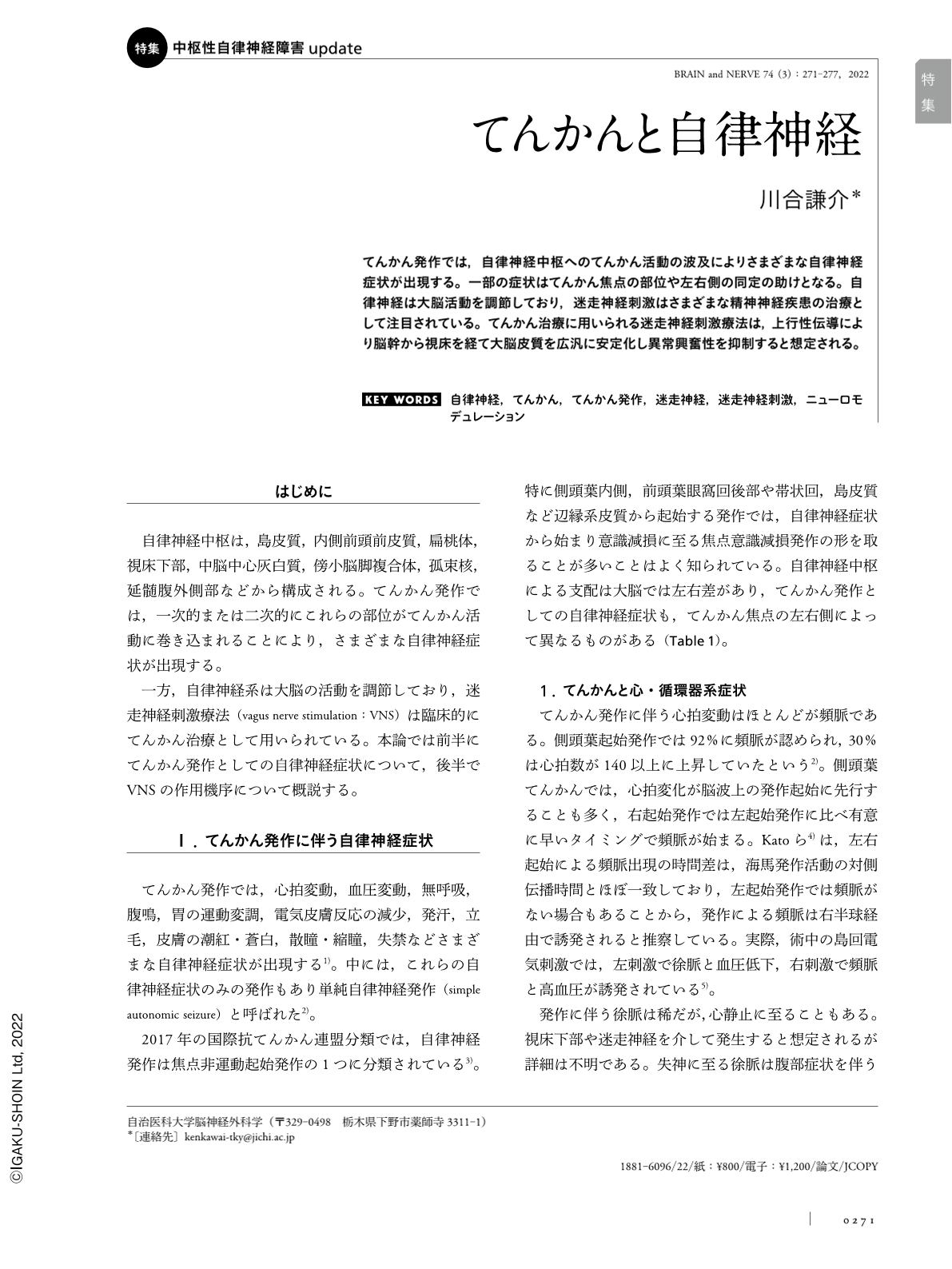
てんかん発作では,自律神経中枢へのてんかん活動の波及によりさまざまな自律神経症状が出現する。一部の症状はてんかん焦点の部位や左右側の同定の助けとなる。自律神経は大脳活動を調節しており,迷走神経刺激はさまざまな精神神経疾患の治療として注目されている。てんかん治療に用いられる迷走神経刺激療法は,上行性伝導により脳幹から視床を経て大脳皮質を広汎に安定化し異常興奮性を抑制すると想定される。
Abstract
Epileptic activity that involves the central autonomic system, including the insular lobe, medial prefrontal cortex, amygdala, hypothalamus, periaqueductal gray, parabrachial complex, nucleus tractus solitarius, and ventrolateral medulla results in seizures with various autonomic manifestations. Some autonomic manifestations suggest localization and lateralization of epileptic foci. The autonomic nervous system modulates cerebral activity under physiological and pathological conditions. Vagus nerve stimulation (VNS) has attracted much attention for treatment of various neurological and psychiatric disorders and is an established palliative care strategy for patients with medically intractable epilepsy. Clinical and experimental studies suggest that VNS stabilizes cerebral cortical activity and inhibits abnormal excitability via pathways including upward vagus nerve conduction, nucleus tractus solitarius, and the thalamus, which consequently produces an anti-epileptic effect.
Copyright © 2022, Igaku-Shoin Ltd. All rights reserved.