Japanese
English
- 有料閲覧
PPV購入案内
1,320円 (1,200円+税10%) こちらは、947ページから954ページの文献です。購入には医書.jp本会員登録が必要です。
会員登録完了後に改めて上記「購入サイトへ」を選択してください。
または「購入サイトへ」選択後に「購入ログイン」、「新規会員登録」の順に進んでください。
会員登録について詳しくはをご確認ください。
- Abstract 文献概要
- 1ページ目 Look Inside
- 参考文献 Reference
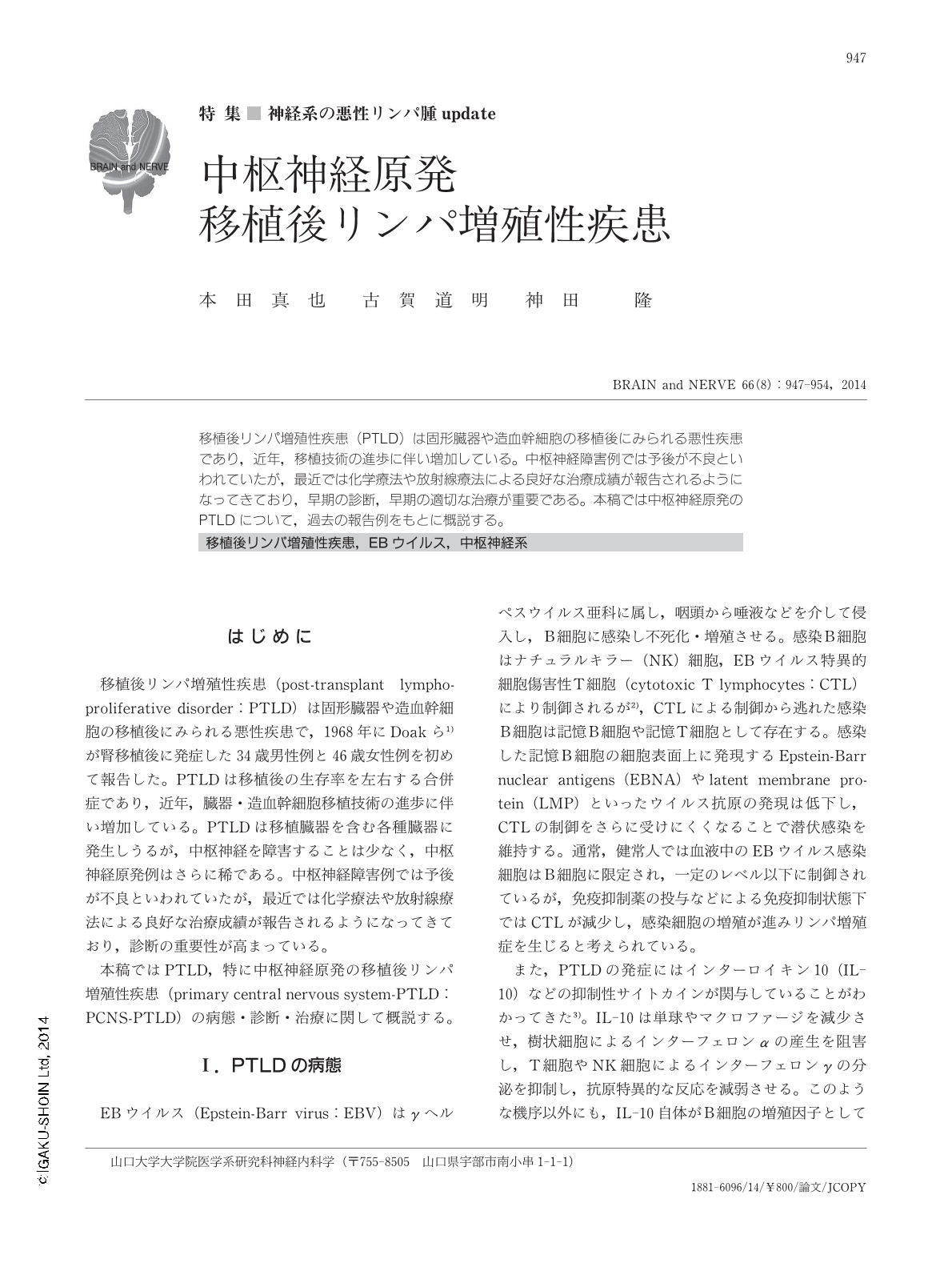
移植後リンパ増殖性疾患(PTLD)は固形臓器や造血幹細胞の移植後にみられる悪性疾患であり,近年,移植技術の進歩に伴い増加している。中枢神経障害例では予後が不良といわれていたが,最近では化学療法や放射線療法による良好な治療成績が報告されるようになってきており,早期の診断,早期の適切な治療が重要である。本稿では中枢神経原発のPTLDについて,過去の報告例をもとに概説する。
Abstract
The post-transplant lymphoproliferative disorders (PTLD) are a heterogeneous disease entity of lymphoid and plasmacytic proliferations that can occur after solid organ and bone marrow/stem cell transplantation. PTLD sometimes involves the central nervous system (CNS), but primary occurrence in central nervous system (PCNS-PTLD) is rare. The Epstein-Barr virus (EBV) plays a causative role, and up to 90% of the tumors are associated with this virus. Diagnosing PCNS-PTLD is often challenging based solely on computed tomography, magnetic resonance imaging, and physical findings; therefore, direct biopsy of the lesion is usually necessary to make a definitive diagnosis. The optimal therapy for PCNS-PTLD remains unknown. Dose reduction or discontinuation of immunosuppressive agents is effective for approximately half of PTLD patients, but not for most patients with PCNS-PTLD. It has been noted that CNS involvement is a poor prognostic factor, but early diagnosis and initiation of chemotherapy or radiotherapy seem critical for maximizing the likelihood of a favorable outcome.
Copyright © 2014, Igaku-Shoin Ltd. All rights reserved.