Japanese
English
- 有料閲覧
PPV購入案内
1,320円 (1,200円+税10%) こちらは、813ページから816ページの文献です。購入には医書.jp本会員登録が必要です。
会員登録完了後に改めて上記「購入サイトへ」を選択してください。
または「購入サイトへ」選択後に「購入ログイン」、「新規会員登録」の順に進んでください。
会員登録について詳しくはをご確認ください。
- Abstract 文献概要
- 1ページ目 Look Inside
- 参考文献 Reference
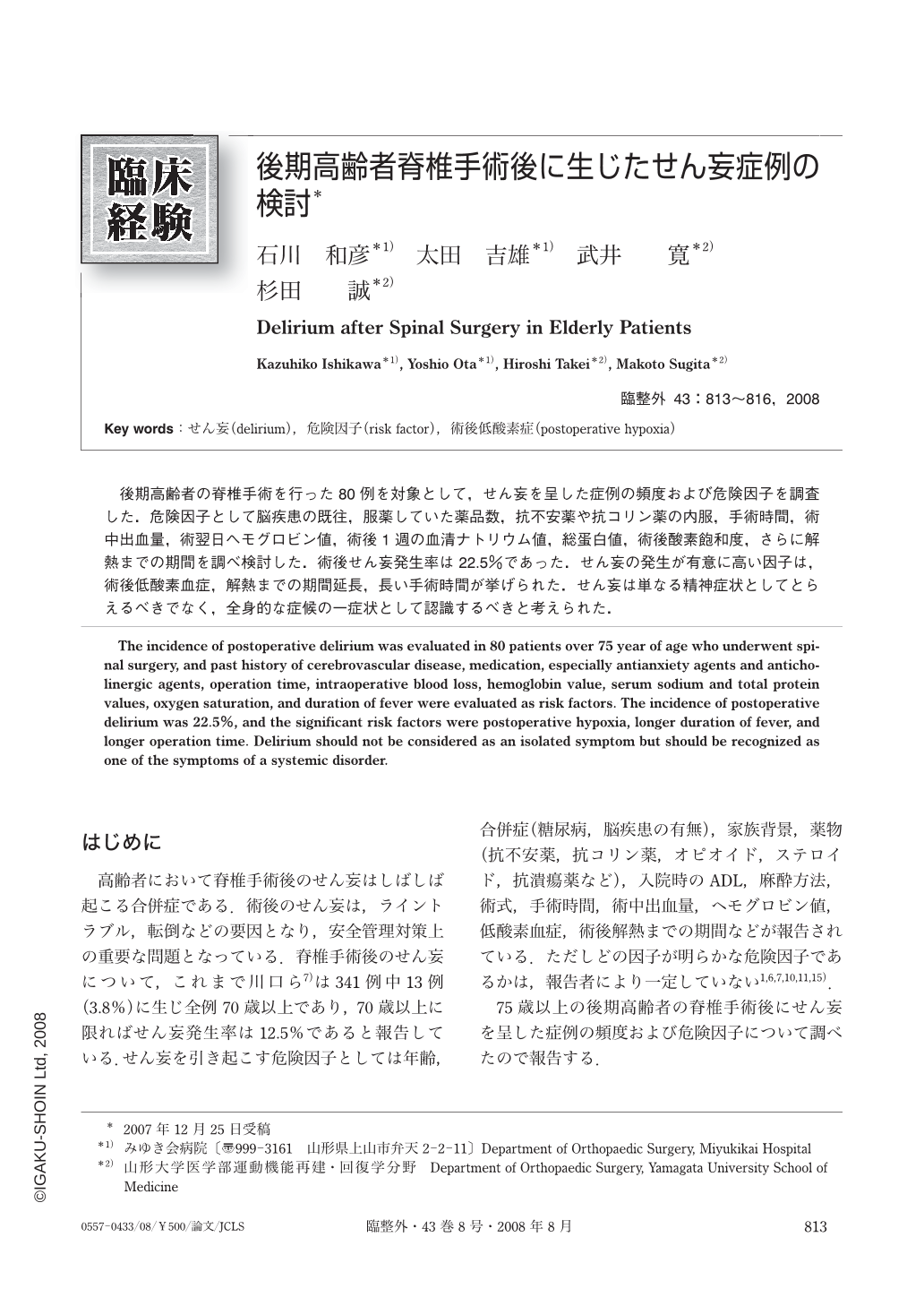
後期高齢者の脊椎手術を行った80例を対象として,せん妄を呈した症例の頻度および危険因子を調査した.危険因子として脳疾患の既往,服薬していた薬品数,抗不安薬や抗コリン薬の内服,手術時間,術中出血量,術翌日ヘモグロビン値,術後1週の血清ナトリウム値,総蛋白値,術後酸素飽和度,さらに解熱までの期間を調べ検討した.術後せん妄発生率は22.5%であった.せん妄の発生が有意に高い因子は,術後低酸素血症,解熱までの期間延長,長い手術時間が挙げられた.せん妄は単なる精神症状としてとらえるべきでなく,全身的な症候の一症状として認識するべきと考えられた.
The incidence of postoperative delirium was evaluated in 80 patients over 75 year of age who underwent spinal surgery, and past history of cerebrovascular disease, medication, especially antianxiety agents and anticholinergic agents, operation time, intraoperative blood loss, hemoglobin value, serum sodium and total protein values, oxygen saturation, and duration of fever were evaluated as risk factors. The incidence of postoperative delirium was 22.5%, and the significant risk factors were postoperative hypoxia, longer duration of fever, and longer operation time. Delirium should not be considered as an isolated symptom but should be recognized as one of the symptoms of a systemic disorder.
Copyright © 2008, Igaku-Shoin Ltd. All rights reserved.