Japanese
English
- 有料閲覧
PPV購入案内
1,320円 (1,200円+税10%) こちらは、345ページから350ページの文献です。購入には医書.jp本会員登録が必要です。
会員登録完了後に改めて上記「購入サイトへ」を選択してください。
または「購入サイトへ」選択後に「購入ログイン」、「新規会員登録」の順に進んでください。
会員登録について詳しくはをご確認ください。
- Abstract 文献概要
- 1ページ目 Look Inside
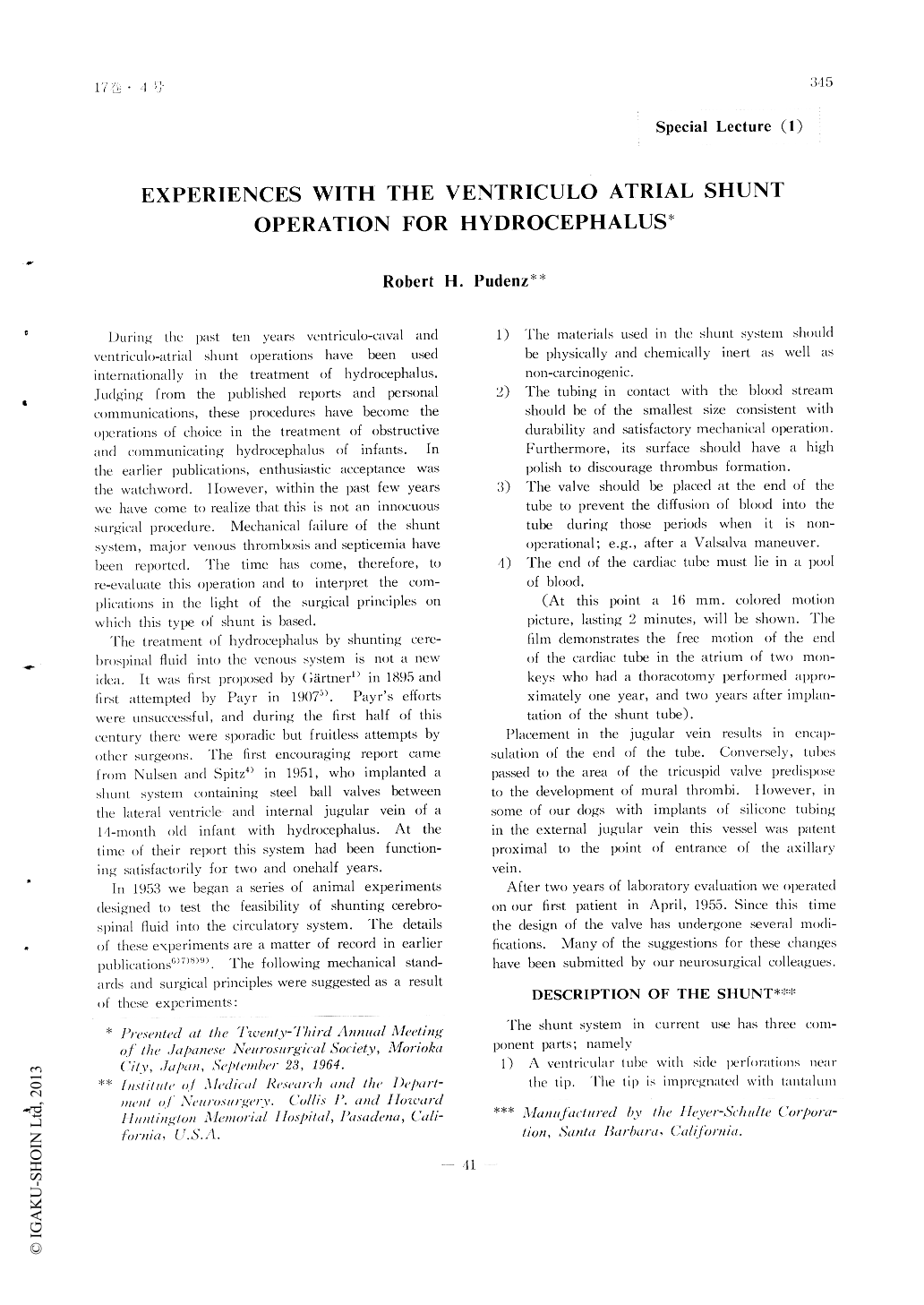
During the past ten years ventriculo-caval and ventriculo-atrial shunt operations have been used internationally in the treatment of hydrocephalus. Judging from the published reports and personal communications, these procedures have become the operations of choice in the treatment of obstructive and communicating hydrocephalus of infants. In the earlier publications, enthusiastic acceptance was the watchword. However, within the past few years we have come to realize that this is not an innocuous surgical procedure. Mechanical failure of the shunt system, major venous thrombosis and septicemia have been reported. The time has come, therefore, to re-evaluate this operation and to interpret the com—plications in the light of the surgical principles on which this type of shunt is based.
The treatment of hydrocephalus by shunting cere—brospinal fluid into the venous system is not a new idea. It was first proposed by Gäin 19075). Payr's efforts were unsuccessful, and during the first half of this century there were sporadic but fruitless attempts by other surgeons. The first encouraging report came from Nulsen and Spitz4) in 1951, who implanted a shunt system containing steel ball valves between the lateral ventricle and internal jugular vein of a 14—month old infant with hydrocephalus. At the time of their report this system had been function—ing satisfactorily for two and onehalf years.
Copyright © 1965, Igaku-Shoin Ltd. All rights reserved.