Japanese
English
- 有料閲覧
PPV購入案内
1,320円 (1,200円+税10%) こちらは、141ページから145ページの文献です。購入には医書.jp本会員登録が必要です。
会員登録完了後に改めて上記「購入サイトへ」を選択してください。
または「購入サイトへ」選択後に「購入ログイン」、「新規会員登録」の順に進んでください。
会員登録について詳しくはをご確認ください。
- Abstract 文献概要
- 1ページ目 Look Inside
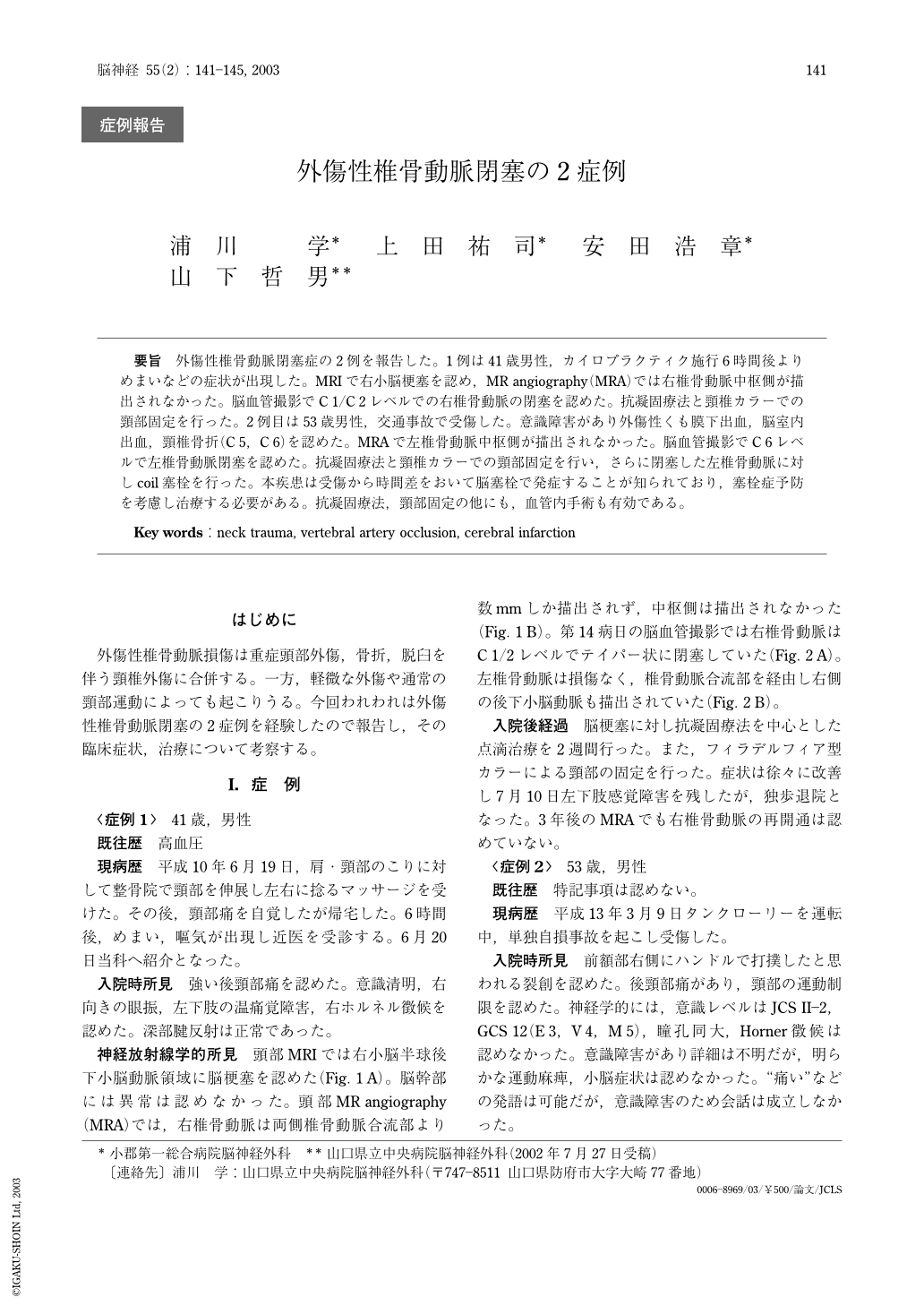
要旨 外傷性椎骨動脈閉塞症の2例を報告した。1例は41歳男性,カイロプラクティク施行6時間後よりめまいなどの症状が出現した。MRIで右小脳梗塞を認め,MR angiography(MRA)では右椎骨動脈中枢側が描出されなかった。脳血管撮影でC1/C2レベルでの右椎骨動脈の閉塞を認めた。抗凝固療法と頸椎カラーでの頸部固定を行った。2例目は53歳男性,交通事故で受傷した。意識障害があり外傷性くも膜下出血,脳室内出血,頸椎骨折(C5,C6)を認めた。MRAで左椎骨動脈中枢側が描出されなかった。脳血管撮影でC6レベルで左椎骨動脈閉塞を認めた。抗凝固療法と頸椎カラーでの頸部固定を行い,さらに閉塞した左椎骨動脈に対しcoil塞栓を行った。本疾患は受傷から時間差をおいて脳塞栓で発症することが知られており,塞栓症予防を考慮し治療する必要がある。抗凝固療法,頸部固定の他にも,血管内手術も有効である。
We are reporting two cases of vertebral artery occlusion resulting from cervical spine trauma. A 41-year-old man experienced vertigo and nausea 6 hrs after chiropractic manipulation. On admission, he was alert and demonstrated nystagmus, hypalgia of left leg, and right Horner sign. A MR image revealed infarction in the right cerebellar hemisphere. A MR angiogram did not show the proximal part of the right vertebral artery. A right vertebral angiogram revealed right vertebral artery occlusion at the level of C1. He underwent anticoagulation and wore a cervical collar. He was discharged with hypalgia of left leg. A 53-year-old man was admitted to our hospital after an automobile accident. A CT scan revealed a subarachnoid hemorrhage and an intraventricular hemorrhage. A cervical CT scan revealed fractures of the C5 facet joint and C6 vertebral body. A MR angiogram did not show the proximal part of the left vertebral artery. A subsequent left vertebral angiogram revealed left vertebral artery occlusion at the level of C6. He underwent anticoagulation and wore a cervical collar. In addition, he underwent coil embolization of the left vertebral artery. He was discharged with no neurological deficits.
It is said that traumatic vertebral artery injuries cause cerebral infarction with time lags. The therapeutic point is to prevent propagation of the thrombus and distal embolism;therefore wearing a collar, anticoagulation, and endovascular interventional therapy is recommended.
Copyright © 2003, Igaku-Shoin Ltd. All rights reserved.