Japanese
English
- 有料閲覧
PPV購入案内
1,320円 (1,200円+税10%) こちらは、719ページから725ページの文献です。購入には医書.jp本会員登録が必要です。
会員登録完了後に改めて上記「購入サイトへ」を選択してください。
または「購入サイトへ」選択後に「購入ログイン」、「新規会員登録」の順に進んでください。
会員登録について詳しくはをご確認ください。
- Abstract 文献概要
- 1ページ目 Look Inside
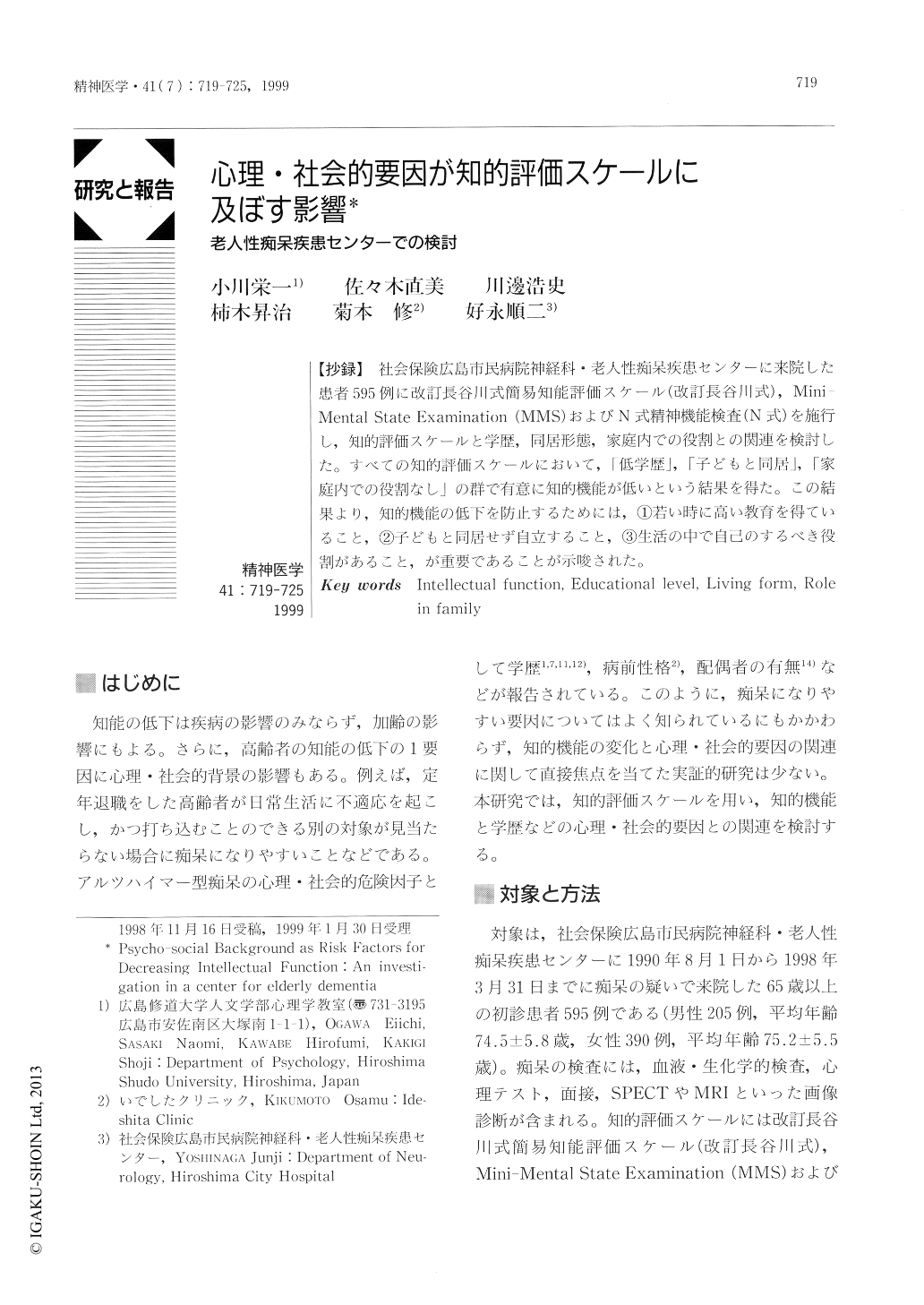
【抄録】 社会保険広島市民病院神経科・老人性痴呆疾患センターに来院した患者595例に改訂長谷川式簡易知能評価スケール(改訂長谷川式),Mini-Mental State Examination(MMS)およびN式精神機能検査(N式)を施行し,知的評価スケールと学歴,同居形態,家庭内での役割との関連を検討した。すべての知的評価スケールにおいて,「低学歴」,「子どもと同居」,「家庭内での役割なし」の群で有意に知的機能が低いという結果を得た。この結果より,知的機能の低下を防止するためには,①若い時に高い教育を得ていること,②子どもと同居せず自立すること,③生活の中で自己のするべき役割があること,が重要であることが示唆された。
A total of 595 patients who visited the Center for Elderly Dementia in Hiroshima City Hospital were tested for their intellectual levels by using the Hasegawa's dementia scale, Mini-Mental State Examination (MMS), and N type dementia scale. Relationships between the intellectual scales and educational levels, living styles, and roles in the family were also tested. In all scales, those with low education, those living with children, and those having no role in the family showed a decreased intellectual level. Taking these results into consideration, it is suggested that higher education during younger years, living alone and having a role in the family are the most important factors for the prevention of a decrease in intellectual level.
Copyright © 1999, Igaku-Shoin Ltd. All rights reserved.