Japanese
English
- 有料閲覧
PPV購入案内
1,320円 (1,200円+税10%) こちらは、113ページから117ページの文献です。購入には医書.jp本会員登録が必要です。
会員登録完了後に改めて上記「購入サイトへ」を選択してください。
または「購入サイトへ」選択後に「購入ログイン」、「新規会員登録」の順に進んでください。
会員登録について詳しくはをご確認ください。
- Abstract 文献概要
- 1ページ目 Look Inside
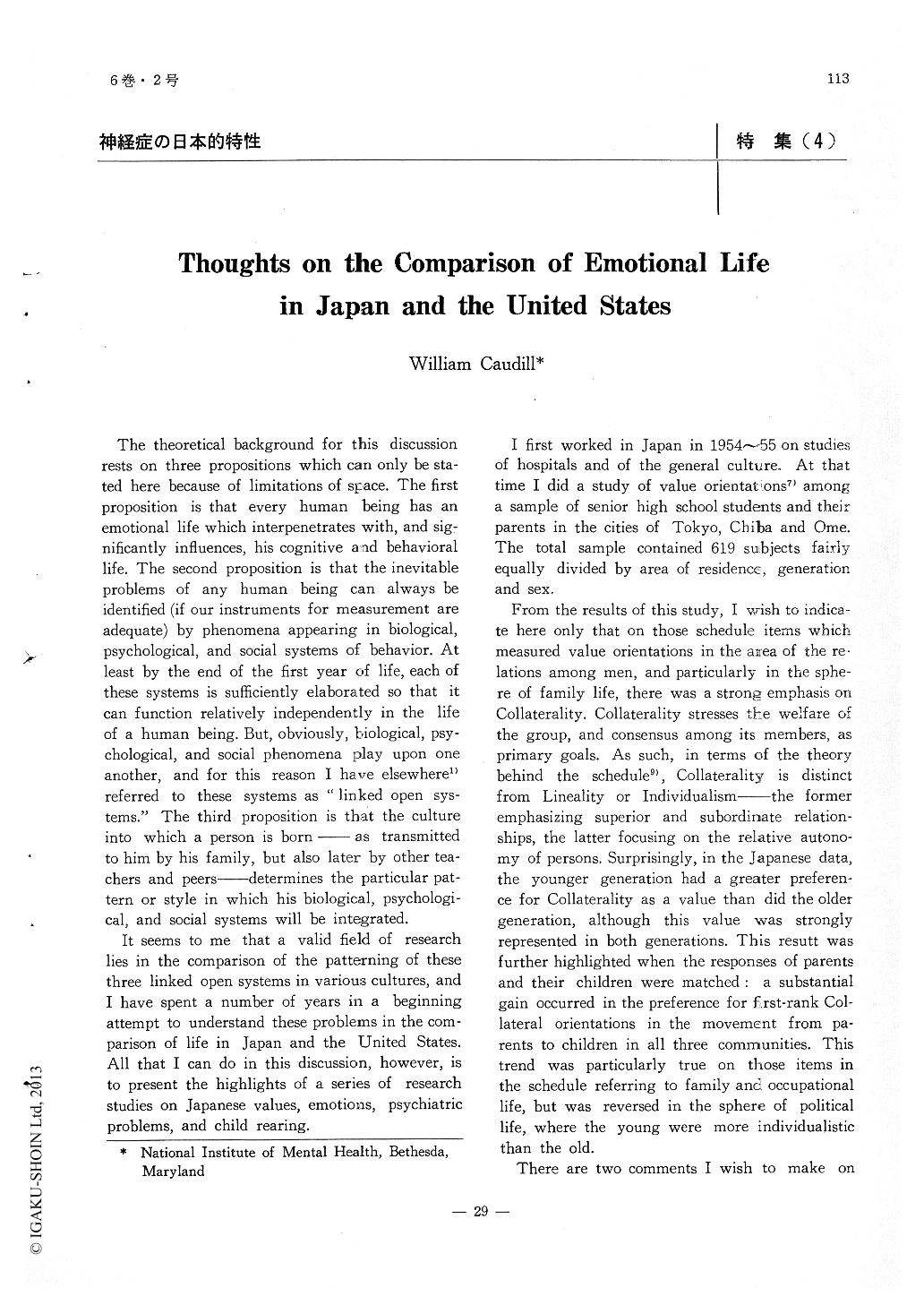
The theoretical background for this discussion rests on three propositions which can only be stated here because of limitations of space. The first proposition is that every human being has an emotional life which interpenetrates with, and significantly influences, his cognitive and behavioral life. The second proposition is that the inevitable problems of any human being can always be identified (if our instruments for measurement are adequate) by phenomena appearing in biological, psychological, and social systems of behavior. At least by the end of the first year of life, each of these systems is sufficiently elaborated so that it can function relatively independently in the life of a human being. But, obviously, biological, psychological, and social phenomena play upon one another, and for this reason I have elsewhere1) referred to these systems as "linked open systems." The third proposition is that the culture into which a person is born―as transmitted to him by his family, but also later by other teachers and peers―determines the particular pattern or style in which his biological, psychological, and social systems will be integrated.
It seems to me that a valid field of research lies in the comparison of the patterning of these three linked open systems in various cultures, and I have spent a number of years in a beginningattempt to understand these problems in the comparison of life in Japan and the United States. All that I can do in this discussion, however, is to present the highlights of a series of research studies on Japanese values, emotions, psychiatric problems, and child rearing.
Copyright © 1964, Igaku-Shoin Ltd. All rights reserved.