Japanese
English
- 有料閲覧
PPV購入案内
1,320円 (1,200円+税10%) こちらは、1184ページから1191ページの文献です。購入には医書.jp本会員登録が必要です。
会員登録完了後に改めて上記「購入サイトへ」を選択してください。
または「購入サイトへ」選択後に「購入ログイン」、「新規会員登録」の順に進んでください。
会員登録について詳しくはをご確認ください。
- Abstract 文献概要
- 1ページ目 Look Inside
- 参考文献 Reference
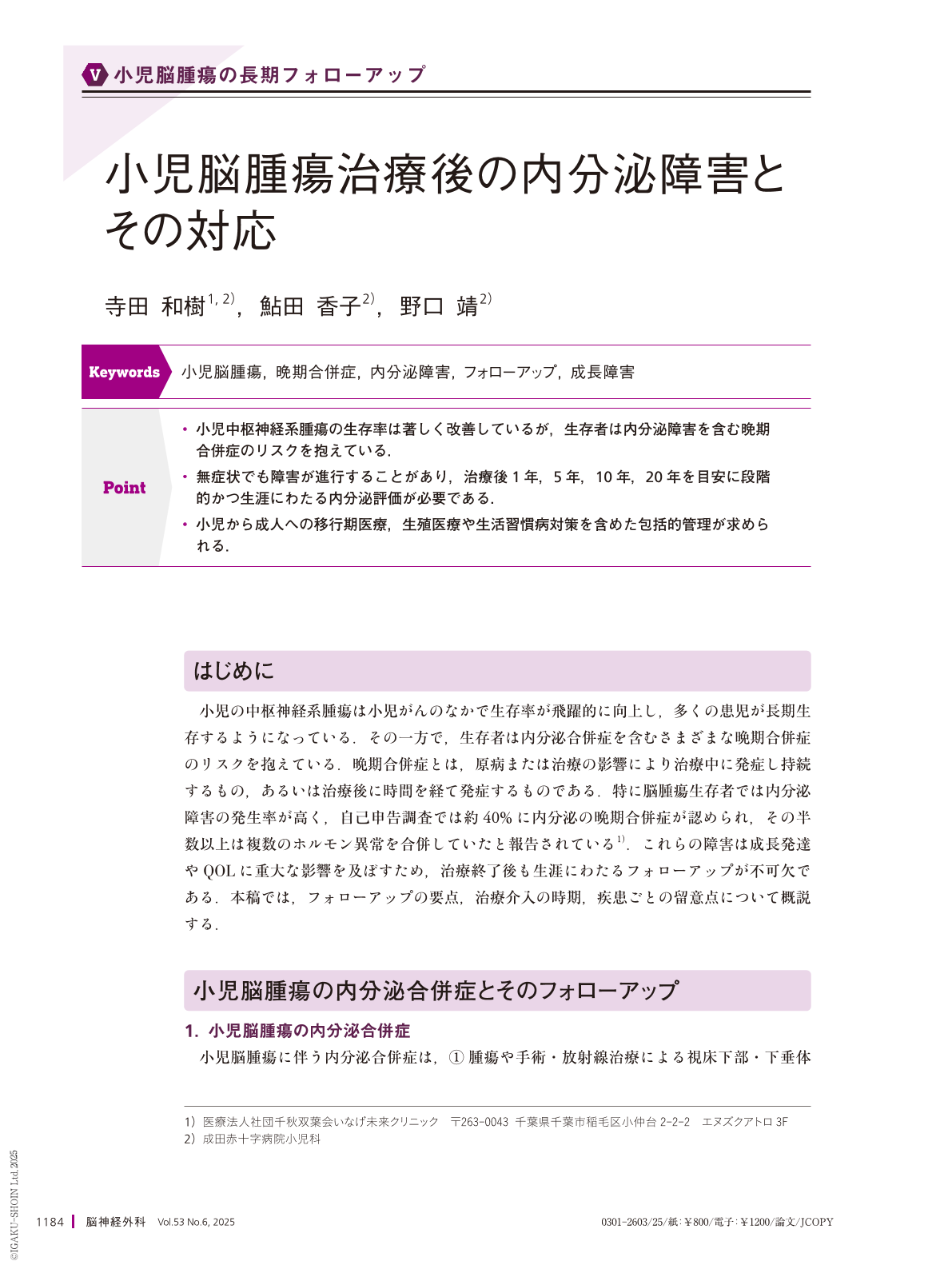
Point
・小児中枢神経系腫瘍の生存率は著しく改善しているが,生存者は内分泌障害を含む晩期合併症のリスクを抱えている.
・無症状でも障害が進行することがあり,治療後1年,5年,10年,20年を目安に段階的かつ生涯にわたる内分泌評価が必要である.
・小児から成人への移行期医療,生殖医療や生活習慣病対策を含めた包括的管理が求められる.
Advances in the treatment of pediatric brain tumors have markedly improved survival rates; however, long-term survivors still commonly experience delayed effects, particularly endocrine disorders. Growth hormone deficiency, central hypothyroidism, gonadal dysfunction, including pubertal abnormalities, and central diabetes insipidus are the most common such complications. Their onset is influenced by tumor type, surgical intervention, and cranial irradiation. Survivors of craniopharyngioma commonly develop panhypopituitarism and hypothalamic obesity, whereas survivors of germ cell tumors frequently present with diabetes insipidus and pubertal disturbances. Patients with medulloblastoma, particularly those receiving craniospinal irradiation, are at high risk of growth hormone deficiency and multiple hormonal deficits. These endocrine complications may be progressive and asymptomatic in the early stages, thus underscoring the necessity for systematic follow-up. Lifelong surveillance is recommended, with evaluations conducted at 1, 5, 10, and 20 years after treatment, focusing on growth, puberty, thyroid and adrenal functions, and metabolic status. The transition from pediatric to adult care, fertility preservation, and the management of lifestyle-related diseases represent additional challenges. Comprehensive multidisciplinary follow-up is essential to ensure an optimal quality of life in pediatric brain tumor survivors.
Copyright © 2025, Igaku-Shoin Ltd. All rights reserved.