Japanese
English
- 有料閲覧
- Abstract 文献概要
- 1ページ目 Look Inside
- 参考文献 Reference
はじめに
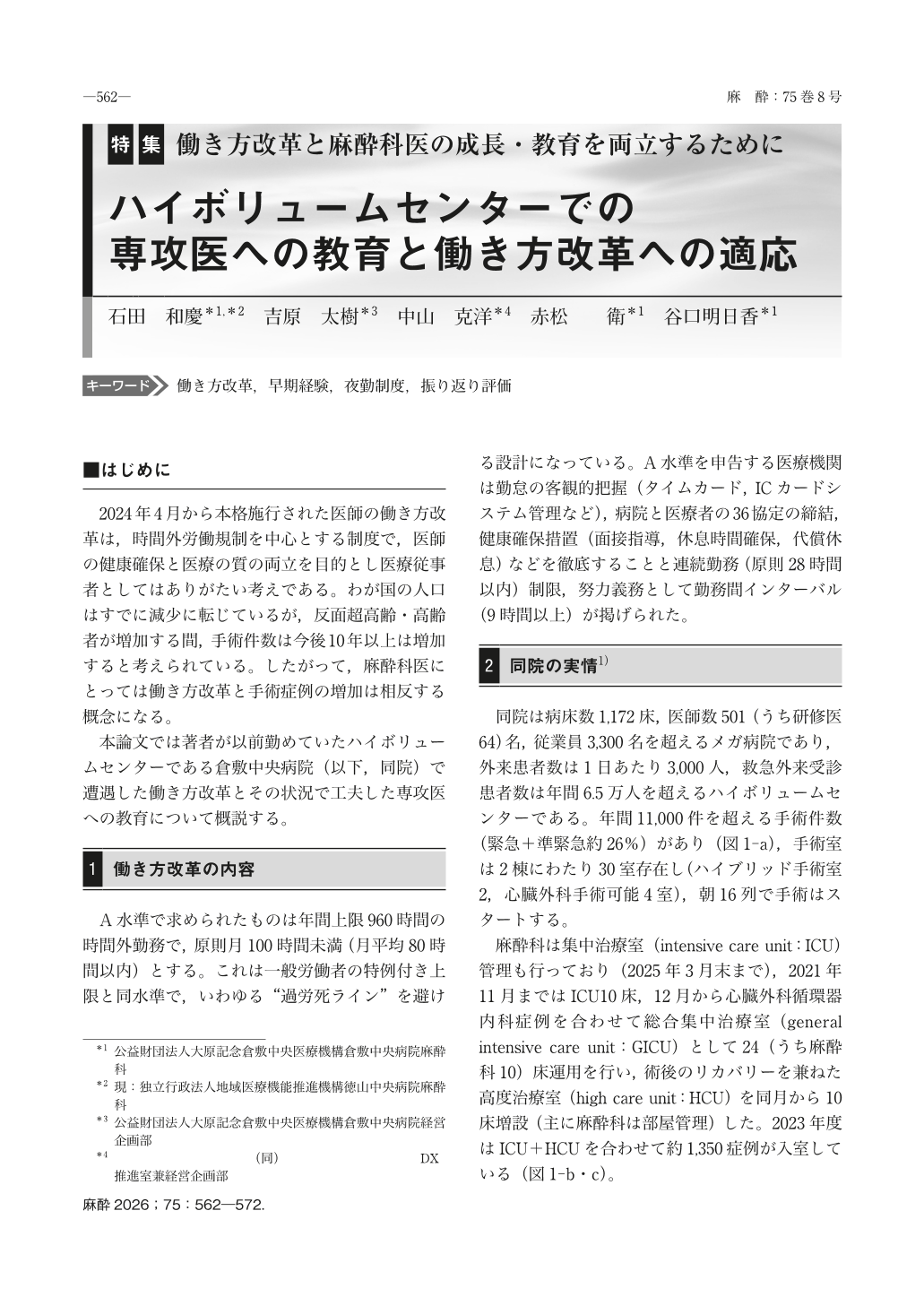
2024年4月から本格施行された医師の働き方改革は,時間外労働規制を中心とする制度で,医師の健康確保と医療の質の両立を目的とし医療従事者としてはありがたい考えである。わが国の人口はすでに減少に転じているが,反面超高齢・高齢者が増加する間,手術件数は今後10年以上は増加すると考えられている。したがって,麻酔科医にとっては働き方改革と手術症例の増加は相反する概念になる。
本論文では著者が以前勤めていたハイボリュームセンターである倉敷中央病院(以下,同院)で遭遇した働き方改革とその状況で工夫した専攻医への教育について概説する。
Japan, which is at the forefront of super-aging societies, is expected to continue experiencing an increase in surgical cases for the next 10-15 years despite the country’s declining population. The physician work-style reforms implemented in Japan in 2024 require anesthesiologists at high-volume centers aiming to meet the A-level standard to address two challenges simultaneously:maintaining their surgical case volumes and adapting to new work-style regulations. However, the reforms also provide an opportunity to train residents more efficiently and at a higher level within a shorter period. In addition, the introduction of a night-shift system―distinct from the traditional on-call duty―has contributed to improving the safety and quality of nighttime patient care, particularly for critically ill patients. Given the current situation in anesthesiology, where sufficient protected time for education is often limited, early clinical exposure and intensive bedside supervision are considered essential for the effective training of anesthesiology residents.
Copyright © 2026 KOKUSEIDO CO., LTD. All Rights Reserved.