Japanese
English
- 有料閲覧
- Abstract 文献概要
- 1ページ目 Look Inside
- 参考文献 Reference
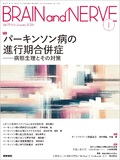
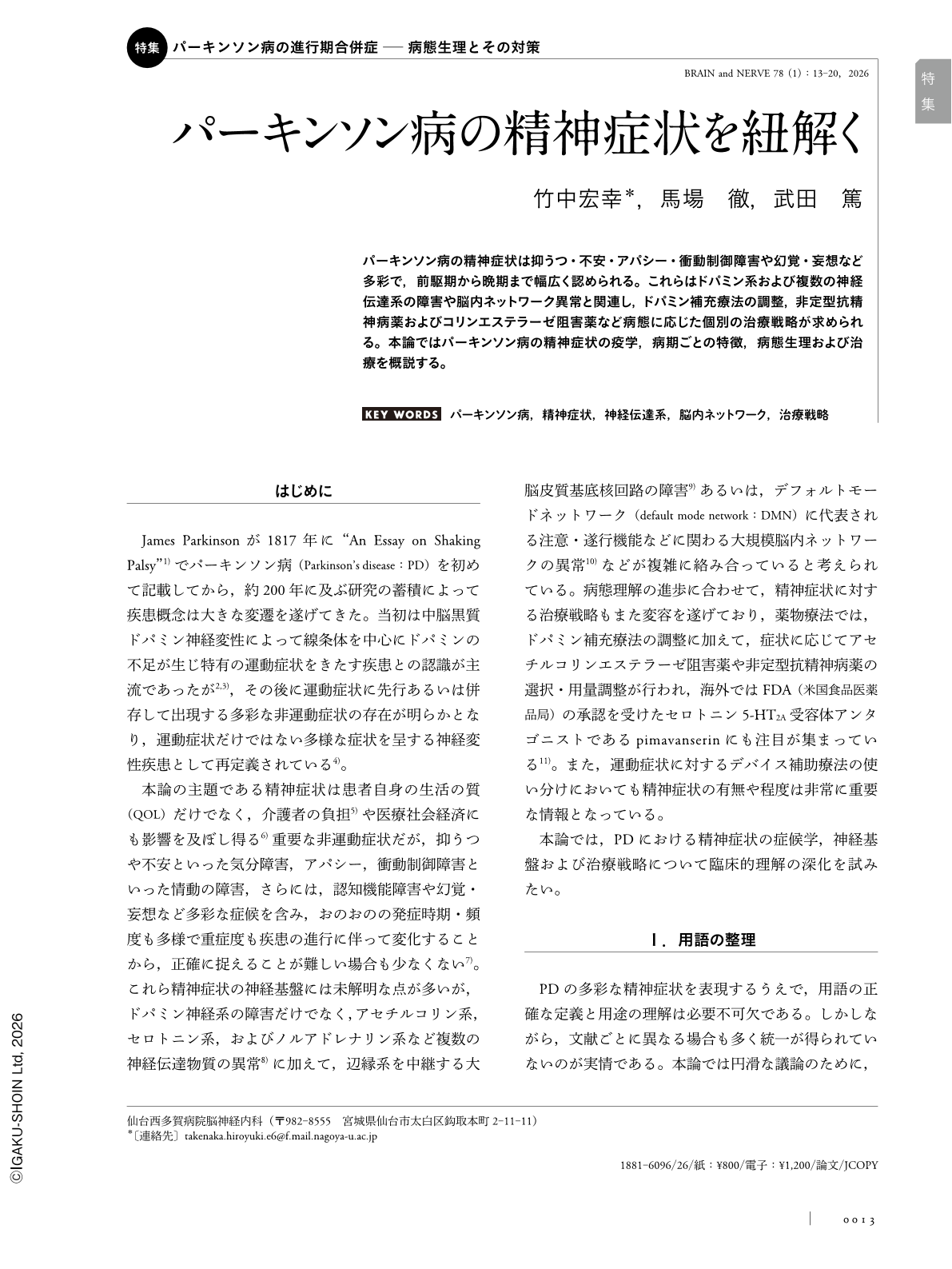
パーキンソン病の精神症状は抑うつ・不安・アパシー・衝動制御障害や幻覚・妄想など多彩で,前駆期から晩期まで幅広く認められる。これらはドパミン系および複数の神経伝達系の障害や脳内ネットワーク異常と関連し,ドパミン補充療法の調整,非定型抗精神病薬およびコリンエステラーゼ阻害薬など病態に応じた個別の治療戦略が求められる。本論ではパーキンソン病の精神症状の疫学,病期ごとの特徴,病態生理および治療を概説する。
Abstract
Although traditionally classified as a movement disorder due to nigrostriatal dopamine loss, Parkinson's disease also manifests a wide range of psychiatric symptoms across the disease course from prodromal phase to advanced stages. These psychiatric symptoms include depression, anxiety, apathy, impulse control disorders, hallucinations, and delusions. The emergence of psychiatric symptoms reflects the dysfunction of the dopaminergic system and multiple neurotransmitter systems (e.g., serotonergic, noradrenergic, and cholinergic systems) and disruption of large-scale brain networks. Providing optimal care requires stage- and symptom-specific strategies, such as optimizing dopaminergic therapy, judiciously using atypical antipsychotics, and considering acetylcholinesterase inhibitors when appropriate. This review summarizes the epidemiology, pathophysiology, and treatment of the psychiatric symptoms in Parkinson's disease, highlighting individualized management strategies that align with the underlying mechanisms.
Copyright © 2026, Igaku-Shoin Ltd. All rights reserved.