Japanese
English
- 有料閲覧
- Abstract 文献概要
- 1ページ目 Look Inside
- 参考文献 Reference
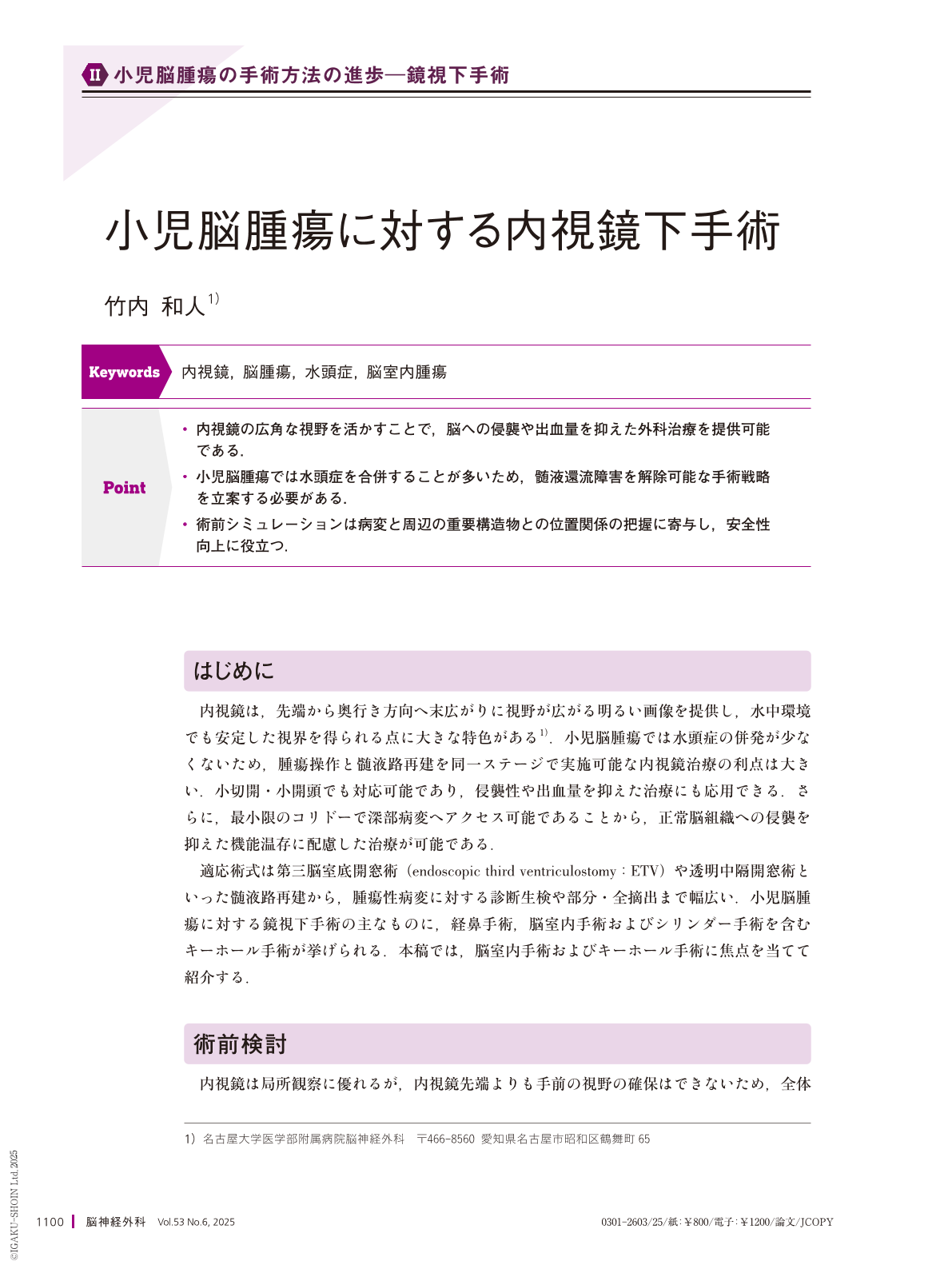
Point
・内視鏡の広角な視野を活かすことで,脳への侵襲や出血量を抑えた外科治療を提供可能である.
・小児脳腫瘍では水頭症を合併することが多いため,髄液還流障害を解除可能な手術戦略を立案する必要がある.
・術前シミュレーションは病変と周辺の重要構造物との位置関係の把握に寄与し,安全性向上に役立つ.
*本論文中、[Video]マークのある図につきましては、関連する動画を見ることができます(公開期間:2028年12月まで)。
Endoscopy provides a bright, wide field of view in deep surgical corridors, and preserves image quality under continuous irrigation (“underwater” conditions). Pediatric patients tolerate limited blood loss and are vulnerable to retraction injuries; therefore, meticulous hemostasis and brain-sparing techniques are mandatory. As hydrocephalus commonly accompanies pediatric brain tumors, treatment should address both tumor control and cerebrospinal fluid diversion within the same operation. Endoscopy enables access through minimal corridors, and is particularly effective for deep-seated lesions. Safe application requires rigorous preoperative planning and simulation to delineate the lesion, feeding and draining vessels, critical white matter tracts, and deep venous structures near the intended corridor. Patient positioning and operating room setup must be optimized in advance. When underwater techniques are anticipated, the angle of the tubular retractor (cannula/cylinder) should allow the maintenance of a stable fluid column. This article provides a practice-oriented overview of the endoscopic management of pediatric intraventricular and intraparenchymal tumors, emphasizing the importance of planning, workflow discipline, and strategies that minimize blood loss and parenchymal injury, while integrating diagnosis, cytoreduction, and CSF pathway reconstruction.
Copyright © 2025, Igaku-Shoin Ltd. All rights reserved.