Japanese
English
- 有料閲覧
- Abstract 文献概要
- 1ページ目 Look Inside
- 参考文献 Reference
Point
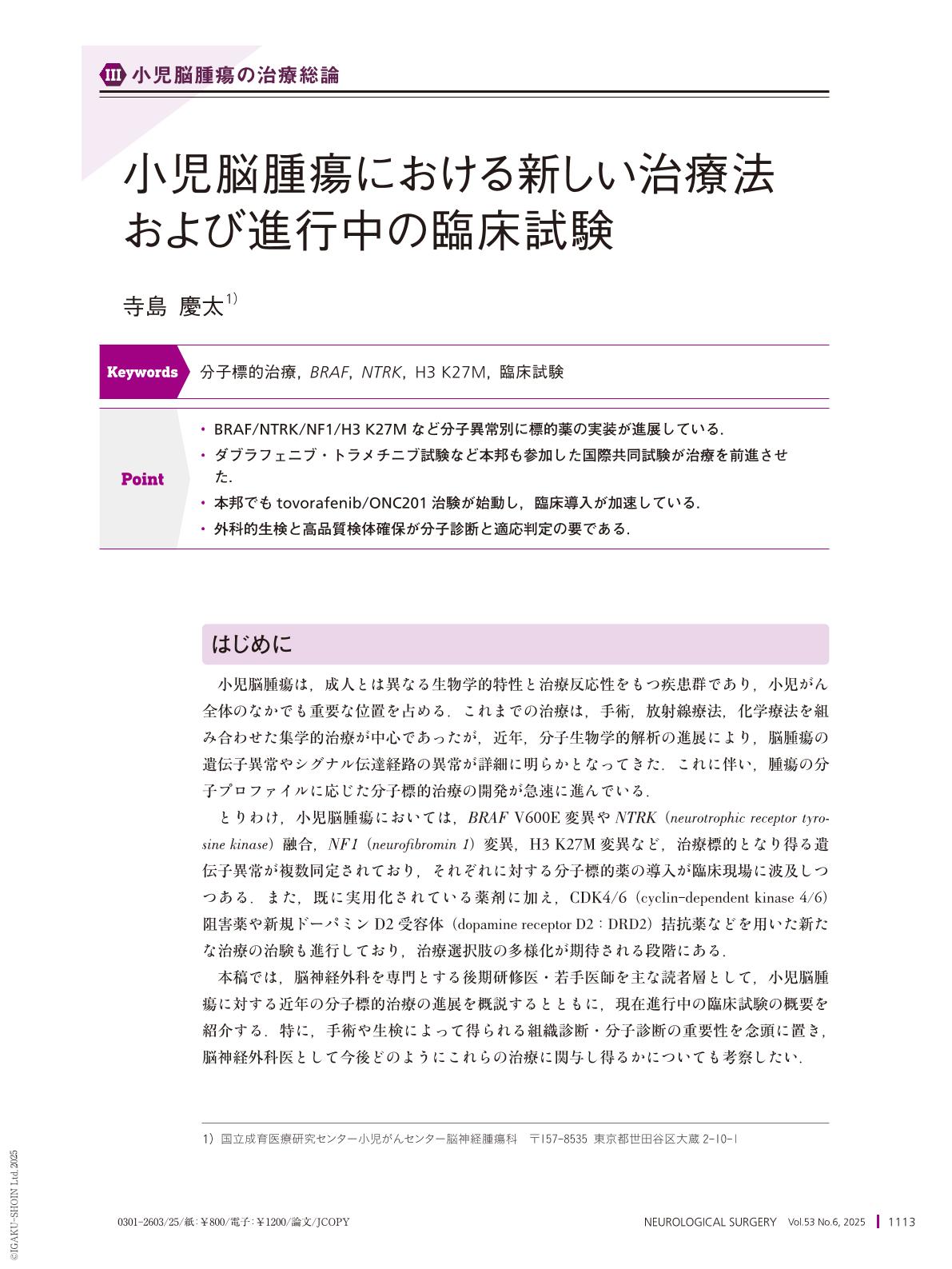
・BRAF/NTRK/NF1/H3 K27Mなど分子異常別に標的薬の実装が進展している.
・ダブラフェニブ・トラメチニブ試験など本邦も参加した国際共同試験が治療を前進させた.
・本邦でもtovorafenib/ONC201治験が始動し,臨床導入が加速している.
・外科的生検と高品質検体確保が分子診断と適応判定の要である.
Recent advances in molecular profiling have transformed pediatric brain tumors management. The use of targeted agents is guided by actionable alterations including the BRAF V600E mutation, NTRK fusions, NF1 pathway activation, and H3 K27M mutation. Dabrafenib plus trametinib has shown superiority over chemotherapy in pediatric low-grade gliomas and activity against high-grade diseases. Larotrectinib and entrectinib provide tumor-agnostic options for NTRK-fusion-positive tumors with central nervous system penetration. Selumetinib offers clinical benefits in NF1-associated plexiform neurofibromas and shows promise for treating NF1-related low-grade gliomas. Tovorafenib, a type Ⅱ RAF inhibitor active in BRAF-altered tumors (including BRAFKIAA1549 fusion), achieved robust responses, thereby leading to FDA approval. ONC201 (dordaviprone) has received accelerated approval for the treatment of H3 K27M-mutant diffuse midline gliomas, with Japanese trials and patient-initiated programs expanding access. Abemaciclib, a CDK4/6 inhibitor, is under phase Ⅱ evaluation for pediatric high-grade glioma and diffuse midline glioma, including sites in Japan. Neurosurgeons play a pivotal role in securing high-quality biopsies, thus enabling comprehensive molecular diagnostics and facilitating enrollment in international trials. This review summarizes current targeted therapies and ongoing studies and outlines practical considerations for integrating precision oncology into pediatric neuro-oncology in Japan.
Copyright © 2025, Igaku-Shoin Ltd. All rights reserved.