Japanese
English
- 有料閲覧
PPV購入案内
1,320円 (1,200円+税10%) こちらは、654ページから662ページの文献です。購入には医書.jp本会員登録が必要です。
会員登録完了後に改めて上記「購入サイトへ」を選択してください。
または「購入サイトへ」選択後に「購入ログイン」、「新規会員登録」の順に進んでください。
会員登録について詳しくはをご確認ください。
- Abstract 文献概要
- 1ページ目 Look Inside
- 参考文献 Reference
はじめに
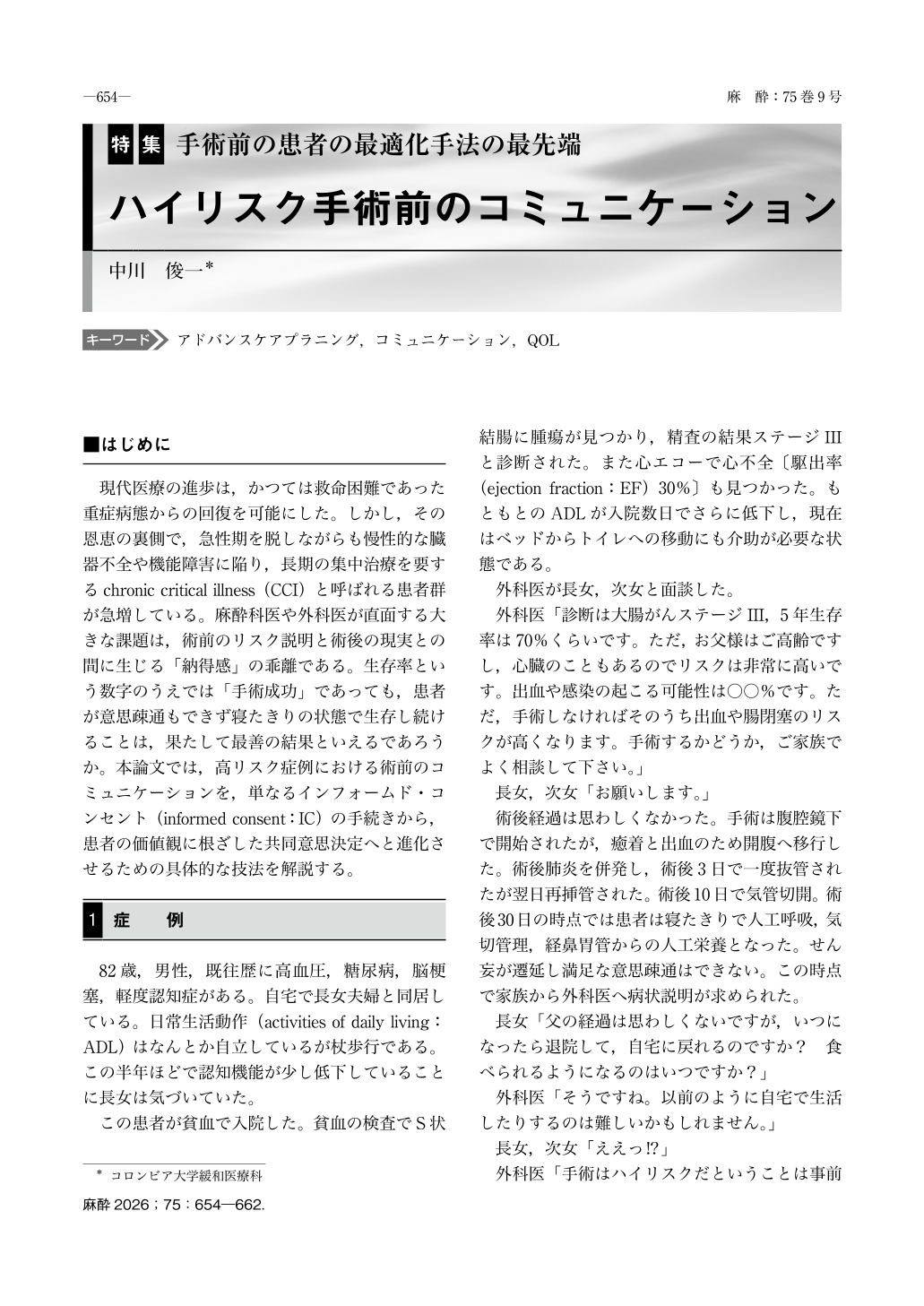
現代医療の進歩は,かつては救命困難であった重症病態からの回復を可能にした。しかし,その恩恵の裏側で,急性期を脱しながらも慢性的な臓器不全や機能障害に陥り,長期の集中治療を要するchronic critical illness(CCI)と呼ばれる患者群が急増している。麻酔科医や外科医が直面する大きな課題は,術前のリスク説明と術後の現実との間に生じる「納得感」の乖離である。生存率という数字のうえでは「手術成功」であっても,患者が意思疎通もできず寝たきりの状態で生存し続けることは,果たして最善の結果といえるであろうか。本論文では,高リスク症例における術前のコミュニケーションを,単なるインフォームド・コンセント(informed consent:IC)の手続きから,患者の価値観に根ざした共同意思決定へと進化させるための具体的な技法を解説する。
Advances in modern medicine have enabled survival from conditions that were once deemed fatal. However, a growing population of patients now develop chronic critical illness(CCI), surviving acute events but remaining dependent on prolonged intensive care with persistent organ dysfunction. A major challenge for anesthesiologists and surgeons concerns the gap between the preoperative disclosure of risks to patients and the postoperative reality. Even when surgery is deemed a technical ‘success’ based on the survival rate, prolonged survival without functional recovery or a sufficient quality of life may not align with a patient’s values. This article outlines practical strategies to transform the preoperative communication with patients in high-risk cases from merely procedural informed consent to shared decision-making that is grounded in individual values.
Copyright © 2026 KOKUSEIDO CO., LTD. All Rights Reserved.