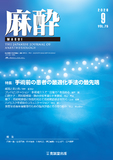
Japanese
English
- 有料閲覧
PPV購入案内
1,320円 (1,200円+税10%) こちらは、622ページから624ページの文献です。購入には医書.jp本会員登録が必要です。
会員登録完了後に改めて上記「購入サイトへ」を選択してください。
または「購入サイトへ」選択後に「購入ログイン」、「新規会員登録」の順に進んでください。
会員登録について詳しくはをご確認ください。
- Abstract 文献概要
- 1ページ目 Look Inside
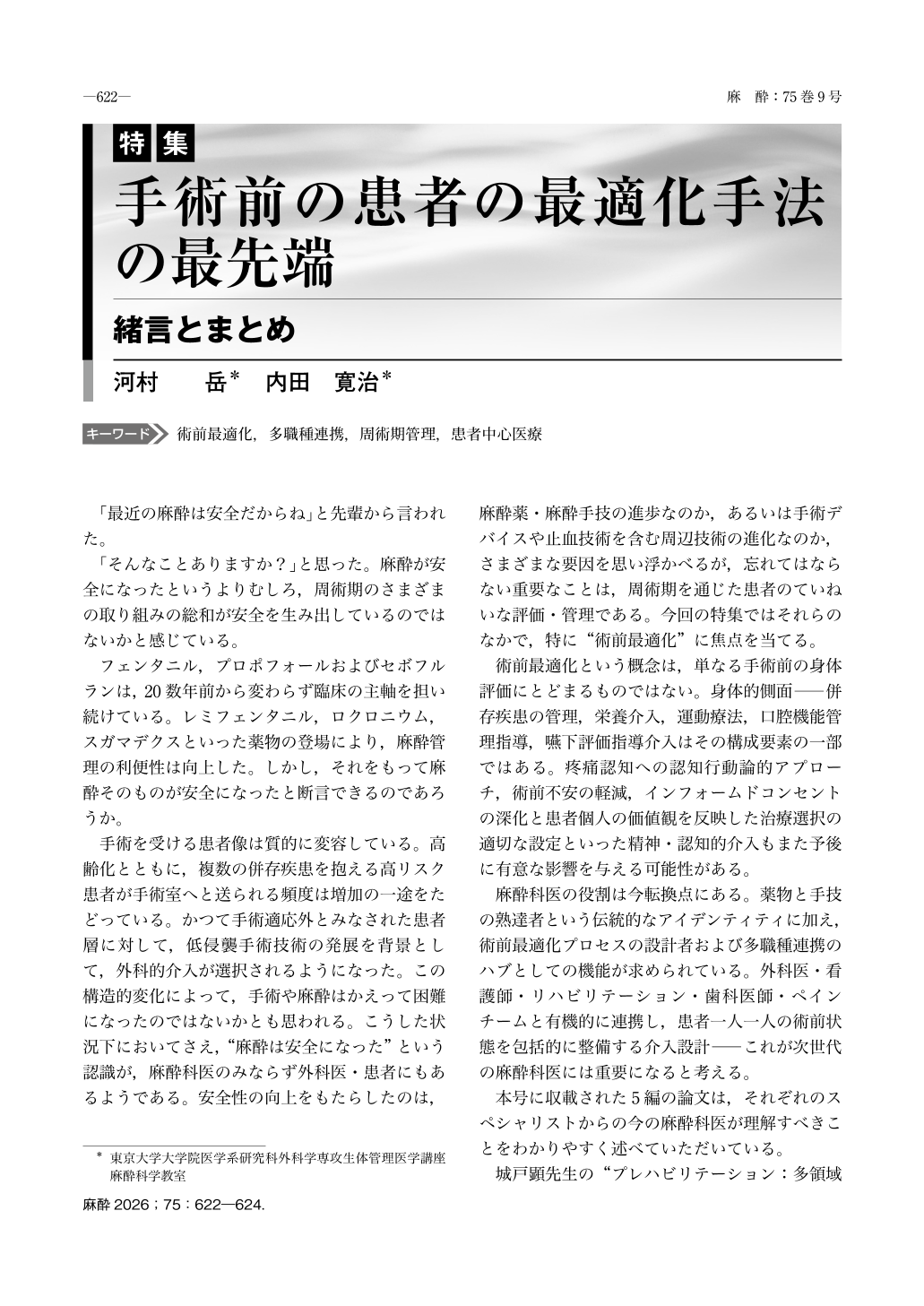
「最近の麻酔は安全だからね」と先輩から言われた。
Although the belief that “anesthesia has become safer” is widely shared among anesthesiologists, surgeons, and patients, it is not clear that this perception is fully justified. The introductions of remifentanil, rocuronium, and sugammadex have improved the convenience and efficiency of anesthetic management, but whether these advances have fundamentally enhanced patient safety has not been established. Concurrently, surgical populations have undergone a profound transformation:due to the many advances in minimally invasive surgical techniques, an increasing number of high-risk patients with multiple comorbidities now undergo procedures that were once considered contraindicated. Against this backdrop, the concept of preoperative patient optimization has emerged as a key strategy. Such preoperative optimization extends beyond the routine physical assessments to encompass multimodal interventions(e.g., comorbidity management, nutritional support, exercise therapy, oral health management, and a swallowing evaluation)as well as psychocognitive approaches such as cognitive behavioral therapy for pain, anxiety reduction, and values-based shared decision-making. The role of anesthesiologists is at a turning point:in addition to the mastery of pharmacology and anesthesia techniques, anesthesiologists are now called upon to serve as leaders of preoperative patient optimization and coordinators of multidisciplinary perioperative care. This special issue presents five evidence-based articles that explore these emerging challenges and opportunities.
Copyright © 2026 KOKUSEIDO CO., LTD. All Rights Reserved.