Japanese
English
- 有料閲覧
PPV購入案内
1,650円 (1,500円+税10%) こちらは、357ページから360ページの文献です。購入には医書.jp本会員登録が必要です。
会員登録完了後に改めて上記「購入サイトへ」を選択してください。
または「購入サイトへ」選択後に「購入ログイン」、「新規会員登録」の順に進んでください。
会員登録について詳しくはをご確認ください。
- Abstract 文献概要
- 1ページ目 Look Inside
- 参考文献 Reference
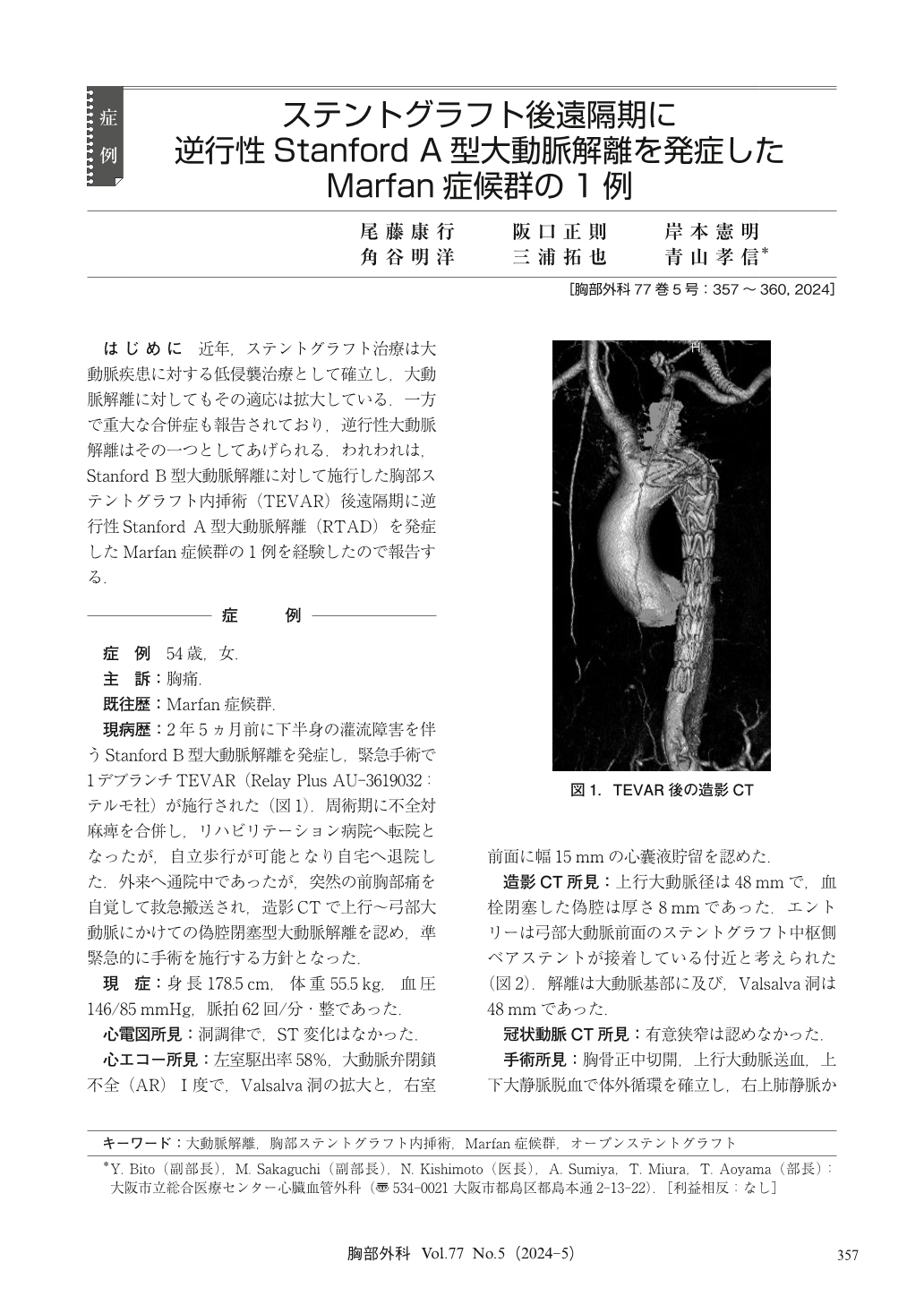
はじめに 近年,ステントグラフト治療は大動脈疾患に対する低侵襲治療として確立し,大動脈解離に対してもその適応は拡大している.一方で重大な合併症も報告されており,逆行性大動脈解離はその一つとしてあげられる.われわれは,Stanford B型大動脈解離に対して施行した胸部ステントグラフト内挿術(TEVAR)後遠隔期に逆行性Stanford A型大動脈解離(RTAD)を発症したMarfan症候群の1例を経験したので報告する.
A 52-year-old woman with Marfan syndrome developed Stanford type B aortic dissection and was treated with thoracic endovascular aortic repair. However, 29 months later, she presented with retrograde Stanford type A aortic dissection. We successfully performed aortic arch replacement with the frozen elephant trunk technique and valve-sparing aortic root replacement. The advantages of the frozen elephant trunk technique are that the distal anastomosis can be created without stent-graft resection and the cardiac arrest time is shortened. Therefore, the frozen elephant trunk technique was considered valuable and safe in this potentially lethal situation.
© Nankodo Co., Ltd., 2024