Japanese
English
- 有料閲覧
PPV購入案内
1,320円 (1,200円+税10%) こちらは、127ページから140ページの文献です。購入には医書.jp本会員登録が必要です。
会員登録完了後に改めて上記「購入サイトへ」を選択してください。
または「購入サイトへ」選択後に「購入ログイン」、「新規会員登録」の順に進んでください。
会員登録について詳しくはをご確認ください。
- Abstract 文献概要
- 1ページ目 Look Inside
- 参考文献 Reference
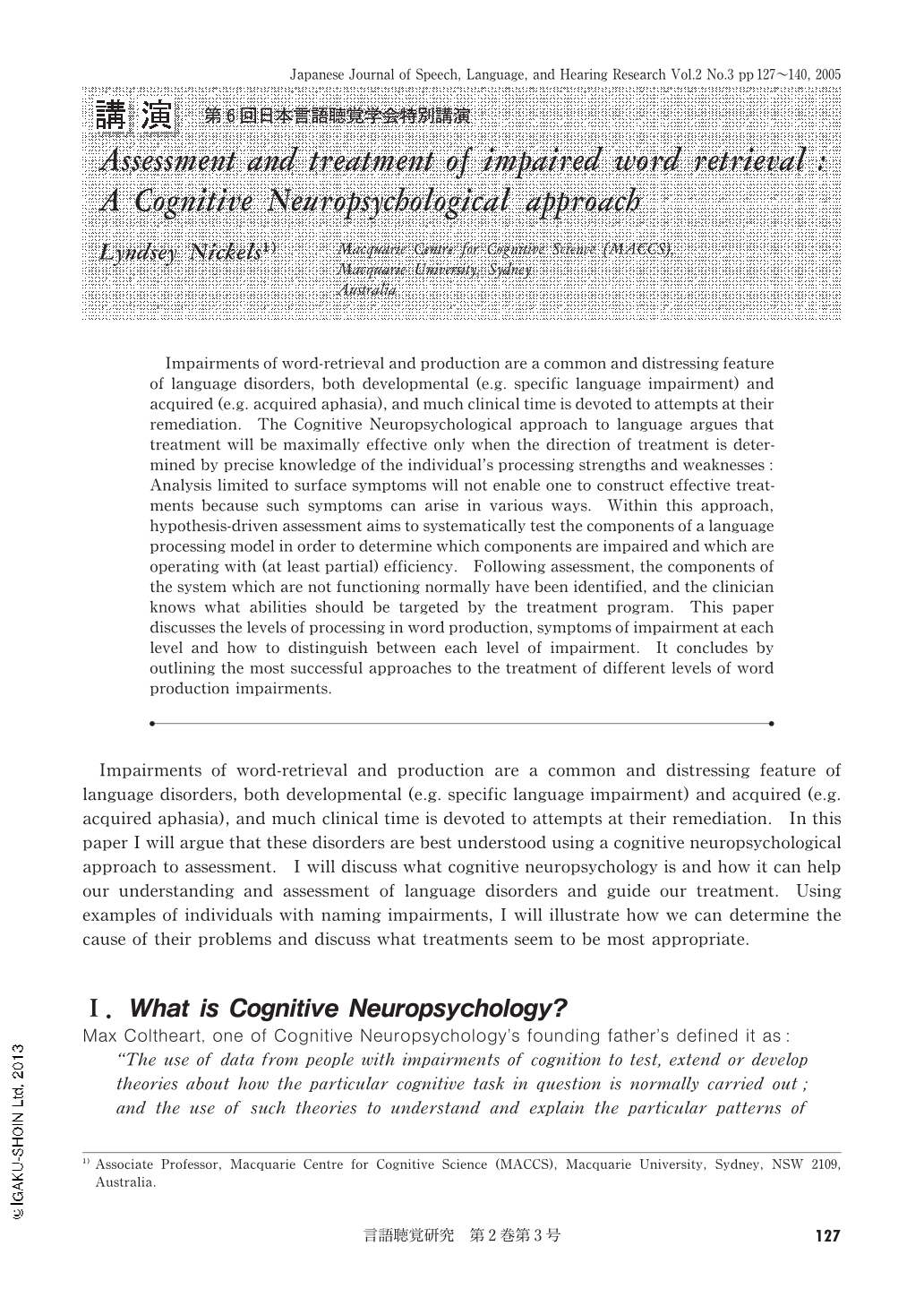
Impairments of word-retrieval and production are a common and distressing feature of language disorders, both developmental (e.g. specific language impairment) and acquired (e.g. acquired aphasia), and much clinical time is devoted to attempts at their remediation. The Cognitive Neuropsychological approach to language argues that treatment will be maximally effective only when the direction of treatment is determined by precise knowledge of the individual's processing strengths and weaknesses:Analysis limited to surface symptoms will not enable one to construct effective treatments because such symptoms can arise in various ways. Within this approach, hypothesis-driven assessment aims to systematically test the components of a language processing model in order to determine which components are impaired and which are operating with (at least partial) efficiency. Following assessment, the components of the system which are not functioning normally have been identified, and the clinician knows what abilities should be targeted by the treatment program. This paper discusses the levels of processing in word production, symptoms of impairment at each level and how to distinguish between each level of impairment. It concludes by outlining the most successful approaches to the treatment of different levels of word production impairments.
Copyright © 2005, Japanese Association of Speech-Language-Hearing Therapists. All rights reserved.