Japanese
English
- 有料閲覧
PPV購入案内
1,320円 (1,200円+税10%) こちらは、3ページから12ページの文献です。購入には医書.jp本会員登録が必要です。
会員登録完了後に改めて上記「購入サイトへ」を選択してください。
または「購入サイトへ」選択後に「購入ログイン」、「新規会員登録」の順に進んでください。
会員登録について詳しくはをご確認ください。
- Abstract 文献概要
- 1ページ目 Look Inside
- サイト内被引用 Cited by
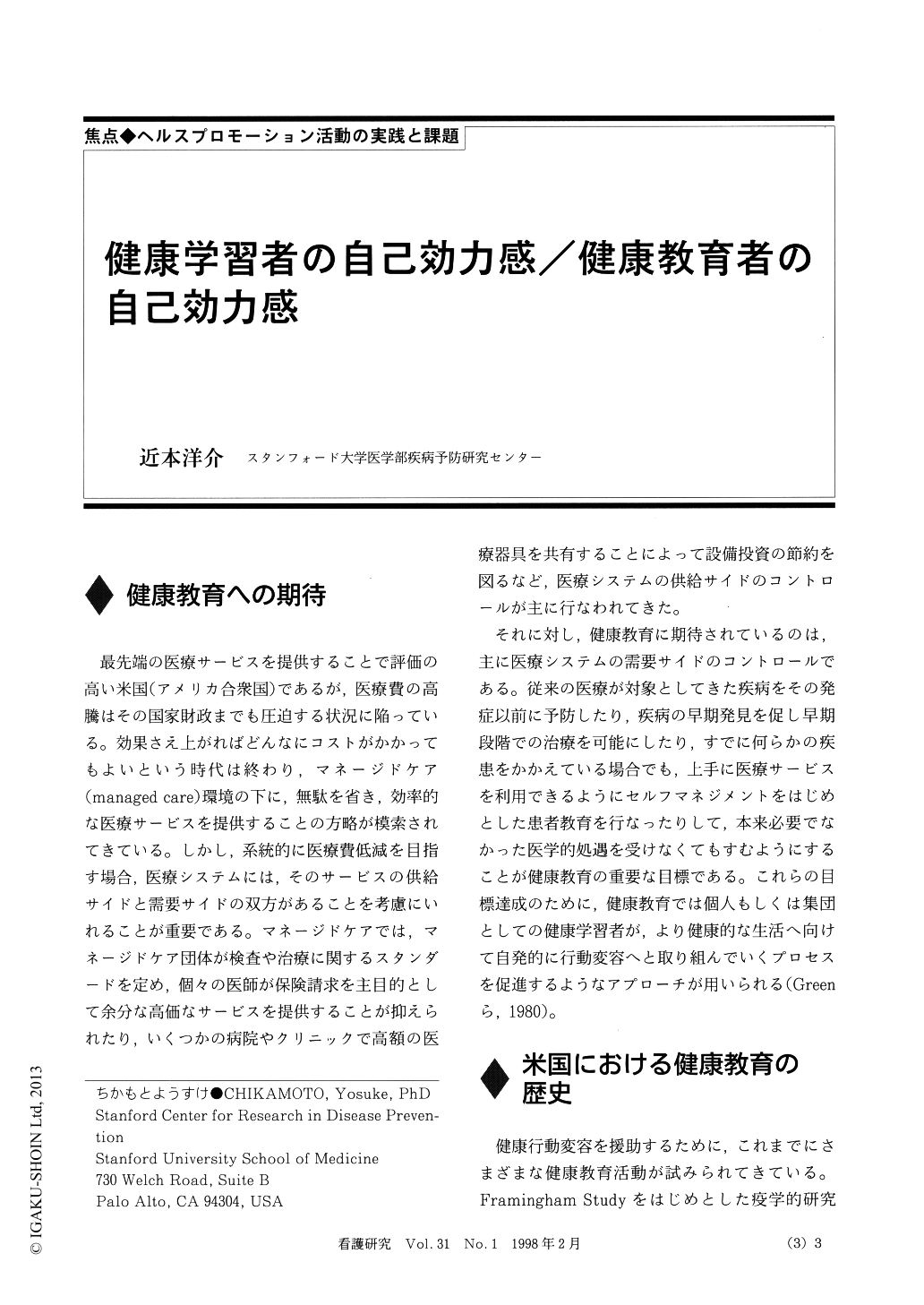
健康教育への期待
最先端の医療サービスを提供することで評価の高い米国(アメリカ合衆国)であるが,医療費の高騰はその国家財政までも圧迫する状況に陥っている。効果さえ上がればどんなにコストがかかってもよいという時代は終わり,マネージドケア(managed care)環境の下に,無駄を省き,効率的な医療サービスを提供することの方略が模索されてきている。しかし,系統的に医療費低減を目指す場合,医療システムには,そのサービスの供給サイドと需要サイドの双方があることを考慮にいれることが重要である。マネージドケアでは,マネージドケア団体が検査や治療に関するスタンダードを定め,個々の医師が保険請求を主目的として余分な高価なサービスを提供することが抑えられたり,いくつかの病院やクリニックで高額の医療器具を共有することによって設備投資の節約を図るなど,医療システムの供給サイドのコントロールが主に行なわれてきた。
それに対し,健康教育に期待されているのは,主に医療システムの需要サイドのコントロールである。従来の医療が対象としてきた疾病をその発症以前に予防したり,疾病の早期発見を促し早期段階での治療を可能にしたり,すでに何らかの疾患をかかえている場合でも,上手に医療サービスを利用できるようにセルフマネジメントをはじめとした患者教育を行なったりして,本来必要でなかった医学的処遇を受けなくてもすむようにすることが健康教育の重要な目標である。これらの目標達成のために,健康教育では個人もしくは集団としての健康学習者が,より健康的な生活へ向けて自発的に行動変容へと取り組んでいくプロセスを促進するようなアプローチが用いられる(Greenら,1980)。
The Social Cognitive Theory has helped health educators develop effective health education programs that target self-efficacy among participants in changing their health behavior. Bandura has identified four resources on which individuals determine their levels of self-efficacy: (1) performance accomplishment, (2) vicarious reinforcement, (3) verbal persuasion, a nd (4) emotional arousal. Examples of health education strategies that utilize each of the four resources to increase participants' self-efficacy are described.
Health education professionals in Japan have attempted to use programs based on the Social Cognitive Theory for Japanese populations. It is criticized that health educators that use such programs are not well trained in effective use, and that those programs have not been utilized at their maximum potentials. Using the framework of the Social Cognitive Theory, the importance of incorporating ways to increase self-efficacy of health educators in providing health education services into education and training of health educators is discussed.
Copyright © 1998, Igaku-Shoin Ltd. All rights reserved.