Japanese
English
- 有料閲覧
PPV購入案内
1,320円 (1,200円+税10%) こちらは、155ページから160ページの文献です。購入には医書.jp本会員登録が必要です。
会員登録完了後に改めて上記「購入サイトへ」を選択してください。
または「購入サイトへ」選択後に「購入ログイン」、「新規会員登録」の順に進んでください。
会員登録について詳しくはをご確認ください。
- Abstract 文献概要
- 1ページ目 Look Inside
I.はじめに
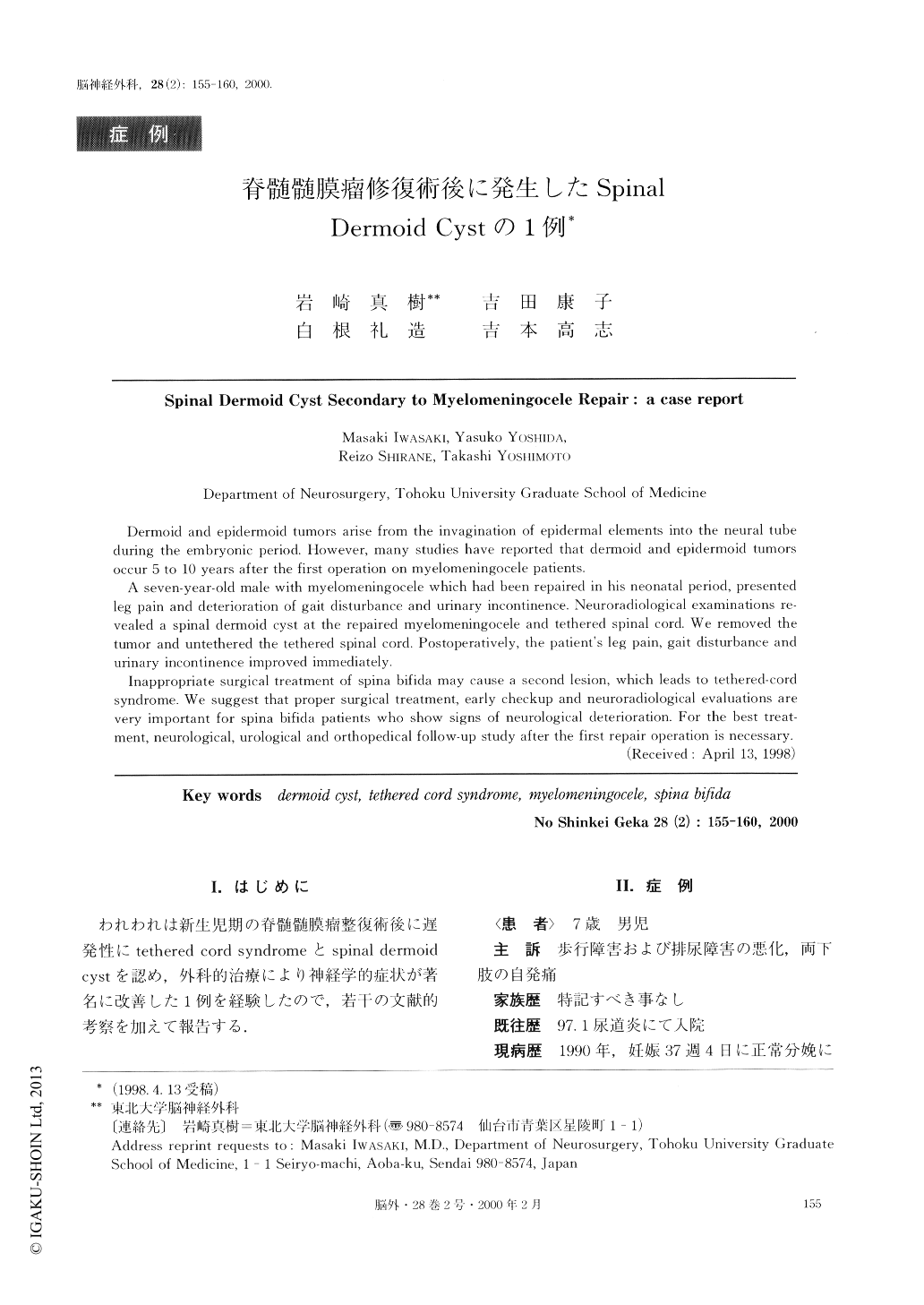
われわれは新生児期の脊髄髄膜瘤整復術後に遅発性にtethered cord syndromeとspinal dermoidcystを認め,外科的治療により神経学的症状が著名に改善した1例を経験したので,若干の文献的考察を加えて報告する.
Dermoid and epidermoid tumors arise from the invagination of epidermal elements into the neural tube during the embryonic period. However, many studies have reported that dermoid and epidermoid tumors occur 5 to 10 years after the first operation on myelomeningocele patients.
A seven-year-old male with myelomeningocele which had been repaired in his neonatal period, presented leg pain and deterioration of gait disturbance and urinary incontinence. Neuroradiological examinations re-vealed a spinal dermoid cyst at the repaired myelomeningocele and tethered spinal cord. We removed the tumor and untethered the tethered spinal cord. Postoperatively, the patient's leg pain, gait disturbance and urinary incontinence improved immediately.
Inappropriate surgical treatment of spina bifida may cause a second lesion, which leads to tethered-cord syndrome. We suggest that proper surgical treatment, early checkup and neuroradiological evaluations are very important for spina bifida patients who show signs of neurological deterioration. For the best treat-ment, neurological, urological and orthopedical follow-up study after the first repair operation is necessary.
Copyright © 2000, Igaku-Shoin Ltd. All rights reserved.