Japanese
English
- 有料閲覧
PPV購入案内
1,320円 (1,200円+税10%) こちらは、795ページから801ページの文献です。購入には医書.jp本会員登録が必要です。
会員登録完了後に改めて上記「購入サイトへ」を選択してください。
または「購入サイトへ」選択後に「購入ログイン」、「新規会員登録」の順に進んでください。
会員登録について詳しくはをご確認ください。
- Abstract 文献概要
- 1ページ目 Look Inside
I.はじめに
脳腫瘍と診断されることは,その患者にとって大変なストレスである.脳神経外科医は患者に神経学的症状を残さず治療し,その患者が社会復帰を果たし,高いquality of life(QOL)を維持してほしいと望んでいる.実際医療技術の進歩によって神経学的症状を殆ど残さずに治療できる例も多くなり,患者の社会復帰率も高くなっていると考えられる.しかし退院時に元気に退院した患者が,社会復帰後に外来で診察をするとそれほど満足そうに見えないことをよく経験する.このことは脳腫瘍患者が社会復帰後にもストレスを抱えた生活を強いられていることをうかがわせ,社会的サポートの必要性を感じる.しかし現在わが国では満足できる社会的サポート体制が出来ておらず,脳腫瘍患者がより高いQOLを得るためには病態を最もよく把握している脳神経外科医が中心となって努力しなければいけないと考える.しかし脳腫瘍患者のサポートを考慮したQOLに関しての研究はわが国では未だ行われていない.今回脳腫瘍患者の自覚的健康度,神経症の有無及び情動反応を入院中と社会復帰後に測定し,その変化を検討することによりより高いQOLを得るための一助にしようと考えた.
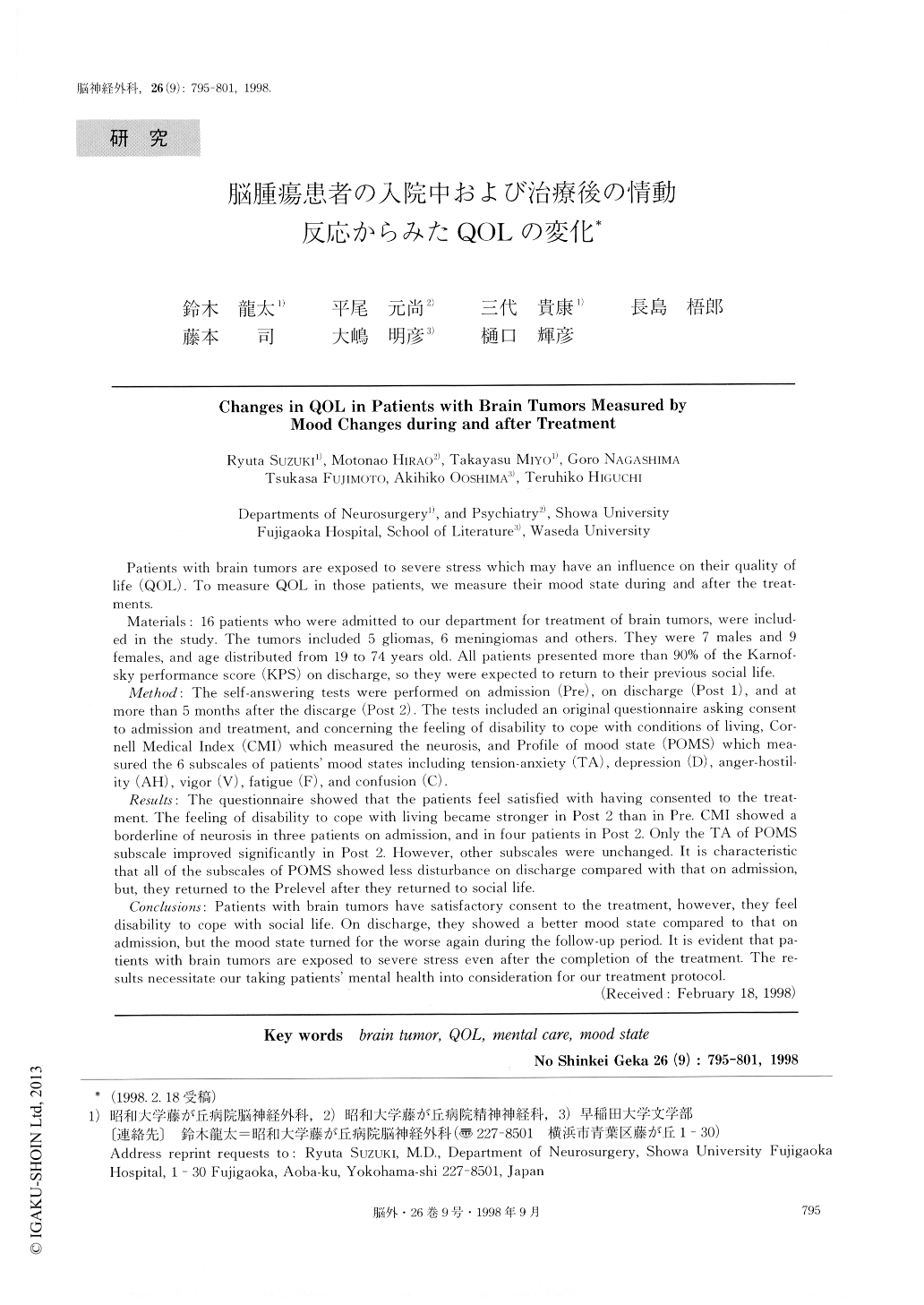
Patients with brain tumors are exposed to severe stress which may have an influence on their quality oflife (QOL). To measure QOL in those patients, we measure their mood state during and after the treat-ments.
Materials: 16 patients who were admitted to our department for treatment of brain tumors, were includ-ed in the study. The tumors included 5 gliomas, 6 meningiomas and others. They were 7 males and 9females, and age distributed from 19 to 74 years old. All patients presented more than 90% of the Karnof-sky performance score (KPS) on discharge, so they were expected to return to their previous social life.
Method: The self-answering tests were performed on admission (Pre), on discharge (Post 1), and atmore than 5 months after the discarge (Post 2). The tests included an original questionnaire asking consentto admission and treatment, and concerning the feeling of disability to cope with conditions of living, Cor-nell Medical Index (CMI) which measured the neurosis, and Profile of mood state (POMS) which mea-sured the 6 subscales of patients' mood states including tension-anxiety (TA), depression (D), anger-hostil-ity (AH), vigor (V), fatigue (F), and confusion (C).
Results: The questionnaire showed that the patients feel satisfied with having consented to the treat-ment. The feeling of disability to cope with living became stronger in Post 2 than in Pre. CMI showed aborderline of neurosis in three patients on admission, and in four patients in Post 2. Only the TA of POMSsubscale improved significantly in Post 2. However, other subscales were unchanged. It is characteristicthat all of the subscales of POMS showed less disturbance on discharge compared with that on admission,but, they returned to the Prelevel after they returned to social life.
Conclusions: Patients with brain tumors have satisfactory consent to the treatment, however, they feeldisability to cope with social life. On discharge, they showed a better mood state compared to that onadmission, but the mood state turned for the worse again during the follow-up period. It is evident that pa-tients with brain tumors are exposed to severe stress even after the completion of the treatment. The re-sults necessitate our taking patients' mental health into consideration for our treatment protocol.
Copyright © 1998, Igaku-Shoin Ltd. All rights reserved.