Japanese
English
- 有料閲覧
PPV購入案内
1,320円 (1,200円+税10%) こちらは、1179ページから1186ページの文献です。購入には医書.jp本会員登録が必要です。
会員登録完了後に改めて上記「購入サイトへ」を選択してください。
または「購入サイトへ」選択後に「購入ログイン」、「新規会員登録」の順に進んでください。
会員登録について詳しくはをご確認ください。
- Abstract 文献概要
- 1ページ目 Look Inside
- 参考文献 Reference
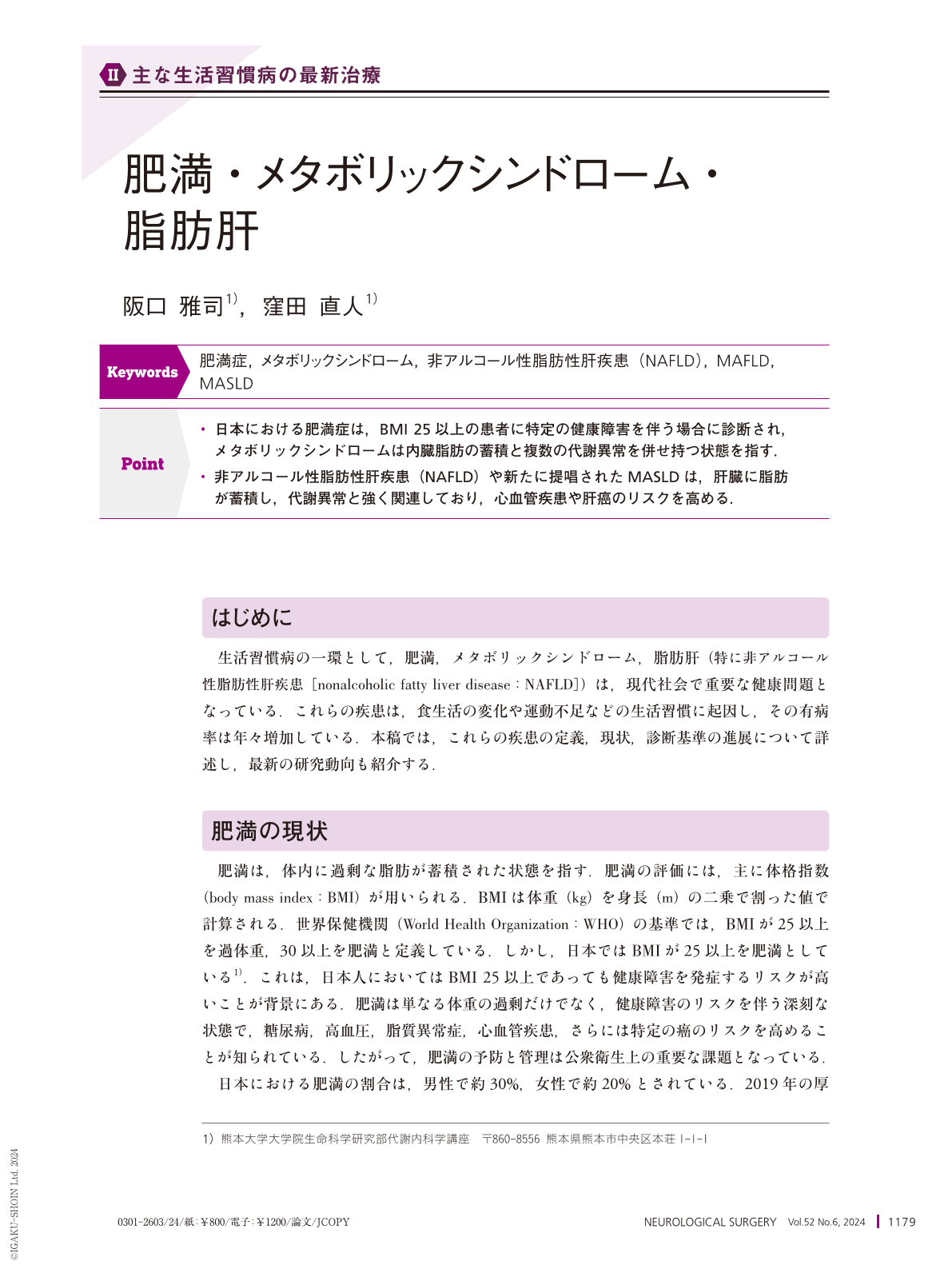
Point
・日本における肥満症は,BMI 25以上の患者に特定の健康障害を伴う場合に診断され,メタボリックシンドロームは内臓脂肪の蓄積と複数の代謝異常を併せ持つ状態を指す.
・非アルコール性脂肪性肝疾患(NAFLD)や新たに提唱されたMASLDは,肝臓に脂肪が蓄積し,代謝異常と強く関連しており,心血管疾患や肝癌のリスクを高める.
Obesity, metabolic syndrome, and fatty liver disease, particularly nonalcoholic fatty liver disease(NAFLD), are significant health issues in current society. These conditions are linked to lifestyle changes such as overeating and lack of exercise, and their prevalence is increasing. Obesity is defined using body mass index(BMI), with a BMI of 25 kg/m2 or higher considered obese in Japan due to the higher health risks in this population. Obesity significantly increases the risk of diabetes, hypertension, dyslipidemia, cardiovascular disease, and cancer. Metabolic syndrome involves visceral fat accumulation along with high blood glucose levels, dyslipidemia, and hypertension. NAFLD, which is related to metabolic abnormalities such as obesity and diabetes, can progress to non-alcoholic steatohepatitis(NASH), cirrhosis, and liver cancer. Recent concepts, such as metabolic dysfunction-associated fatty liver disease and metabolic dysfunction-associated steatotic liver disease, provide new diagnostic criteria that better identify high-risk patients. The effective management of these diseases involves lifestyle changes and targeted medical treatments. Ongoing research and new diagnostic criteria are expected to improve prevention, diagnosis, and treatment and enhance patient outcomes and quality of life.
Copyright © 2024, Igaku-Shoin Ltd. All rights reserved.