Japanese
English
- 有料閲覧
PPV購入案内
1,320円 (1,200円+税10%) こちらは、1053ページから1060ページの文献です。購入には医書.jp本会員登録が必要です。
会員登録完了後に改めて上記「購入サイトへ」を選択してください。
または「購入サイトへ」選択後に「購入ログイン」、「新規会員登録」の順に進んでください。
会員登録について詳しくはをご確認ください。
- Abstract 文献概要
- 1ページ目 Look Inside
- 参考文献 Reference
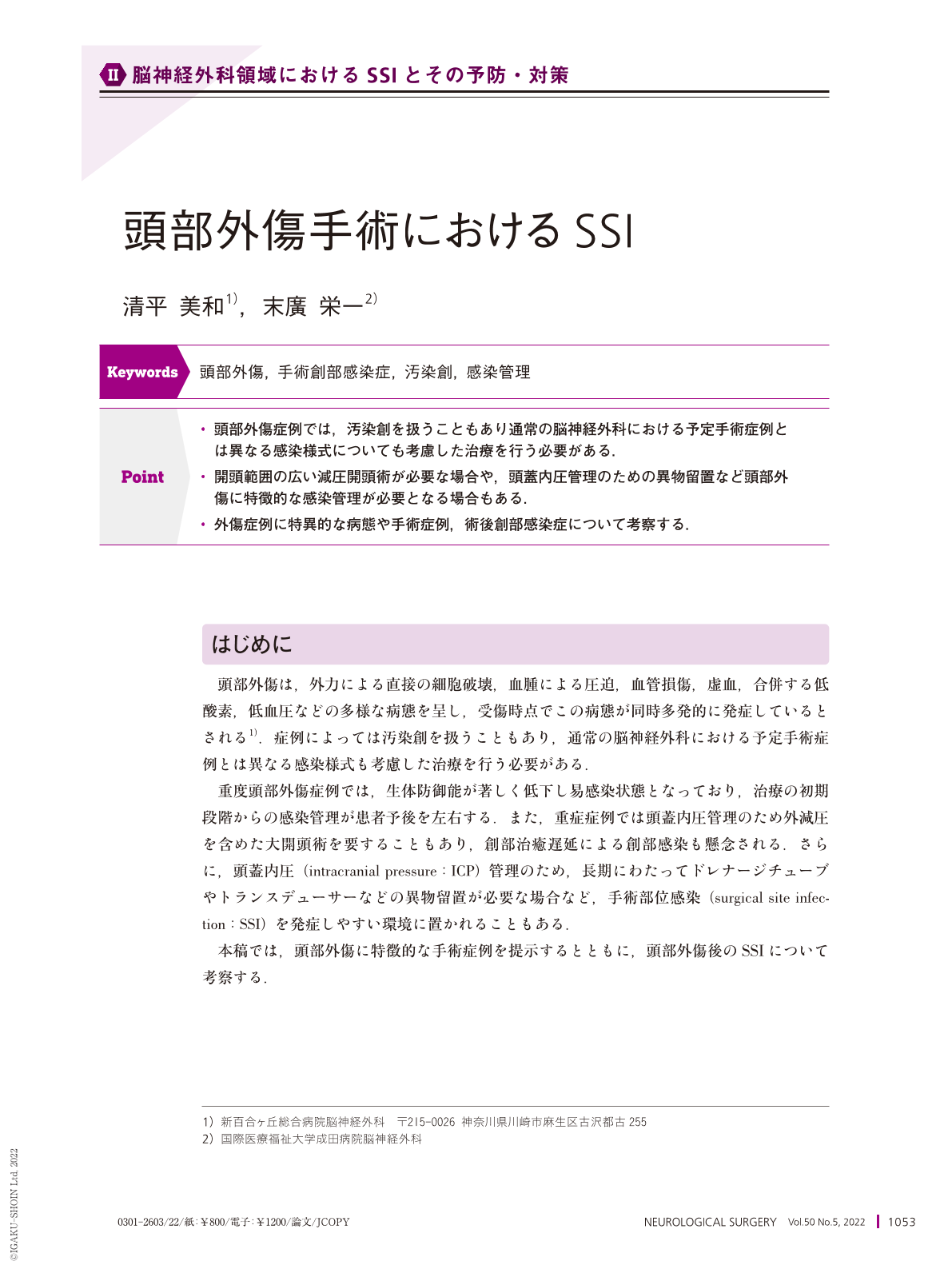
Point
・頭部外傷症例では,汚染創を扱うこともあり通常の脳神経外科における予定手術症例とは異なる感染様式についても考慮した治療を行う必要がある.
・開頭範囲の広い減圧開頭術が必要な場合や,頭蓋内圧管理のための異物留置など頭部外傷に特徴的な感染管理が必要となる場合もある.
・外傷症例に特異的な病態や手術症例,術後創部感染症について考察する.
Patients with traumatic brain injury(TBI)have various pathological conditions, such as direct cell destruction by external force, compression by hematoma, vascular injury, ischemia, complicated hypoxia, and hypotension. These pathological conditions occur simultaneously at the time of injury. In some cases, contaminated wounds may be treated, and infection patterns different from the scheduled neurosurgical cases should be managed.
In cases of severe TBI, immunocompromised patients are considered to be at high risk of infection. Infection control during the initial stage of treatment affects patient prognosis. In addition, large craniotomy, including decompressive craniectomy, is required to manage intracranial pressure(ICP), which causes skin infection due to delayed wound healing. Furthermore, placement of drainage tubes and transducers for a long period of time might be necessary to manage ICP, and the patient is likely to develop surgical site infection(SSI).
In this paper, we describe the characteristic surgical procedure and discuss ways to control SSI in TBI cases.
Copyright © 2022, Igaku-Shoin Ltd. All rights reserved.