Japanese
English
- 有料閲覧
PPV購入案内
1,320円 (1,200円+税10%) こちらは、497ページから504ページの文献です。購入には医書.jp本会員登録が必要です。
会員登録完了後に改めて上記「購入サイトへ」を選択してください。
または「購入サイトへ」選択後に「購入ログイン」、「新規会員登録」の順に進んでください。
会員登録について詳しくはをご確認ください。
- Abstract 文献概要
- 1ページ目 Look Inside
- 参考文献 Reference
Ⅰ.はじめに
わが国の高齢化率は上昇傾向にあり,総務省の国勢調査11)によると,2019年現在は26.1%と国民の4人に1人となっている.高齢化率の上昇に伴い高齢者頭部外傷も増加しており,日本頭部外傷データバンク(Japan Neurotrauma Data Bank:JNTDB)10)においても重症頭部外傷の年齢別発生頻度は,20歳台と60歳台の二峰性のピークから,高齢者のみの一峰性のピークに変化している.
高齢者では抗血栓薬内服患者の割合が比較的高く,JNTDB Project 2015(2015〜2017年登録)13)では,65歳以上の高齢者頭部外傷患者の約30%は抗血栓薬を内服していると報告されている.また同報告によると,抗血栓薬内服患者では非内服患者と比べ,talk and deteriorateが有意に起こりやすいとされており,一般的にも頭部外傷では,抗凝固薬や抗血小板薬の内服は転帰不良の原因とされている8).高齢化率の上昇とともに今後増加してくると推測される抗血栓薬内服中の高齢者頭部外傷において,血腫拡大を防ぎ,良好な転帰を得るために,適切な抗血栓薬の中和に関する検討が必要となる.
そこで今回,当院へ搬送された65歳以上の頭部外傷患者を対象に,当院での中和プロトコールに基づいて中和を施行した抗血栓薬内服患者に関して,中和の効果を後方視的に検討した.
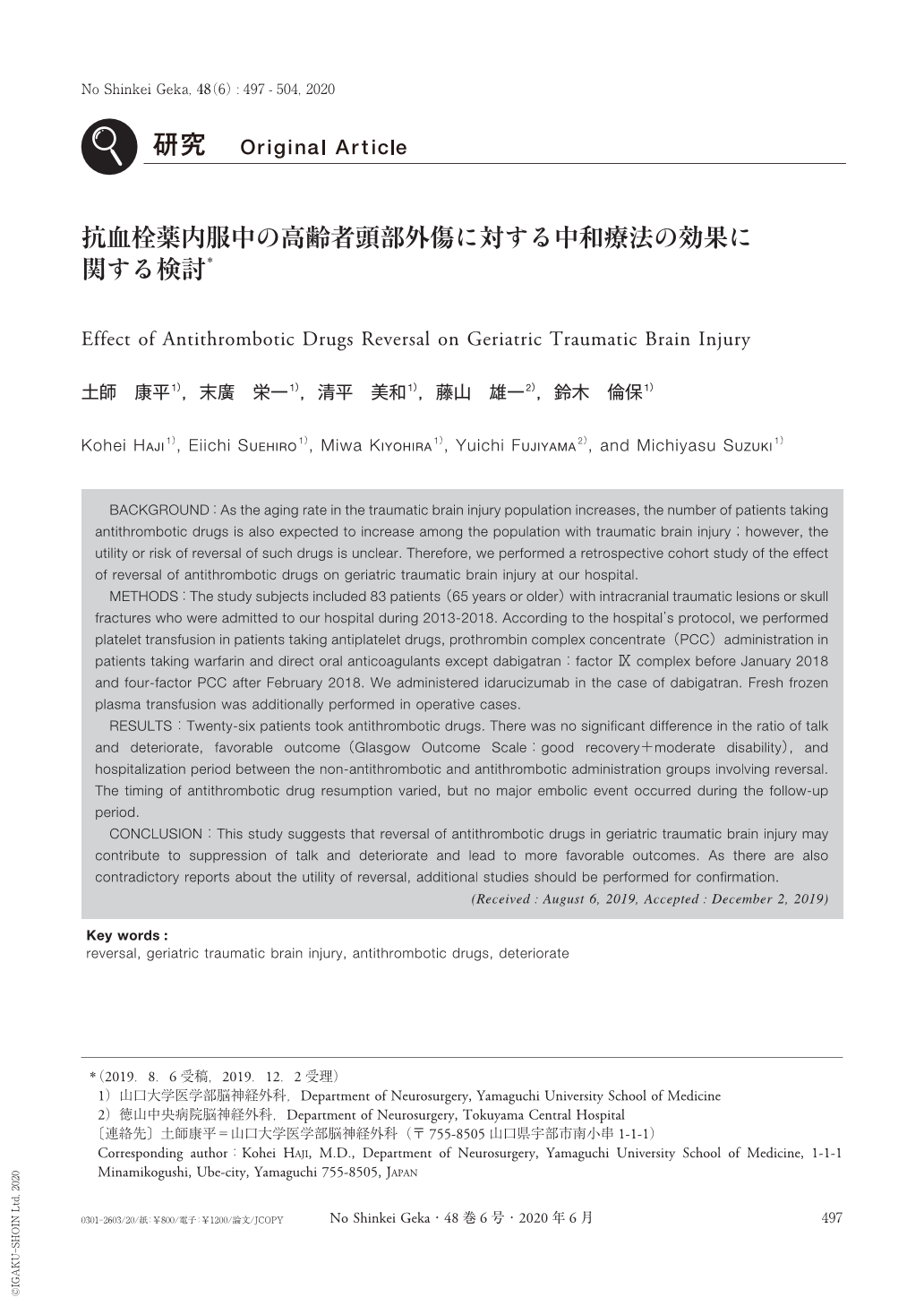
BACKGROUND:As the aging rate in the traumatic brain injury population increases, the number of patients taking antithrombotic drugs is also expected to increase among the population with traumatic brain injury;however, the utility or risk of reversal of such drugs is unclear. Therefore, we performed a retrospective cohort study of the effect of reversal of antithrombotic drugs on geriatric traumatic brain injury at our hospital.
METHODS:The study subjects included 83 patients(65 years or older)with intracranial traumatic lesions or skull fractures who were admitted to our hospital during 2013-2018. According to the hospital's protocol, we performed platelet transfusion in patients taking antiplatelet drugs, prothrombin complex concentrate(PCC)administration in patients taking warfarin and direct oral anticoagulants except dabigatran:factor Ⅸ complex before January 2018 and four-factor PCC after February 2018. We administered idarucizumab in the case of dabigatran. Fresh frozen plasma transfusion was additionally performed in operative cases.
RESULTS:Twenty-six patients took antithrombotic drugs. There was no significant difference in the ratio of talk and deteriorate, favorable outcome(Glasgow Outcome Scale:good recovery+moderate disability), and hospitalization period between the non-antithrombotic and antithrombotic administration groups involving reversal. The timing of antithrombotic drug resumption varied, but no major embolic event occurred during the follow-up period.
CONCLUSION:This study suggests that reversal of antithrombotic drugs in geriatric traumatic brain injury may contribute to suppression of talk and deteriorate and lead to more favorable outcomes. As there are also contradictory reports about the utility of reversal, additional studies should be performed for confirmation.
Copyright © 2020, Igaku-Shoin Ltd. All rights reserved.