Japanese
English
- 有料閲覧
PPV購入案内
1,320円 (1,200円+税10%) こちらは、875ページから881ページの文献です。購入には医書.jp本会員登録が必要です。
会員登録完了後に改めて上記「購入サイトへ」を選択してください。
または「購入サイトへ」選択後に「購入ログイン」、「新規会員登録」の順に進んでください。
会員登録について詳しくはをご確認ください。
- Abstract 文献概要
- 1ページ目 Look Inside
- 参考文献 Reference
Ⅰ.はじめに
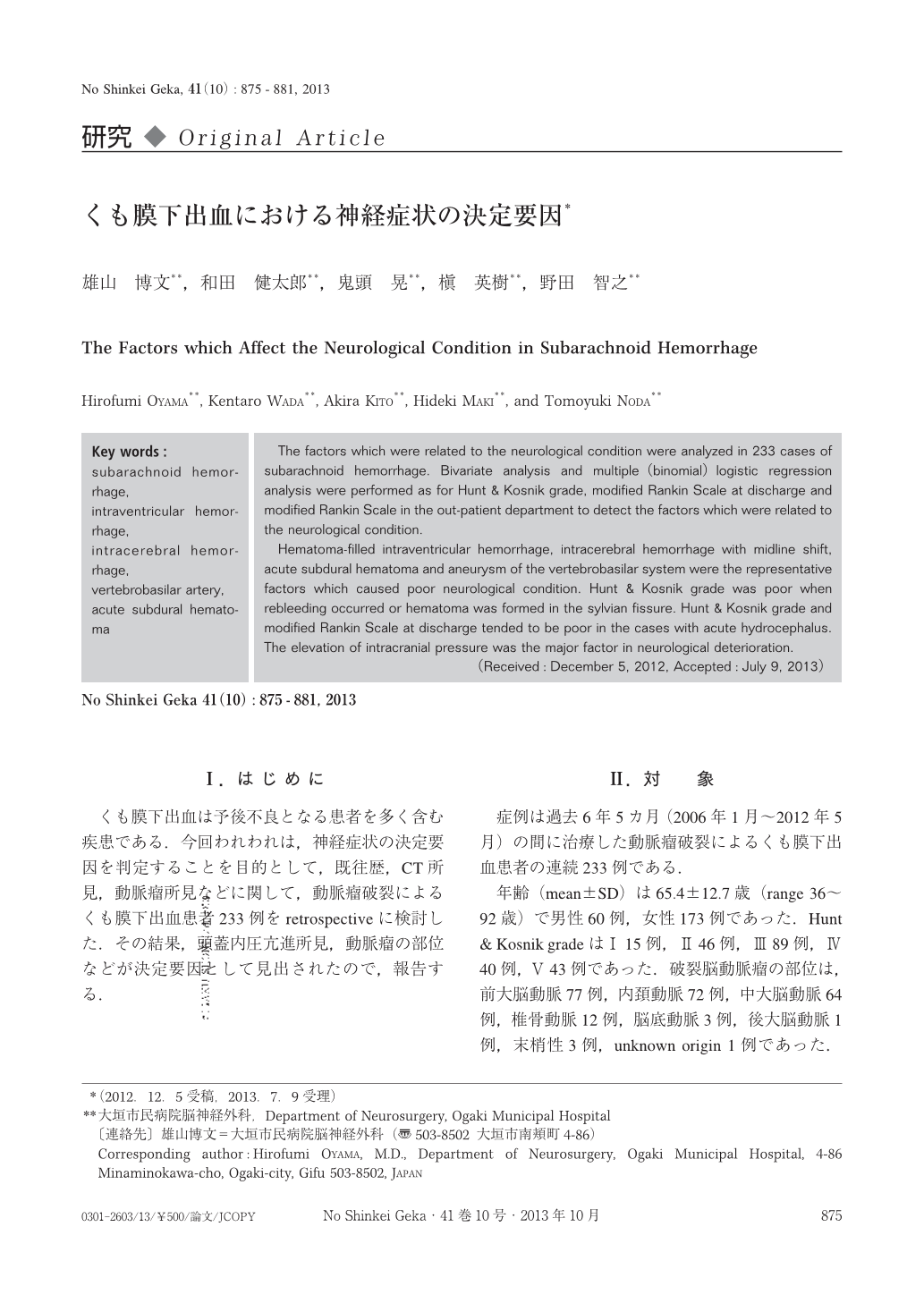
くも膜下出血は予後不良となる患者を多く含む疾患である.今回われわれは,神経症状の決定要因を判定することを目的として,既往歴,CT所見,動脈瘤所見などに関して,動脈瘤破裂によるくも膜下出血患者233例をretrospectiveに検討した.その結果,頭蓋内圧亢進所見,動脈瘤の部位などが決定要因として見出されたので,報告する.
The factors which were related to the neurological condition were analyzed in 233 cases of subarachnoid hemorrhage. Bivariate analysis and multiple(binomial)logistic regression analysis were performed as for Hunt & Kosnik grade, modified Rankin Scale at discharge and modified Rankin Scale in the out-patient department to detect the factors which were related to the neurological condition.
Hematoma-filled intraventricular hemorrhage, intracerebral hemorrhage with midline shift, acute subdural hematoma and aneurysm of the vertebrobasilar system were the representative factors which caused poor neurological condition. Hunt & Kosnik grade was poor when rebleeding occurred or hematoma was formed in the sylvian fissure. Hunt & Kosnik grade and modified Rankin Scale at discharge tended to be poor in the cases with acute hydrocephalus. The elevation of intracranial pressure was the major factor in neurological deterioration.
Copyright © 2013, Igaku-Shoin Ltd. All rights reserved.