Japanese
English
- 有料閲覧
PPV購入案内
1,320円 (1,200円+税10%) こちらは、607ページから610ページの文献です。購入には医書.jp本会員登録が必要です。
会員登録完了後に改めて上記「購入サイトへ」を選択してください。
または「購入サイトへ」選択後に「購入ログイン」、「新規会員登録」の順に進んでください。
会員登録について詳しくはをご確認ください。
- Abstract 文献概要
- 1ページ目 Look Inside
- 参考文献 Reference
Ⅰ.はじめに
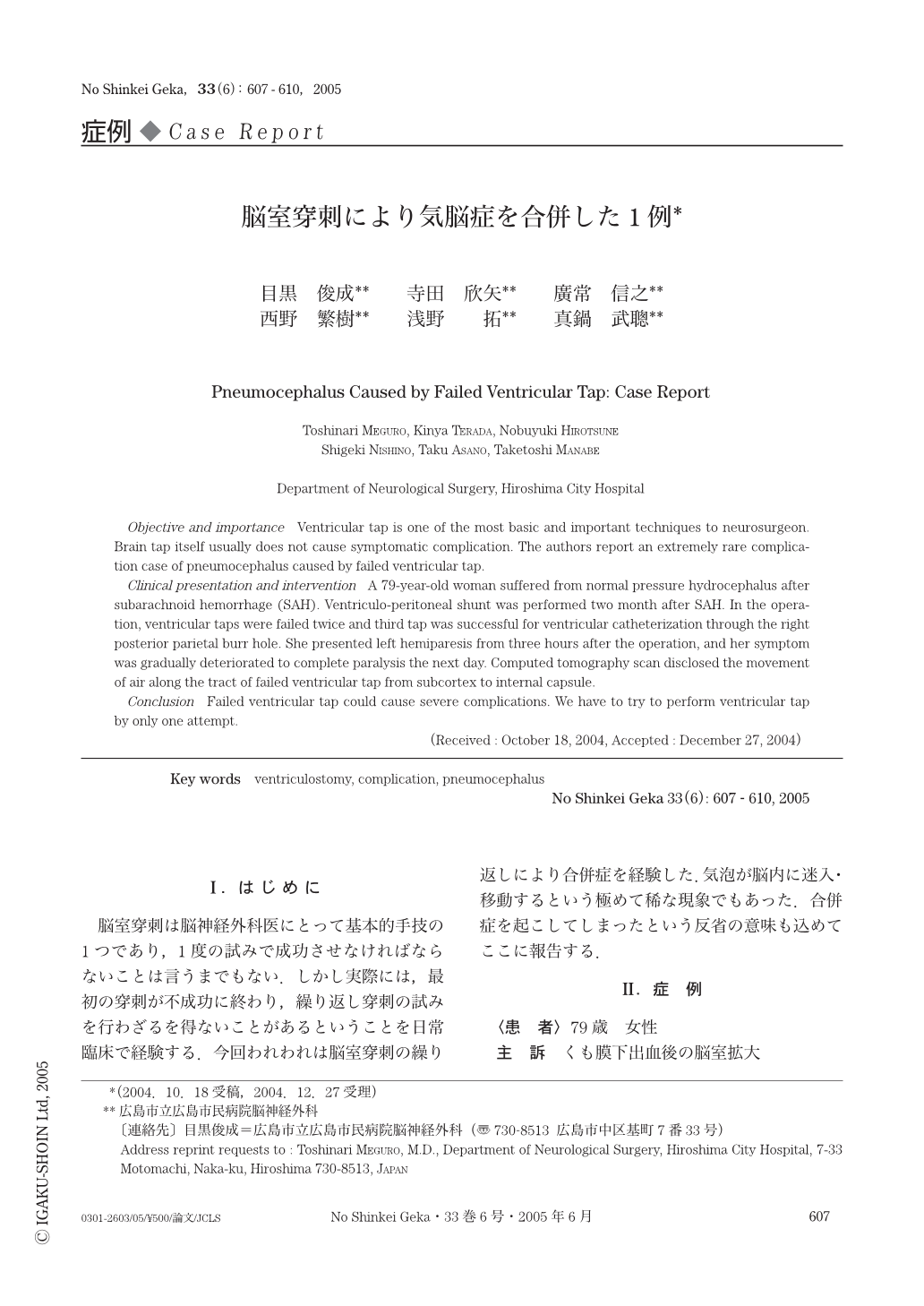
脳室穿刺は脳神経外科医にとって基本的手技の1つであり,1度の試みで成功させなければならないことは言うまでもない.しかし実際には,最初の穿刺が不成功に終わり,繰り返し穿刺の試みを行わざるを得ないことがあるということを日常臨床で経験する.今回われわれは脳室穿刺の繰り返しにより合併症を経験した.気泡が脳内に迷入・移動するという極めて稀な現象でもあった.合併症を起こしてしまったという反省の意味も込めてここに報告する.
Objective and importance Ventricular tap is one of the most basic and important techniques to neurosurgeon. Brain tap itself usually does not cause symptomatic complication. The authors report an extremely rare complication case of pneumocephalus caused by failed ventricular tap.
Clinical presentation and intervention A 79-year-old woman suffered from normal pressure hydrocephalus after subarachnoid hemorrhage (SAH). Ventriculo-peritoneal shunt was performed two month after SAH. In the operation, ventricular taps were failed twice and third tap was successful for ventricular catheterization through the right posterior parietal burr hole. She presented left hemiparesis from three hours after the operation, and her symptom was gradually deteriorated to complete paralysis the next day. Computed tomography scan disclosed the movement of air along the tract of failed ventricular tap from subcortex to internal capsule.
Conclusion Failed ventricular tap could cause severe complications. We have to try to perform ventricular tap by only one attempt.
Copyright © 2005, Igaku-Shoin Ltd. All rights reserved.