Japanese
English
- 有料閲覧
PPV購入案内
1,320円 (1,200円+税10%) こちらは、648ページから657ページの文献です。購入には医書.jp本会員登録が必要です。
会員登録完了後に改めて上記「購入サイトへ」を選択してください。
または「購入サイトへ」選択後に「購入ログイン」、「新規会員登録」の順に進んでください。
会員登録について詳しくはをご確認ください。
- Abstract 文献概要
- 1ページ目 Look Inside
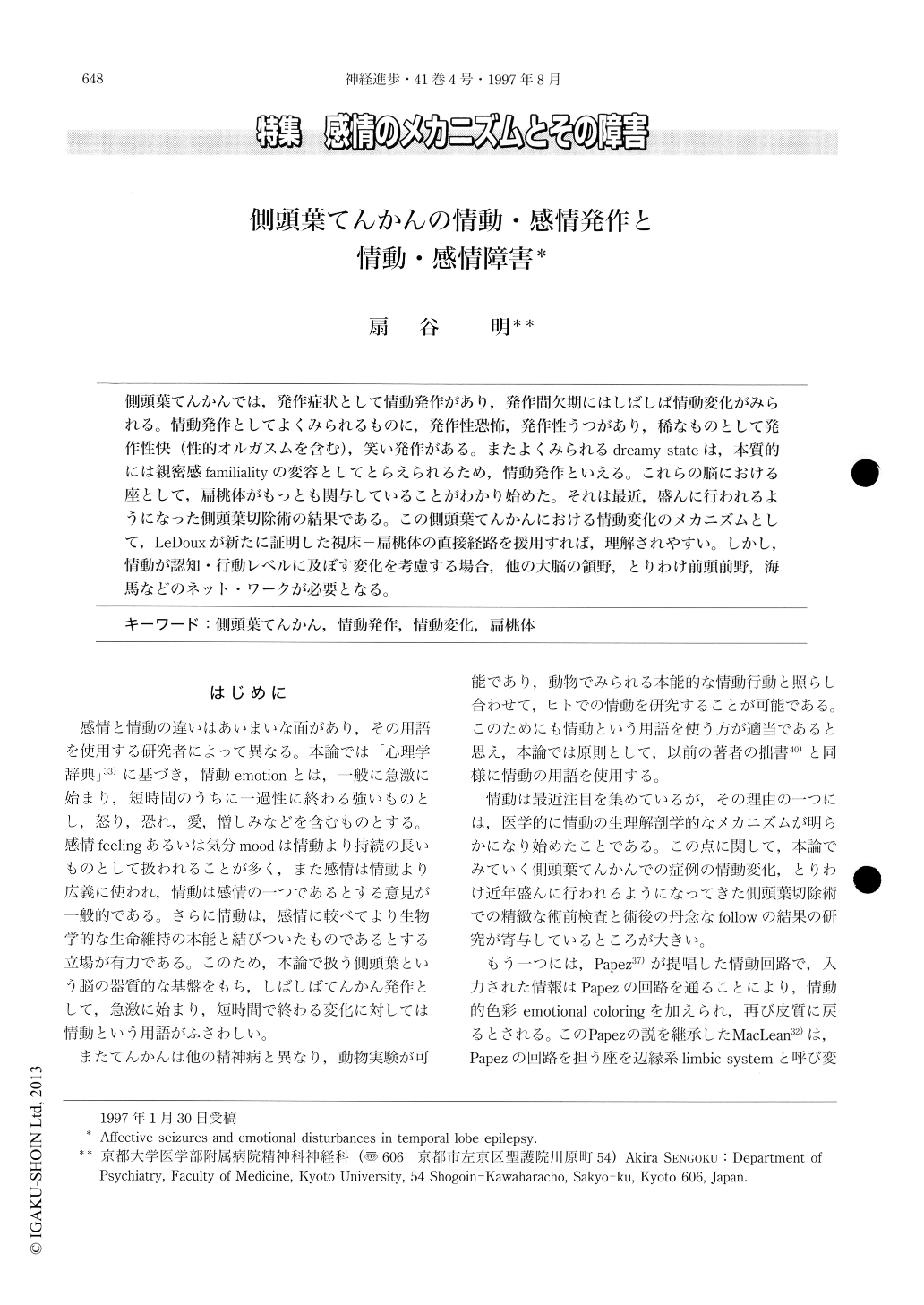
側頭葉てんかんでは,発作症状として情動発作があり,発作間欠期にはしばしば情動変化がみられる。情動発作としてよくみられるものに,発作性恐怖,発作性うつがあり,稀なものとして発作性快(性的オルガスムを含む),笑い発作がある。またよくみられるdreamy stateは,本質的には親密感familialityの変容としてとらえられるため,情動発作といえる。これらの脳における座として,扁桃体がもっとも関与していることがわかり始めた。それは最近,盛んに行われるようになった側頭葉切除術の結果である。この側頭葉てんかんにおける情動変化のメカニズムとして,LeDouxが新たに証明した視床―扁桃体の直接経路を援用すれば,理解されやすい。しかし,情動が認知・行動レベルに及ぼす変化を考慮する場合,他の大脳の領野,とりわけ前頭前野,海馬などのネット・ワークが必要となる。
In the patients with temporal lobe epilepsy, the affective seizures were manifested often as the ictal phenomena, and the emotional disturbances as the interictal symptoms. Ictal fear and ictal depression appeared often, and ictal pleasure, including sexual orgasm and laughing seizures (gelastic seizures) occurred rarely. Dreamy states, which were first defined by J. H. Jackson and were demonstrated mostly as the aural symptom of temporal lobeepilepsy are essentially as the alteration of familiality, that is, the emotional change.
Copyright © 1997, Igaku-Shoin Ltd. All rights reserved.