Japanese
English
- 有料閲覧
PPV購入案内
1,320円 (1,200円+税10%) こちらは、527ページから539ページの文献です。購入には医書.jp本会員登録が必要です。
会員登録完了後に改めて上記「購入サイトへ」を選択してください。
または「購入サイトへ」選択後に「購入ログイン」、「新規会員登録」の順に進んでください。
会員登録について詳しくはをご確認ください。
- Abstract 文献概要
- 1ページ目 Look Inside
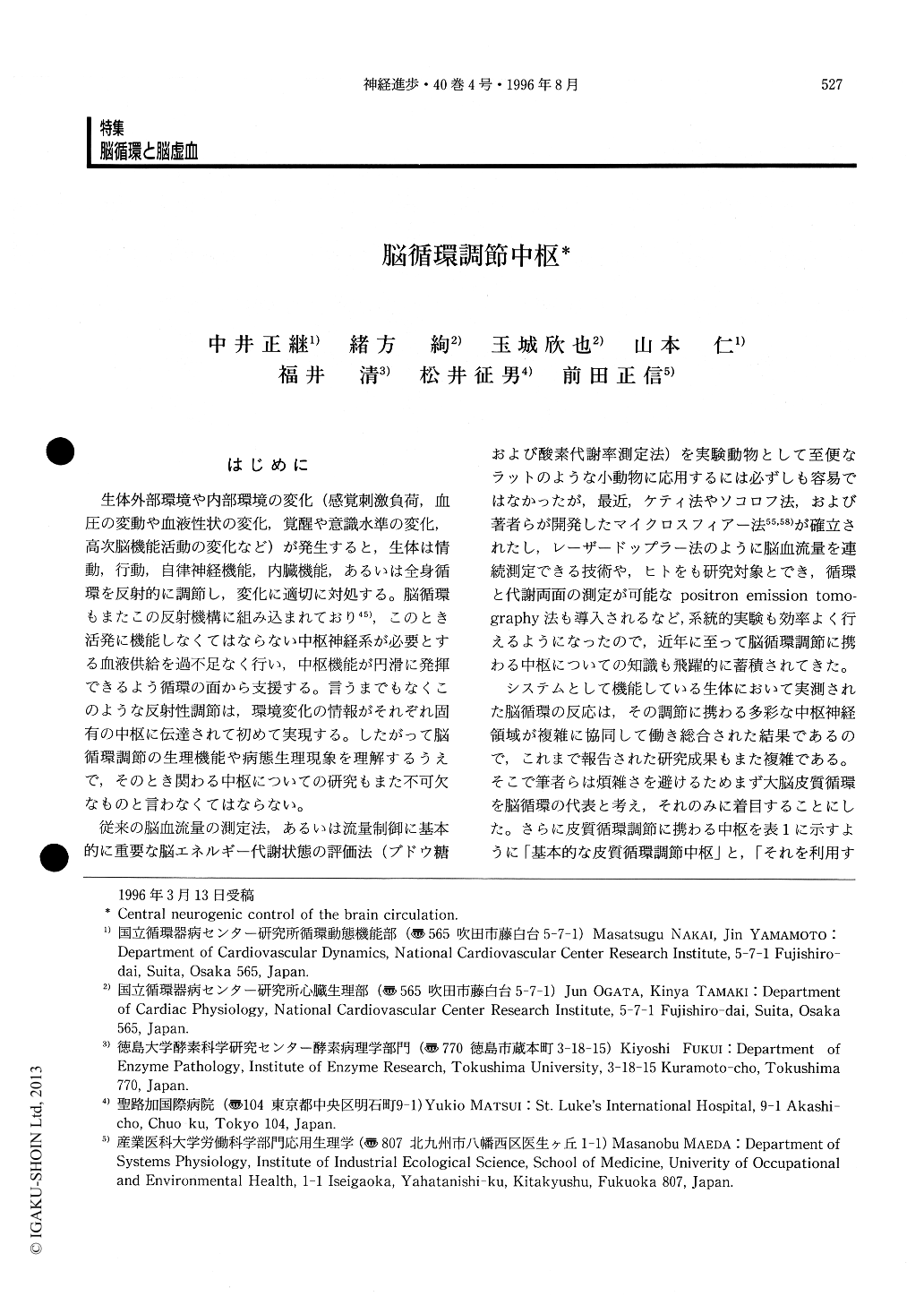
はじめに
生体外部環境や内部環境の変化(感覚刺激負荷,血圧の変動や血液性状の変化,覚醒や意識水準の変化,高次脳機能活動の変化など)が発生すると,生体は情動,行動,自律神経機能,内臓機能,あるいは全身循環を反射的に調節し,変化に適切に対処する。脳循環もまたこの反射機構に組み込まれており45),このとき活発に機能しなくてはならない中枢神経系が必要とする血液供給を過不足なく行い,中枢機能が円滑に発揮できるよう循環の面から支援する。言うまでもなくこのような反射性調節は,環境変化の情報がそれぞれ固有の中枢に伝達されて初めて実現する。したがって脳循環調節の生理機能や病態生理現象を理解するうえで,そのとき関わる中枢についての研究もまた不可欠なものと言わなくてはならない。
As opposed to the classic concept of tight coupling of cerebral blood flow (CBF) to cerebral energy metabolism, several lines of evidence indicate that in response to an innocuous somatosensory stimulus, the CBF and cerebral glucose metabolism can be enhanced to the same extent as each other, without a comparable change in cerebral oxidative metabolism. In this context, we attempted to reconcile the divergent experimental results so far demonstrated in the literature.
Copyright © 1996, Igaku-Shoin Ltd. All rights reserved.