Japanese
English
- 有料閲覧
PPV購入案内
1,320円 (1,200円+税10%) こちらは、1000ページから1006ページの文献です。購入には医書.jp本会員登録が必要です。
会員登録完了後に改めて上記「購入サイトへ」を選択してください。
または「購入サイトへ」選択後に「購入ログイン」、「新規会員登録」の順に進んでください。
会員登録について詳しくはをご確認ください。
- Abstract 文献概要
- 1ページ目 Look Inside
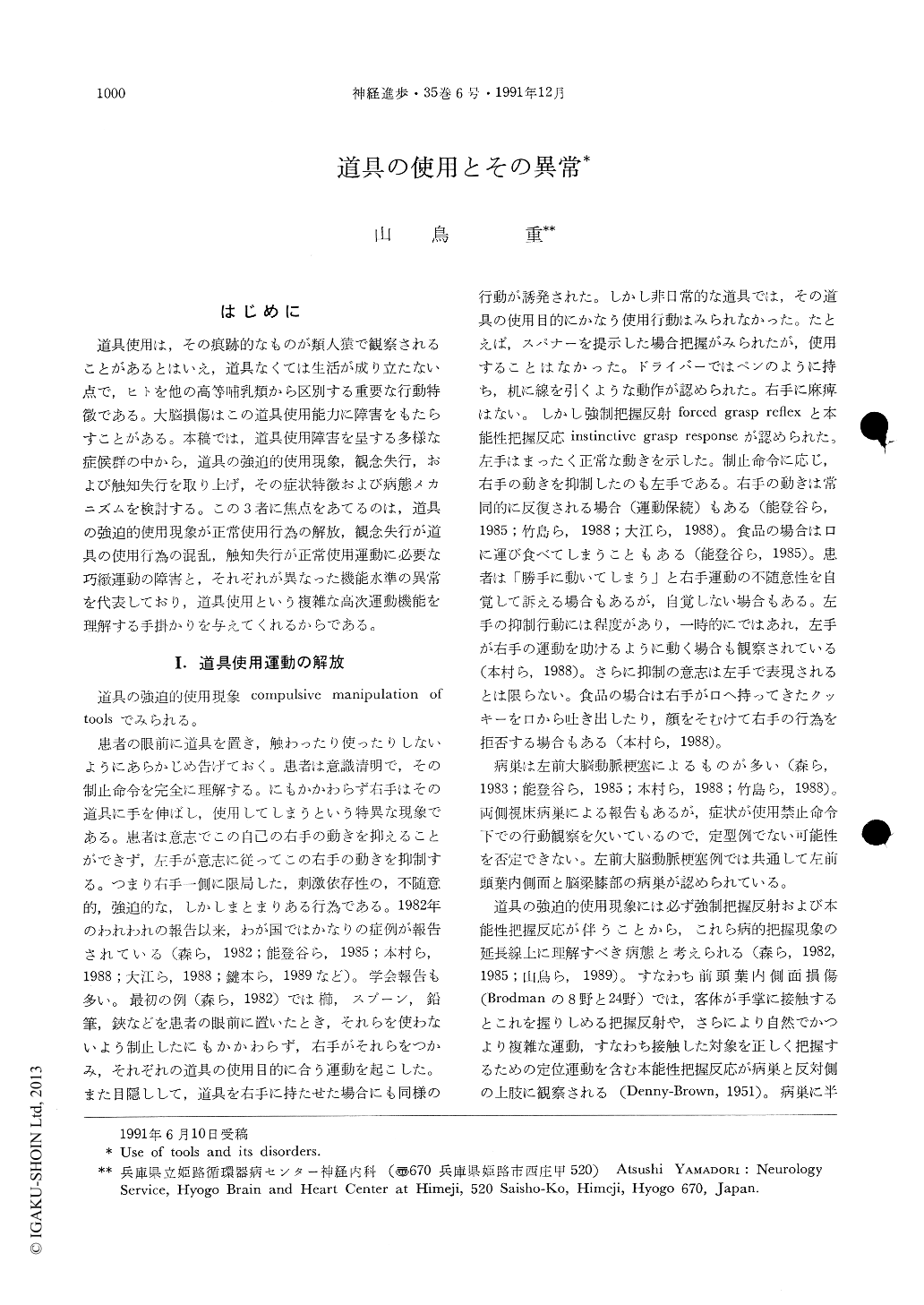
はじめに
道具使用は,その痕跡的なものが類人猿で観察されることがあるとはいえ,道具なくては生活が成り立たない点で,ヒトを他の高等哺乳類から区別する重要な行動特徴である。大脳損傷はこの道具使用能力に障害をもたらすことがある。本稿では,道具使用障害を呈する多様な症候群の中から,道具の強迫的使用現象,観念失行,および触知失行を取り上げ,その症状特微および病態メカニズムを検討する。この3者に焦点をあてるのは,道具の強迫的使用現象が正常使用行為の解放,観念失行が道具の使用行為の混乱,触知失行が正常使用運動に必要な巧緻運動の障害と,それぞれが異なった機能水準の異常を代表しており,道具使用という複雑な高次運動機能を理解する手掛かりを与えてくれるからである。
Realization of use of tools involves complex neurological processes and represents one of the unique behavioral capacities of human being. Analysis of the mode of breakdown of this tool use capability in brain damaged patients presents important clues about the organization of higher nervous system subserving tool use activity. In this article three clinical syndromes representing three different functional levels of tool use were described.
Foreced manipulation of tools (Mori and Yamadori, 1982) is a syndrome characterized by invol-untary use of a tool by the right hand.
Copyright © 1991, Igaku-Shoin Ltd. All rights reserved.