Japanese
English
- 有料閲覧
PPV購入案内
1,320円 (1,200円+税10%) こちらは、837ページから842ページの文献です。購入には医書.jp本会員登録が必要です。
会員登録完了後に改めて上記「購入サイトへ」を選択してください。
または「購入サイトへ」選択後に「購入ログイン」、「新規会員登録」の順に進んでください。
会員登録について詳しくはをご確認ください。
- Abstract 文献概要
- 1ページ目 Look Inside
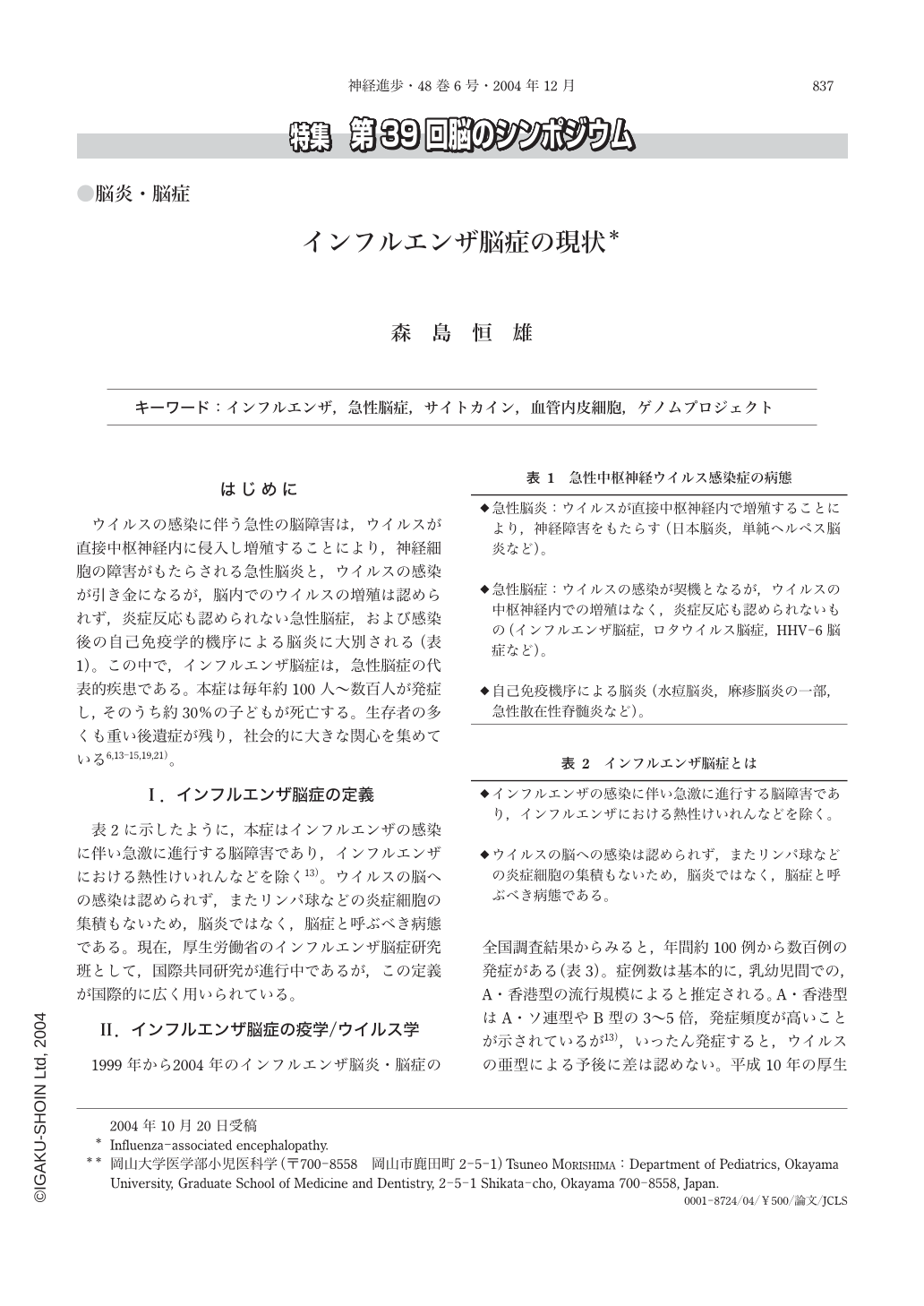
はじめに
ウイルスの感染に伴う急性の脳障害は,ウイルスが直接中枢神経内に侵入し増殖することにより,神経細胞の障害がもたらされる急性脳炎と,ウイルスの感染が引き金になるが,脳内でのウイルスの増殖は認められず,炎症反応も認められない急性脳症,および感染後の自己免疫学的機序による脳炎に大別される(表1)。この中で,インフルエンザ脳症は,急性脳症の代表的疾患である。本症は毎年約100人~数百人が発症し,そのうち約30%の子どもが死亡する。生存者の多くも重い後遺症が残り,社会的に大きな関心を集めている6,13-15,19,21)。
Recently, the number of reports of encephalitis/encephalopathy associated with influenza has increased in Japan. The abrupt onset of seizure and coma within a few days after development of high-grade fever is a prominent indicator of CNS involvement during influenza infection. Case definition of the disease is based on altered or loss of consciousness associated with influenza. Most of them are younger than 6 year old, and the mortality was 30%. Elevation of pro-inflammatory cytokines(TNF-a and IL-6)and the damage of vascular endothelial cells have been demonstrated. Recent studies have shown that apoptosis rapidly occur in nerve tissues and in liver. Influenza virus was undetectable in the brain tissues. The genome project using DNA tips and SNPs has been conducted to find genetic variations among children with influenza-associated encephalopathy.
Copyright © 2004, Igaku-Shoin Ltd. All rights reserved.