Japanese
English
- 有料閲覧
PPV購入案内
1,320円 (1,200円+税10%) こちらは、1107ページから1113ページの文献です。購入には医書.jp本会員登録が必要です。
会員登録完了後に改めて上記「購入サイトへ」を選択してください。
または「購入サイトへ」選択後に「購入ログイン」、「新規会員登録」の順に進んでください。
会員登録について詳しくはをご確認ください。
- Abstract 文献概要
- 1ページ目 Look Inside
- 参考文献 Reference
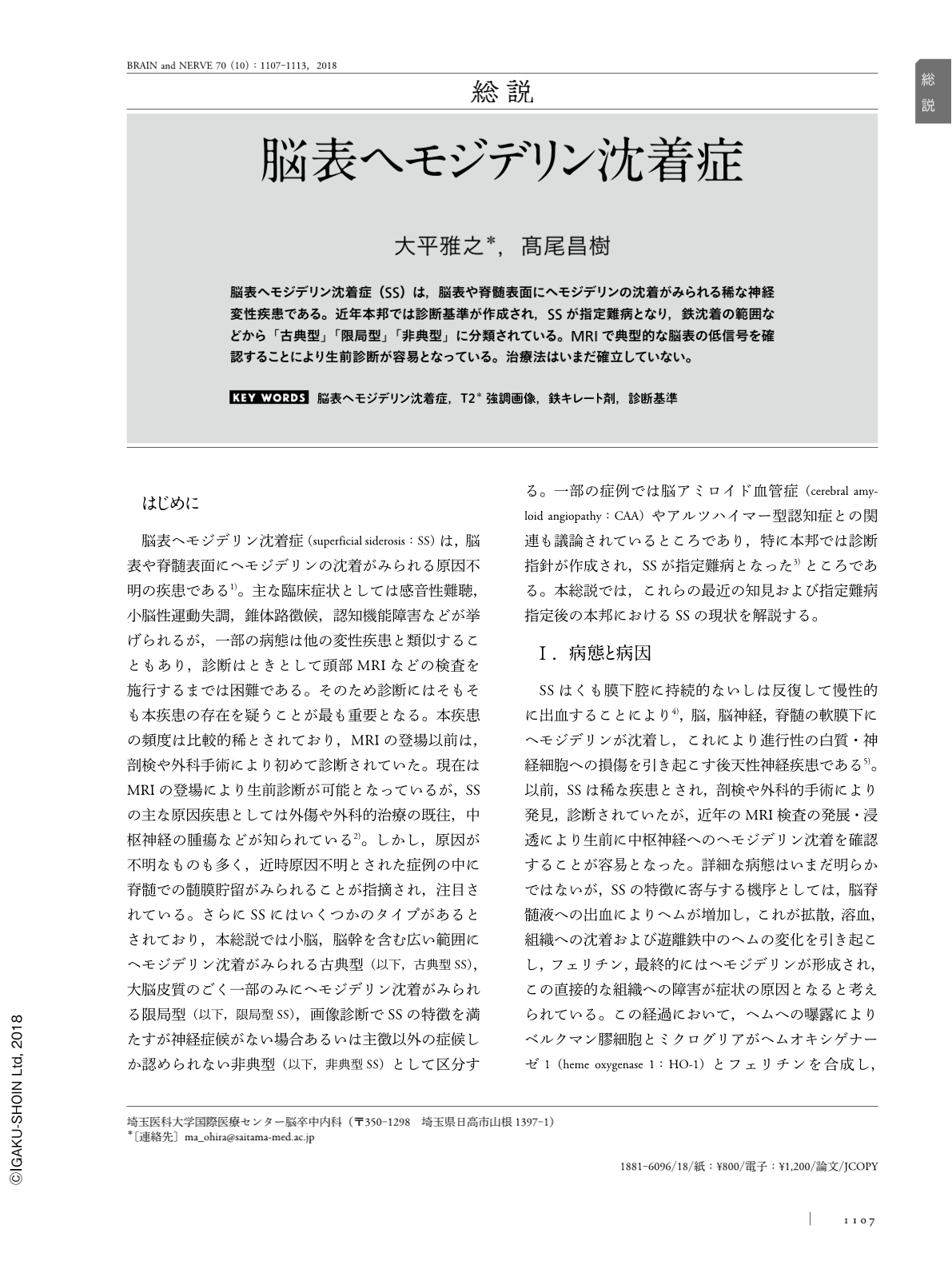
脳表ヘモジデリン沈着症(SS)は,脳表や脊髄表面にヘモジデリンの沈着がみられる稀な神経変性疾患である。近年本邦では診断基準が作成され,SSが指定難病となり,鉄沈着の範囲などから「古典型」「限局型」「非典型」に分類されている。MRIで典型的な脳表の低信号を確認することにより生前診断が容易となっている。治療法はいまだ確立していない。
Abstract
Superficial siderosis (SS) is a rare, neurodegenerative disease that results from toxic accumulation of hemosiderin on the surface of the brain and spinal cord. The Japanese guidelines for diagnosis and classification of SS have been classified into three categories, according to the distribution of iron deposition and the clinical symptoms, as follows: “classical” type, “localized” type and “atypical” type. In “classical” type SS, patients typically present with slowly progressive and irreversible cerebellar ataxia, sensorineural hearing loss, and/or myelopathy, due to involvement of the acoustic nerve, cerebellum, and spinal cord. T2-weighted imaging (WI) or T2* WI demonstrates characteristic linear low intensity signals along the surface of the brain and spinal cord. However, the natural history and clinical evolution of SS are poorly understood. Furthermore identification and resolution of the bleeding source do not elicit prompt clinical recovery or radiological reversal of SS in most cases. Pharmacological treatments for SS primarily include strategies that produce iron chelation. For example, deferiprone is the only treatment that crosses the blood-brain barrier and binds hemosiderin in the central nervous system.
Copyright © 2018, Igaku-Shoin Ltd. All rights reserved.