Japanese
English
- 有料閲覧
PPV購入案内
1,320円 (1,200円+税10%) こちらは、1459ページから1469ページの文献です。購入には医書.jp本会員登録が必要です。
会員登録完了後に改めて上記「購入サイトへ」を選択してください。
または「購入サイトへ」選択後に「購入ログイン」、「新規会員登録」の順に進んでください。
会員登録について詳しくはをご確認ください。
- Abstract 文献概要
- 1ページ目 Look Inside
- 参考文献 Reference
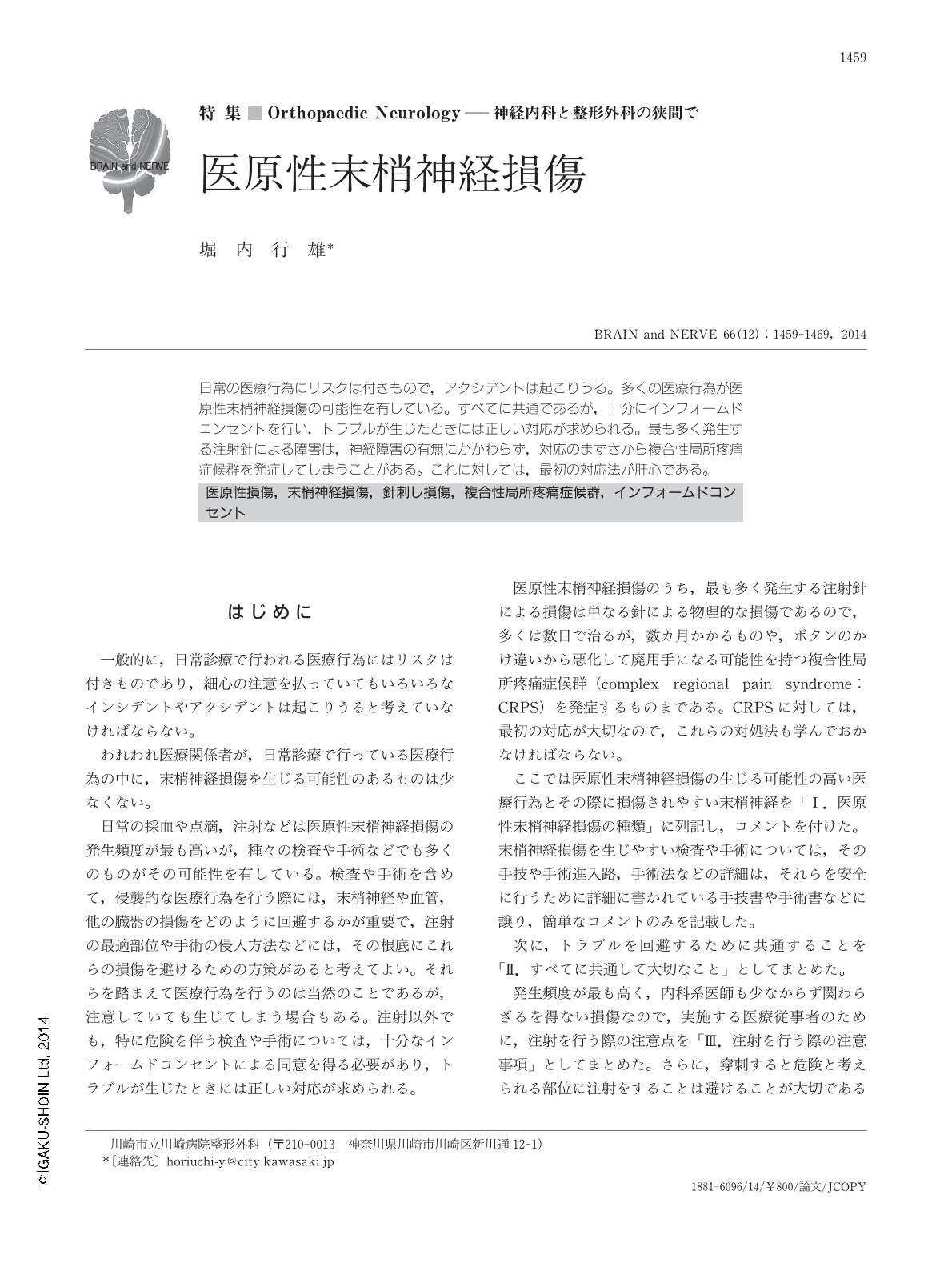
日常の医療行為にリスクは付きもので,アクシデントは起こりうる。多くの医療行為が医原性末梢神経損傷の可能性を有している。すべてに共通であるが,十分にインフォームドコンセントを行い,トラブルが生じたときには正しい対応が求められる。最も多く発生する注射針による障害は,神経障害の有無にかかわらず,対応のまずさから複合性局所疼痛症候群を発症してしまうことがある。これに対しては,最初の対応法が肝心である。
Abstract
There are many risks of iatrogenic peripheral-nerve injuries during routine medical procedures. These injuries may occur during venipuncture for drawing blood, endoscopic treatments, punctures of joints or ganglions, various kinds of surgical procedures, and in numerous other situations. It is important to create a "Manual" of such accidents or incidents. In case an accident occurs, both the medical staff and the injured patient should receive adequate support to avoid any anxiety. The doctor must examine the person's injury carefully, and must judge its severity as soon as possible. The doctor must also offer the patient a prompt explanation about their injury and its proper care or treatment. This explanation must be easy to understand. This step can reduce patient anxiety and even prevent the early stages of complex regional pain syndrome (CRPS).
One of my therapeutic strategies for treating early-stage CRPS is to use prednisolone for a short period for the treatment of strong pain and serious edema; the other approach is to do administer a warm-cold alternating bath with range-of-motion (ROM) exercise.
Creation of manuals and education of staff to quickly respond to such situations is extremely essential.
Copyright © 2014, Igaku-Shoin Ltd. All rights reserved.