Japanese
English
- 有料閲覧
PPV購入案内
1,320円 (1,200円+税10%) こちらは、837ページから841ページの文献です。購入には医書.jp本会員登録が必要です。
会員登録完了後に改めて上記「購入サイトへ」を選択してください。
または「購入サイトへ」選択後に「購入ログイン」、「新規会員登録」の順に進んでください。
会員登録について詳しくはをご確認ください。
- Abstract 文献概要
- 1ページ目 Look Inside
- 参考文献 Reference
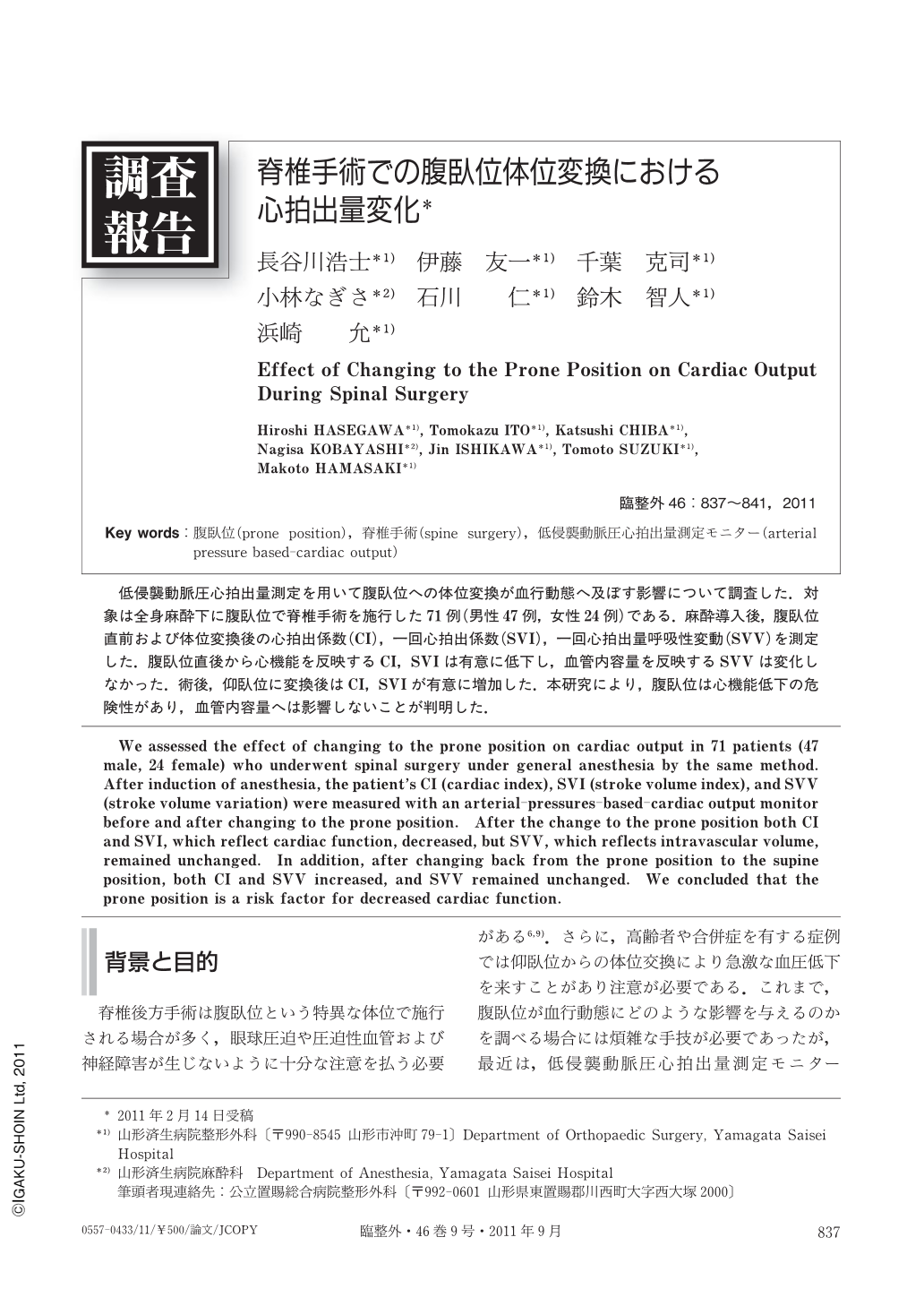
低侵襲動脈圧心拍出量測定を用いて腹臥位への体位変換が血行動態へ及ぼす影響について調査した.対象は全身麻酔下に腹臥位で脊椎手術を施行した71例(男性47例,女性24例)である.麻酔導入後,腹臥位直前および体位変換後の心拍出係数(CI),一回心拍出係数(SVI),一回心拍出量呼吸性変動(SVV)を測定した.腹臥位直後から心機能を反映するCI,SVIは有意に低下し,血管内容量を反映するSVVは変化しなかった.術後,仰臥位に変換後はCI,SVIが有意に増加した.本研究により,腹臥位は心機能低下の危険性があり,血管内容量へは影響しないことが判明した.
We assessed the effect of changing to the prone position on cardiac output in 71 patients (47 male, 24 female) who underwent spinal surgery under general anesthesia by the same method. After induction of anesthesia, the patient's CI (cardiac index), SVI (stroke volume index), and SVV (stroke volume variation) were measured with an arterial-pressures-based-cardiac output monitor before and after changing to the prone position. After the change to the prone position both CI and SVI, which reflect cardiac function, decreased, but SVV, which reflects intravascular volume, remained unchanged. In addition, after changing back from the prone position to the supine position, both CI and SVV increased, and SVV remained unchanged. We concluded that the prone position is a risk factor for decreased cardiac function.
Copyright © 2011, Igaku-Shoin Ltd. All rights reserved.