Japanese
English
- 有料閲覧
PPV購入案内
1,320円 (1,200円+税10%) こちらは、43ページから48ページの文献です。購入には医書.jp本会員登録が必要です。
会員登録完了後に改めて上記「購入サイトへ」を選択してください。
または「購入サイトへ」選択後に「購入ログイン」、「新規会員登録」の順に進んでください。
会員登録について詳しくはをご確認ください。
- Abstract 文献概要
- 1ページ目 Look Inside
- 参考文献 Reference
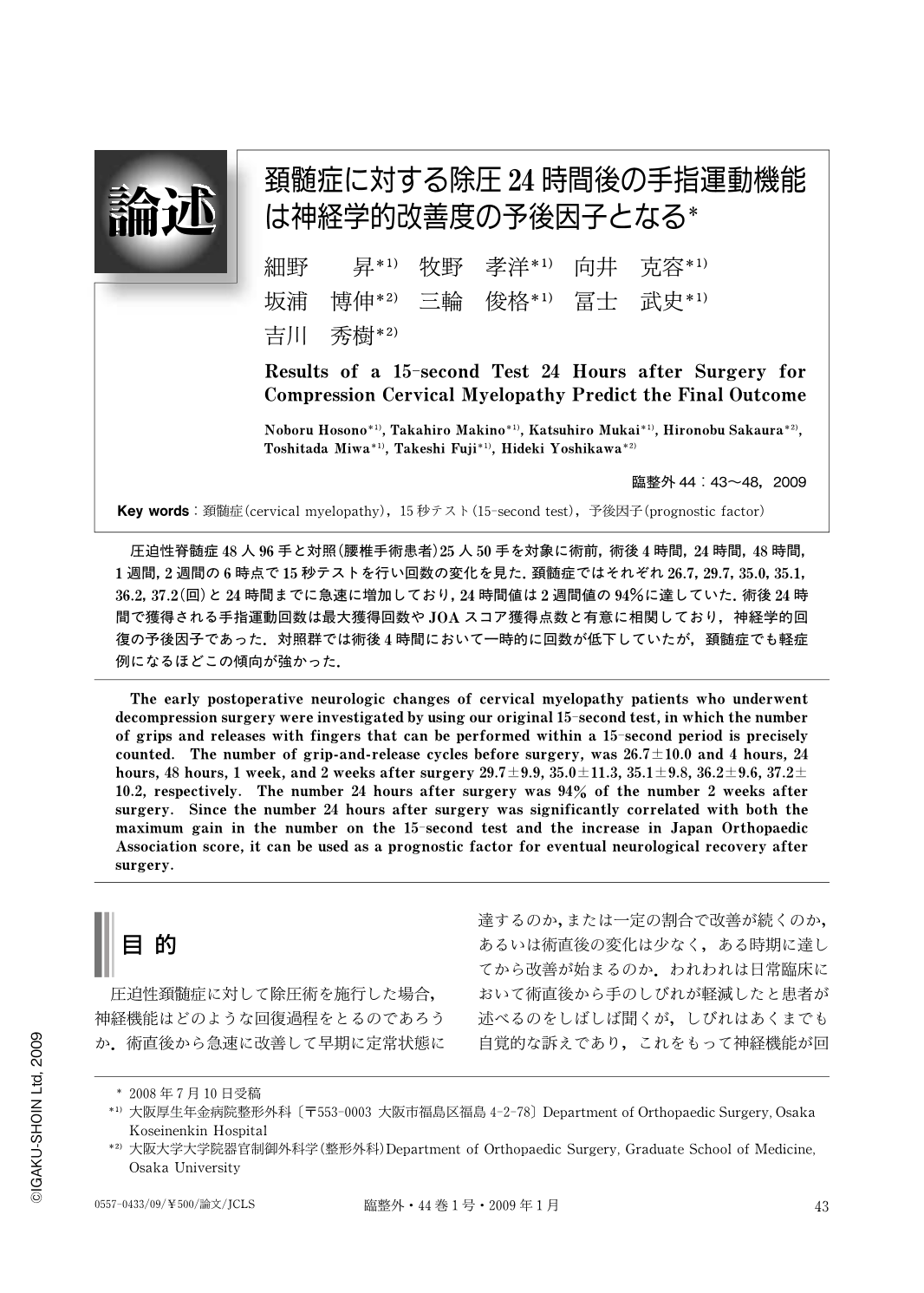
圧迫性脊髄症48人96手と対照(腰椎手術患者)25人50手を対象に術前,術後4時間,24時間,48時間,1週間,2週間の6時点で15秒テストを行い回数の変化を見た.頚髄症ではそれぞれ26.7,29.7,35.0,35.1,36.2,37.2(回)と24時間までに急速に増加しており,24時間値は2週間値の94%に達していた.術後24時間で獲得される手指運動回数は最大獲得回数やJOAスコア獲得点数と有意に相関しており,神経学的回復の予後因子であった.対照群では術後4時間において一時的に回数が低下していたが,頚髄症でも軽症例になるほどこの傾向が強かった.
The early postoperative neurologic changes of cervical myelopathy patients who underwent decompression surgery were investigated by using our original 15-second test, in which the number of grips and releases with fingers that can be performed within a 15-second period is precisely counted. The number of grip-and-release cycles before surgery, was 26.7±10.0 and 4 hours, 24 hours, 48 hours, 1 week, and 2 weeks after surgery 29.7±9.9, 35.0±11.3, 35.1±9.8, 36.2±9.6, 37.2±10.2, respectively. The number 24 hours after surgery was 94% of the number 2 weeks after surgery. Since the number 24 hours after surgery was significantly correlated with both the maximum gain in the number on the 15-second test and the increase in Japan Orthopaedic Association score, it can be used as a prognostic factor for eventual neurological recovery after surgery.
Copyright © 2009, Igaku-Shoin Ltd. All rights reserved.