Japanese
English
- 有料閲覧
PPV購入案内
1,320円 (1,200円+税10%) こちらは、1211ページから1218ページの文献です。購入には医書.jp本会員登録が必要です。
会員登録完了後に改めて上記「購入サイトへ」を選択してください。
または「購入サイトへ」選択後に「購入ログイン」、「新規会員登録」の順に進んでください。
会員登録について詳しくはをご確認ください。
- Abstract 文献概要
- 1ページ目 Look Inside
- 参考文献 Reference
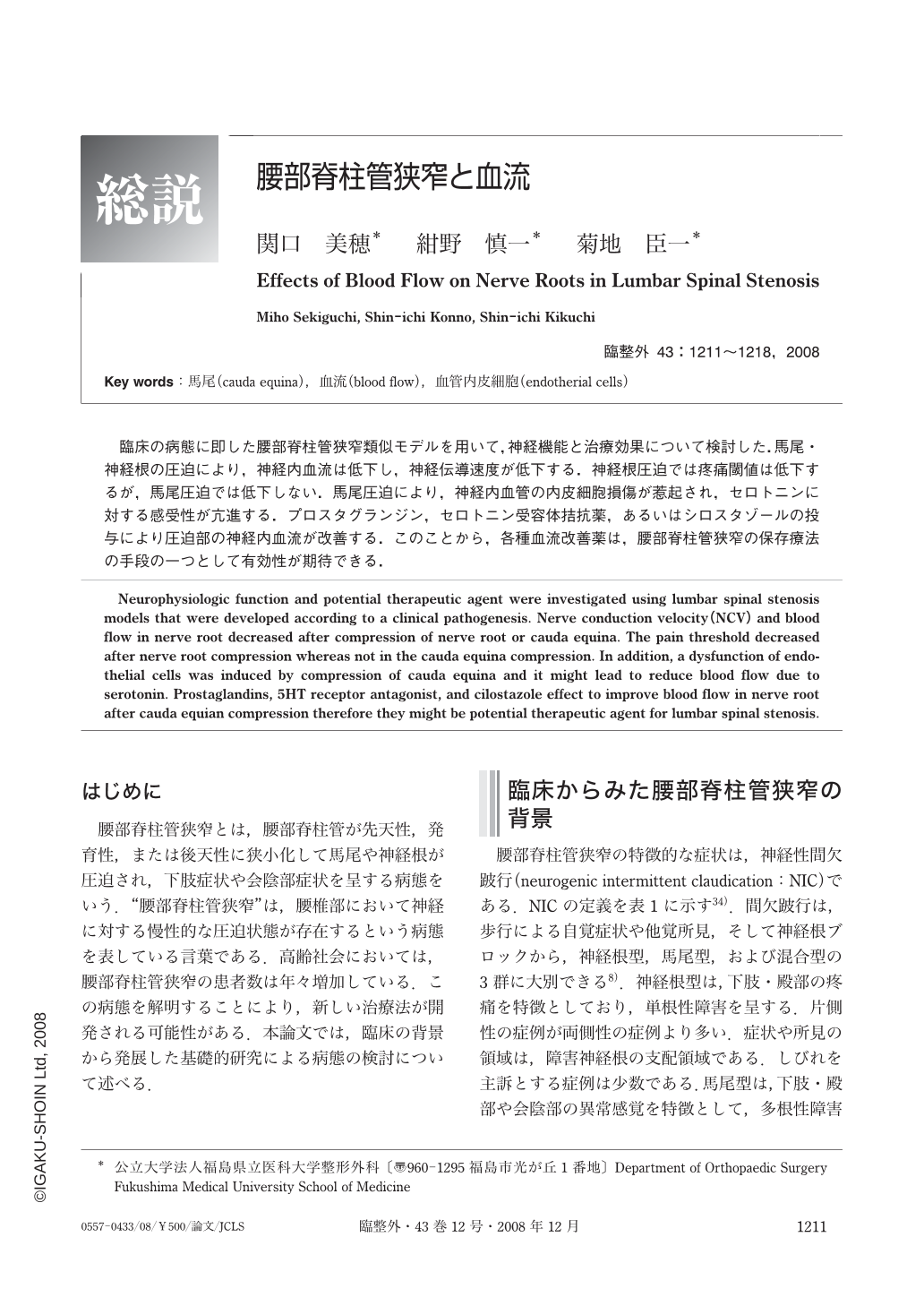
臨床の病態に即した腰部脊柱管狭窄類似モデルを用いて,神経機能と治療効果について検討した.馬尾・神経根の圧迫により,神経内血流は低下し,神経伝導速度が低下する.神経根圧迫では疼痛閾値は低下するが,馬尾圧迫では低下しない.馬尾圧迫により,神経内血管の内皮細胞損傷が惹起され,セロトニンに対する感受性が亢進する.プロスタグランジン,セロトニン受容体拮抗薬,あるいはシロスタゾールの投与により圧迫部の神経内血流が改善する.このことから,各種血流改善薬は,腰部脊柱管狭窄の保存療法の手段の一つとして有効性が期待できる.
Neurophysiologic function and potential therapeutic agent were investigated using lumbar spinal stenosis models that were developed according to a clinical pathogenesis. Nerve conduction velocity (NCV) and blood flow in nerve root decreased after compression of nerve root or cauda equina. The pain threshold decreased after nerve root compression whereas not in the cauda equina compression. In addition, a dysfunction of endothelial cells was induced by compression of cauda equina and it might lead to reduce blood flow due to serotonin. Prostaglandins, 5HT receptor antagonist, and cilostazole effect to improve blood flow in nerve root after cauda equian compression therefore they might be potential therapeutic agent for lumbar spinal stenosis.
Copyright © 2008, Igaku-Shoin Ltd. All rights reserved.