Japanese
English
- 有料閲覧
PPV購入案内
1,320円 (1,200円+税10%) こちらは、661ページから667ページの文献です。購入には医書.jp本会員登録が必要です。
会員登録完了後に改めて上記「購入サイトへ」を選択してください。
または「購入サイトへ」選択後に「購入ログイン」、「新規会員登録」の順に進んでください。
会員登録について詳しくはをご確認ください。
- Abstract 文献概要
- 1ページ目 Look Inside
- 参考文献 Reference
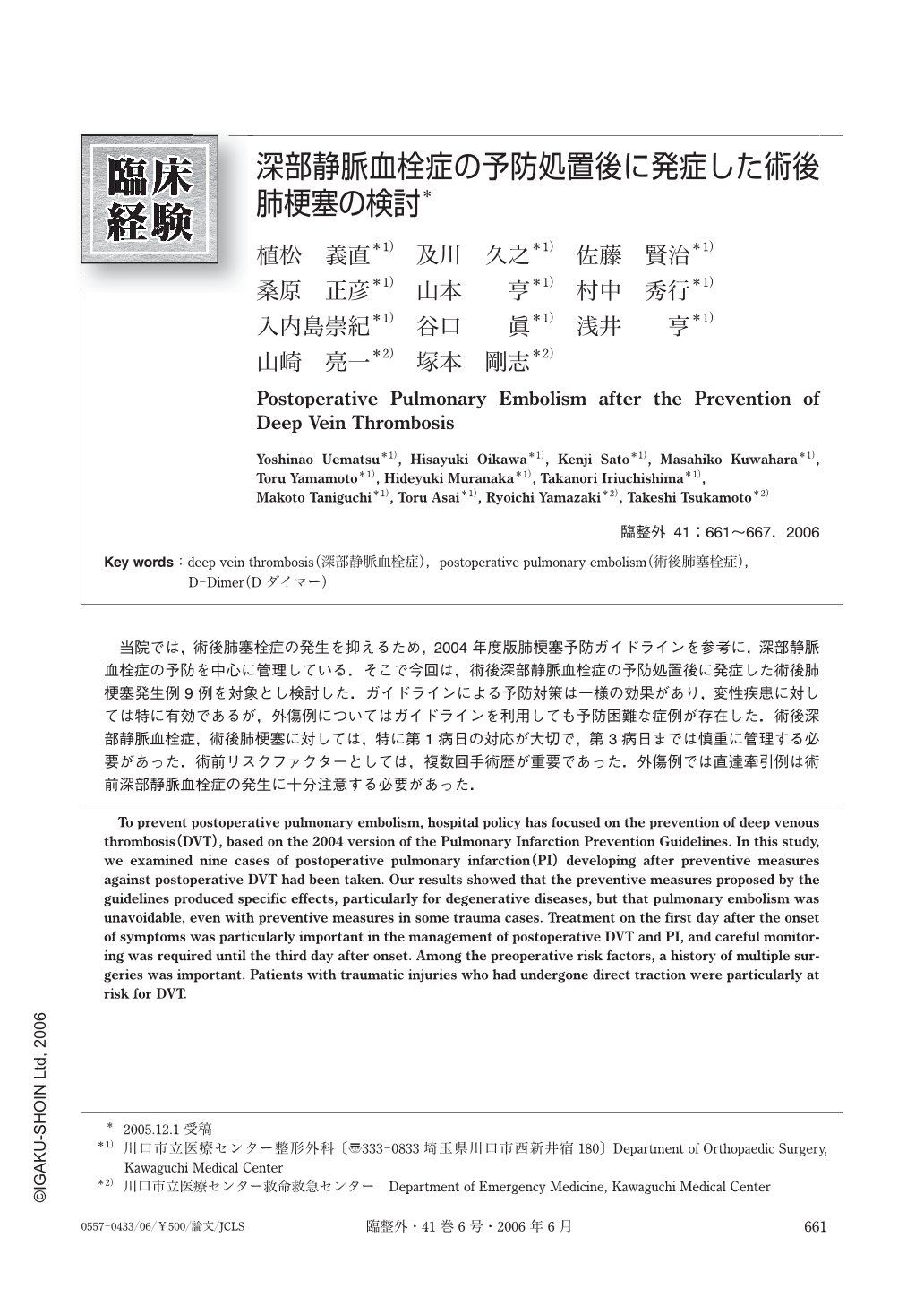
当院では,術後肺塞栓症の発生を抑えるため,2004年度版肺梗塞予防ガイドラインを参考に,深部静脈血栓症の予防を中心に管理している.そこで今回は,術後深部静脈血栓症の予防処置後に発症した術後肺梗塞発生例9例を対象とし検討した.ガイドラインによる予防対策は一様の効果があり,変性疾患に対しては特に有効であるが,外傷例についてはガイドラインを利用しても予防困難な症例が存在した.術後深部静脈血栓症,術後肺梗塞に対しては,特に第1病日の対応が大切で,第3病日までは慎重に管理する必要があった.術前リスクファクターとしては,複数回手術歴が重要であった.外傷例では直達牽引例は術前深部静脈血栓症の発生に十分注意する必要があった.
To prevent postoperative pulmonary embolism, hospital policy has focused on the prevention of deep venous thrombosis (DVT), based on the 2004 version of the Pulmonary Infarction Prevention Guidelines. In this study, we examined nine cases of postoperative pulmonary infarction (PI) developing after preventive measures against postoperative DVT had been taken. Our results showed that the preventive measures proposed by the guidelines produced specific effects, particularly for degenerative diseases, but that pulmonary embolism was unavoidable, even with preventive measures in some trauma cases. Treatment on the first day after the onset of symptoms was particularly important in the management of postoperative DVT and PI, and careful monitoring was required until the third day after onset. Among the preoperative risk factors, a history of multiple surgeries was important. Patients with traumatic injuries who had undergone direct traction were particularly at risk for DVT.
Copyright © 2006, Igaku-Shoin Ltd. All rights reserved.