Japanese
English
- 有料閲覧
PPV購入案内
1,320円 (1,200円+税10%) こちらは、415ページから427ページの文献です。購入には医書.jp本会員登録が必要です。
会員登録完了後に改めて上記「購入サイトへ」を選択してください。
または「購入サイトへ」選択後に「購入ログイン」、「新規会員登録」の順に進んでください。
会員登録について詳しくはをご確認ください。
- Abstract 文献概要
- 1ページ目 Look Inside
- サイト内被引用 Cited by
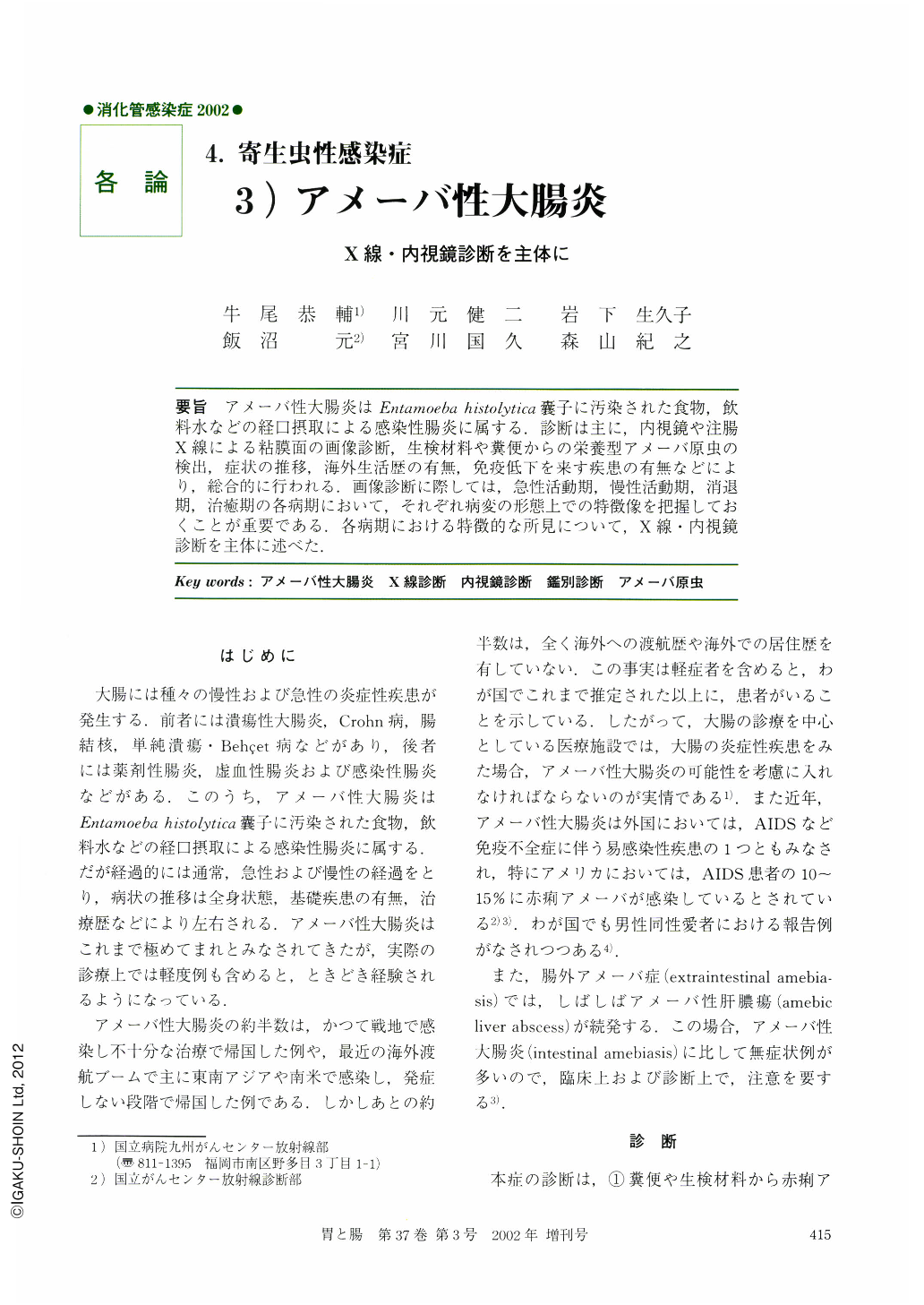
要旨 アメーバ性大腸炎はEntamoeba histolytica囊子に汚染された食物,飲料水などの経口摂取による感染性腸炎に属する.診断は主に,内視鏡や注腸X線による粘膜面の画像診断,生検材料や糞便からの栄養型アメーバ原虫の検出,症状の推移,海外生活歴の有無,免疫低下を来す疾患の有無などにより,総合的に行われる.画像診断に際しては,急性活動期,慢性活動期,消退期,治癒期の各病期において,それぞれ病変の形態上での特徴像を把握しておくことが重要である.各病期における特徴的な所見について,X線・内視鏡診断を主体に述べた.
Amebic colitis is caused by oral intake of food or water contaminated with cysts of Entamoeba histolytica and belongs to infectious colitis. Diagnosis of amebic colitis is usually made on the basis of many conditions as follows: pictorial findings of the mucosa by endoscopic examination and Barium enema, detection of the trophozoite of amoebae from biopsy specimen or stool, the time-course of symptoms, history of staying abroad, medical history of immunocompromized state and etc. The natural history of amoebic colitis is classified as follows: acute active phase, chronic active phase, regression phase and healing phase. It is important for pictorial diagnosis that characteristic findings of each phase should be understood. The characteristic findings of radiologic and endoscopic examination by the phase were reviewed on this article.
Copyright © 2002, Igaku-Shoin Ltd. All rights reserved.