Japanese
English
- 有料閲覧
PPV購入案内
1,320円 (1,200円+税10%) こちらは、720ページから724ページの文献です。購入には医書.jp本会員登録が必要です。
会員登録完了後に改めて上記「購入サイトへ」を選択してください。
または「購入サイトへ」選択後に「購入ログイン」、「新規会員登録」の順に進んでください。
会員登録について詳しくはをご確認ください。
- Abstract 文献概要
- 1ページ目 Look Inside
- 参考文献 Reference
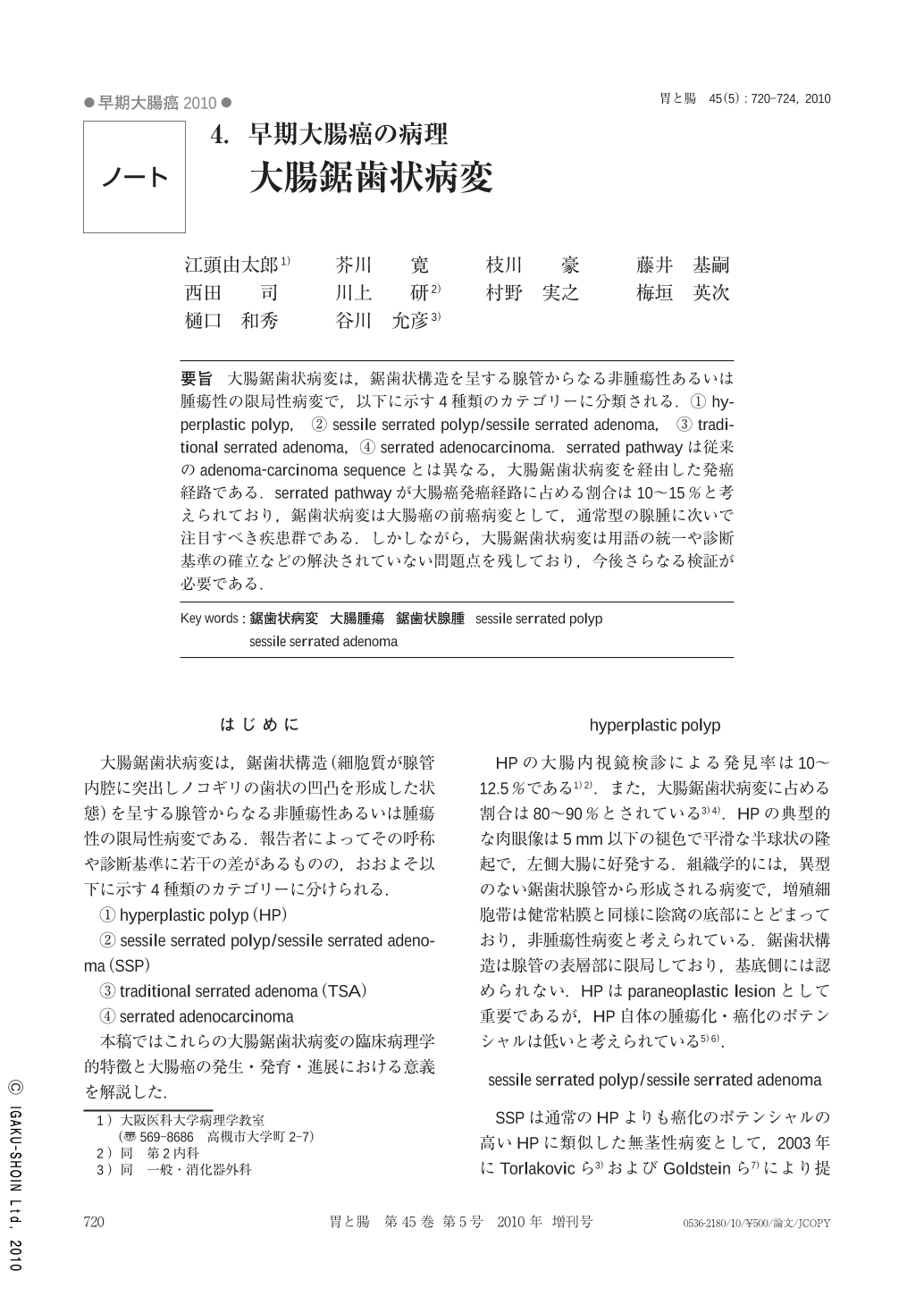
要旨 大腸鋸歯状病変は,鋸歯状構造を呈する腺管からなる非腫瘍性あるいは腫瘍性の限局性病変で,以下に示す4種類のカテゴリーに分類される.(1)hyperplastic polyp,(2)sessile serrated polyp/sessile serrated adenoma,(3)traditional serrated adenoma,(4)serrated adenocarcinoma.serrated pathwayは従来のadenoma-carcinoma sequenceとは異なる,大腸鋸歯状病変を経由した発癌経路である.serrated pathwayが大腸癌発癌経路に占める割合は10~15%と考えられており,鋸歯状病変は大腸癌の前癌病変として,通常型の腺腫に次いで注目すべき疾患群である.しかしながら,大腸鋸歯状病変は用語の統一や診断基準の確立などの解決されていない問題点を残しており,今後さらなる検証が必要である.
The term ‘Serrated lesions’ is used for a range of colorectal polyps with sawtooth-like infolding of the surface and crypt epithelium. Serrated lesions of the large intestine are classified into the following categories.(1)Hyperplastic polyp,(2)Sessile serrate polyp/Sessile serrate adenoma,(3)Traditional serrated adenomas,(4)Serrated adenocarcinoma. These serrated lesions constitute the so-called ‘serrated pathway’, which is distinct from the conventional adenoma-carcinoma pathway. It is thought that the serrated pathway in development of the colorectal cancer accounts for a ratio that we cannot ignore. However, there are many problems about colorectal serrated lesions that are not yet solved such as the unification of the understanding of the term or the establishment of the diagnostic criteria. Further study inspection including the molecular biologic method is necessary for future advancement of our knowledge.
Copyright © 2010, Igaku-Shoin Ltd. All rights reserved.