Japanese
English
- 有料閲覧
PPV購入案内
1,320円 (1,200円+税10%) こちらは、183ページから191ページの文献です。購入には医書.jp本会員登録が必要です。
会員登録完了後に改めて上記「購入サイトへ」を選択してください。
または「購入サイトへ」選択後に「購入ログイン」、「新規会員登録」の順に進んでください。
会員登録について詳しくはをご確認ください。
- Abstract 文献概要
- 1ページ目 Look Inside
- 参考文献 Reference
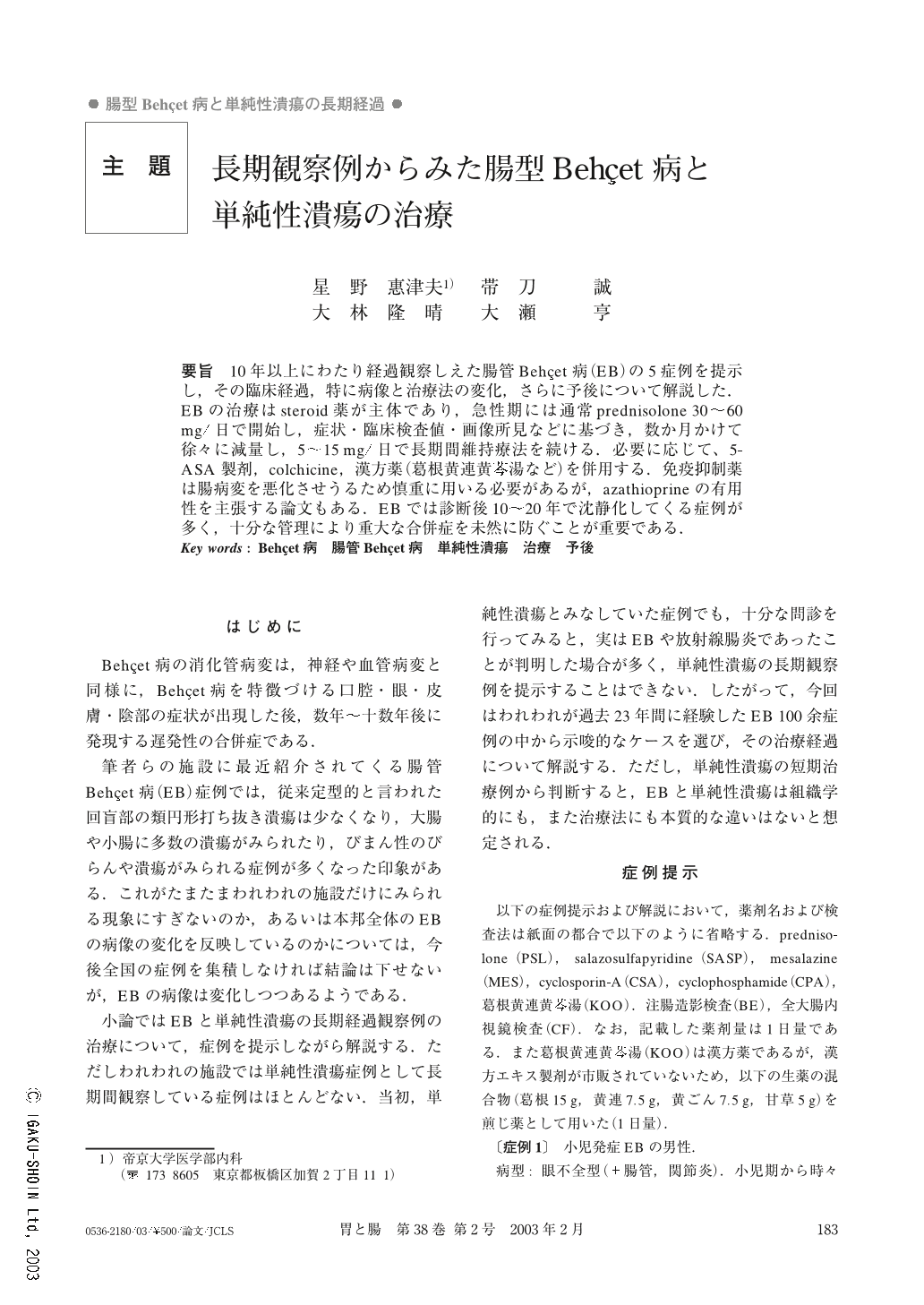
10年以上にわたり経過観察しえた腸管Behçet病(EB)の5症例を提示し,その臨床経過,特に病像と治療法の変化,さらに予後について解説した.EBの治療はsteroid薬が主体であり,急性期には通常prednisolone30~60mg/日で開始し,症状・臨床検査値・画像所見などに基づき,数か月かけて徐々に減量し,5~15mg/日で長期間維持療法を続ける.必要に応じて、5-ASA製剤,colchicine,漢方薬(葛根黄連黄芩湯など)を併用する.免疫抑制薬は腸病変を悪化させうるため慎重に用いる必要があるが,azathioprineの有用性を主張する論文もある.EBでは診断後10~20年で沈静化してくる症例が多く,十分な管理により重大な合併症を未然に防ぐことが重要である.
The clinical course of 5 patients with entero-Behçet's disease (EB) are described, including changes of clinical features and therapeutic regimens and their prognosis. Corticosteroid is the most important drug in the management of EB. Usually the initial dose of prednisolone is 30-60 mg/day, followed by a gradual dose reduction to 5-15 mg/day, which is the standard maintenance dose for most EB patients. Mesalazine, salazosulfapyridine, colchicine, or Kampo herbal formulas have been coadministered empirically. Immunosuppressive drugs can worsen inflammation of EB. In this class of drugs, only azathioprine has been reported to be effective for EB. Because EB has a tendency to calm down itself in 10 to 20 years, patients are advised to see regularly an expert EB physician to be checked and treated in order to prevent developing serious complications.
Copyright © 2003, Igaku-Shoin Ltd. All rights reserved.