Japanese
English
- 有料閲覧
PPV購入案内
1,320円 (1,200円+税10%) こちらは、667ページから670ページの文献です。購入には医書.jp本会員登録が必要です。
会員登録完了後に改めて上記「購入サイトへ」を選択してください。
または「購入サイトへ」選択後に「購入ログイン」、「新規会員登録」の順に進んでください。
会員登録について詳しくはをご確認ください。
- Abstract 文献概要
- 1ページ目 Look Inside
- 参考文献 Reference
- サイト内被引用 Cited by
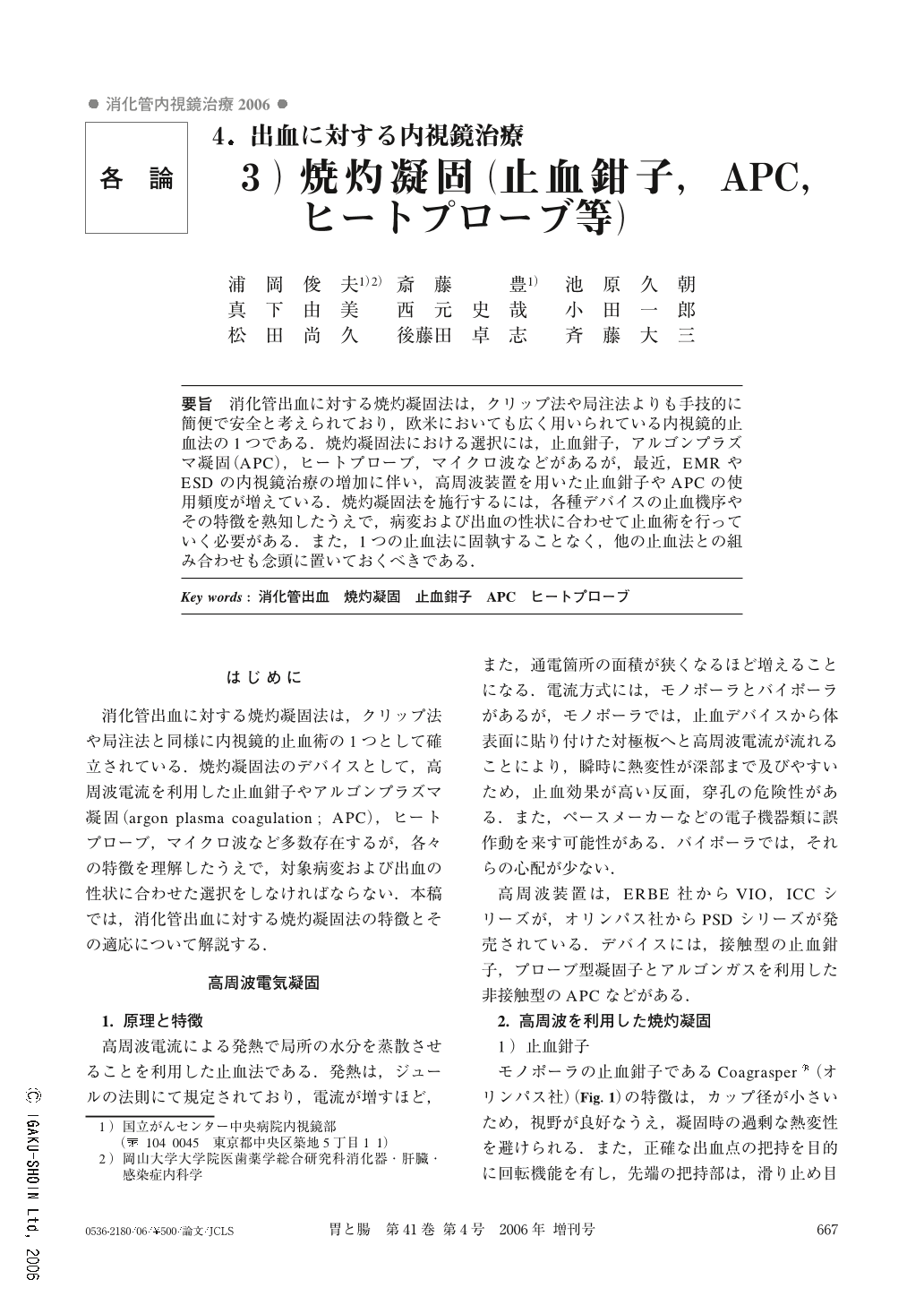
要旨 消化管出血に対する焼灼凝固法は,クリップ法や局注法よりも手技的に簡便で安全と考えられており,欧米においても広く用いられている内視鏡的止血法の1つである.焼灼凝固法における選択には,止血鉗子,アルゴンプラズマ凝固(APC),ヒートプローブ,マイクロ波などがあるが,最近,EMRやESDの内視鏡治療の増加に伴い,高周波装置を用いた止血鉗子やAPCの使用頻度が増えている.焼灼凝固法を施行するには,各種デバイスの止血機序やその特徴を熟知したうえで,病変および出血の性状に合わせて止血術を行っていく必要がある.また,1つの止血法に固執することなく,他の止血法との組み合わせも念頭に置いておくべきである.
Various electrical coagulation procedures for gastrointestinal bleeding are more commonly used in Western countries because they are considered easier and safer compared to hemo-clipping and injection techniques. In the electrical coagulation procedures, we can choose from a number of approaches such as high-frequency coagulation forceps, argon plasma coagulation (APC), heat probe and microwave among others. With more EMRs or ESDs being carried out recently, the use of high-frequency coagulation forceps and APC has also increased. When choosing coagulation procedures for gastrointestinal bleeding, it is necessary to understand the hemostatic mechanisms of each procedure and the possible combinations with other methods, while also carefully considering the characteristics of hemorrhaging lesions and related conditions.
Copyright © 2006, Igaku-Shoin Ltd. All rights reserved.