Japanese
English
- 有料閲覧
PPV購入案内
1,320円 (1,200円+税10%) こちらは、106ページから111ページの文献です。購入には医書.jp本会員登録が必要です。
会員登録完了後に改めて上記「購入サイトへ」を選択してください。
または「購入サイトへ」選択後に「購入ログイン」、「新規会員登録」の順に進んでください。
会員登録について詳しくはをご確認ください。
- Abstract 文献概要
- 1ページ目 Look Inside
- 参考文献 Reference
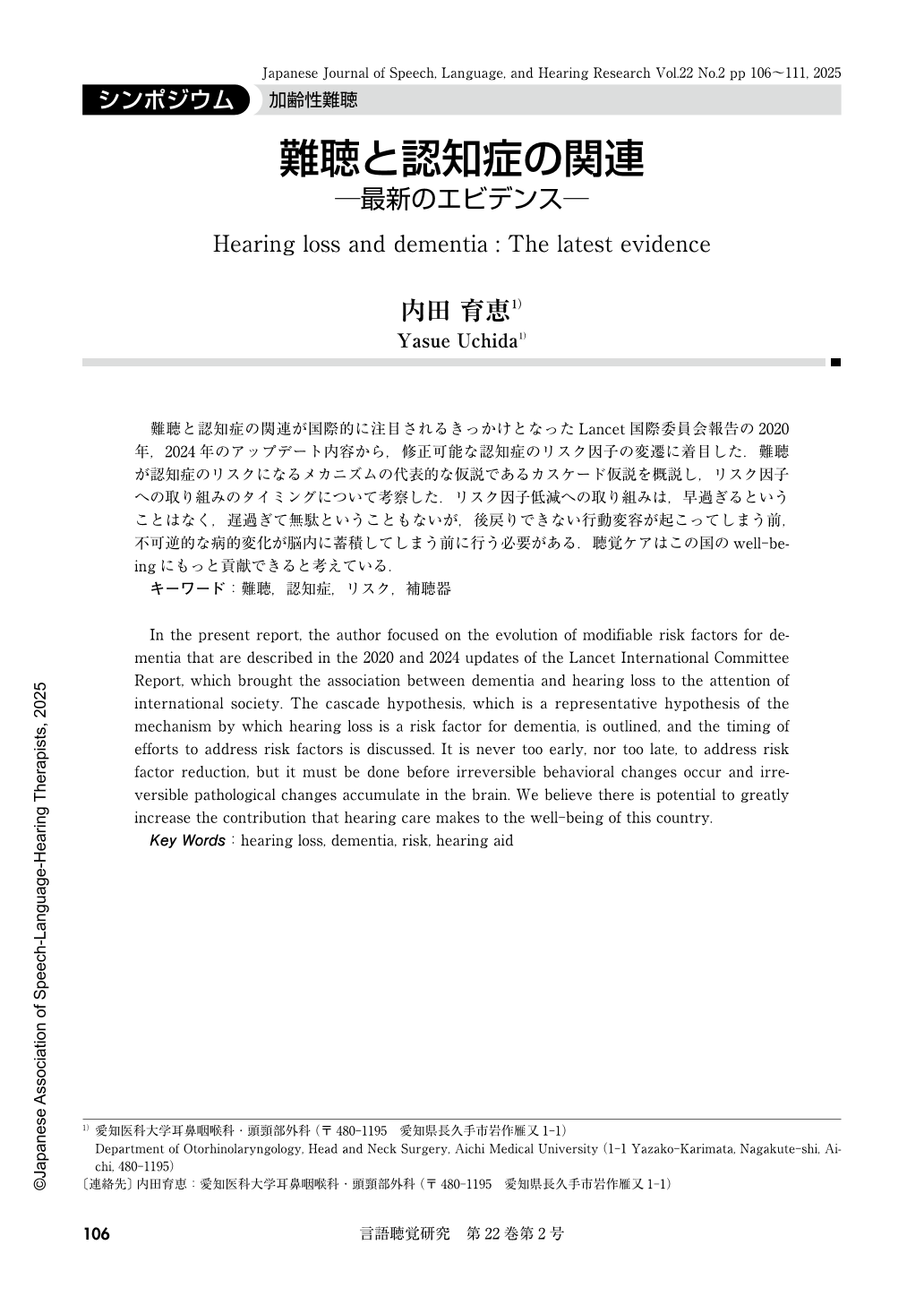
難聴と認知症の関連が国際的に注目されるきっかけとなったLancet国際委員会報告の2020年,2024年のアップデート内容から,修正可能な認知症のリスク因子の変遷に着目した.難聴が認知症のリスクになるメカニズムの代表的な仮説であるカスケード仮説を概説し,リスク因子への取り組みのタイミングについて考察した.リスク因子低減への取り組みは,早過ぎるということはなく,遅過ぎて無駄ということもないが,後戻りできない行動変容が起こってしまう前,不可逆的な病的変化が脳内に蓄積してしまう前に行う必要がある.聴覚ケアはこの国のwell-beingにもっと貢献できると考えている.
In the present report, the author focused on the evolution of modifiable risk factors for dementia that are described in the 2020 and 2024 updates of the Lancet International Committee Report, which brought the association between dementia and hearing loss to the attention of international society. The cascade hypothesis, which is a representative hypothesis of the mechanism by which hearing loss is a risk factor for dementia, is outlined, and the timing of efforts to address risk factors is discussed. It is never too early, nor too late, to address risk factor reduction, but it must be done before irreversible behavioral changes occur and irreversible pathological changes accumulate in the brain. We believe there is potential to greatly increase the contribution that hearing care makes to the well-being of this country.
Copyright © 2025, Japanese Association of Speech-Language-Hearing Therapists. All rights reserved.