Japanese
English
- 有料閲覧
- Abstract 文献概要
- 1ページ目 Look Inside
- 参考文献 Reference
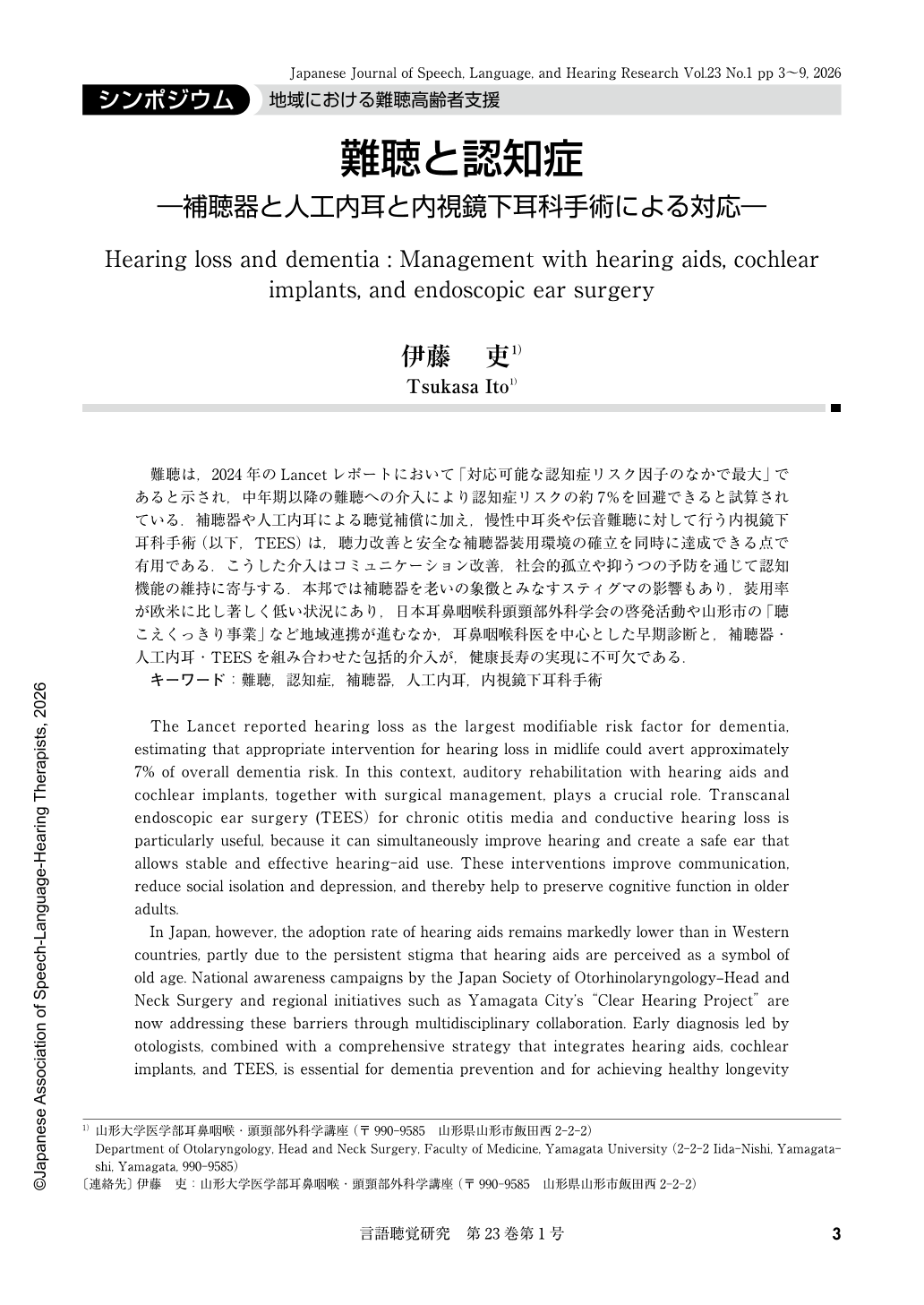
難聴は,2024年のLancetレポートにおいて「対応可能な認知症リスク因子のなかで最大」であると示され,中年期以降の難聴への介入により認知症リスクの約7%を回避できると試算されている.補聴器や人工内耳による聴覚補償に加え,慢性中耳炎や伝音難聴に対して行う内視鏡下耳科手術(以下,TEES)は,聴力改善と安全な補聴器装用環境の確立を同時に達成できる点で有用である.こうした介入はコミュニケーション改善,社会的孤立や抑うつの予防を通じて認知機能の維持に寄与する.本邦では補聴器を老いの象徴とみなすスティグマの影響もあり,装用率が欧米に比し著しく低い状況にあり,日本耳鼻咽喉科頭頸部外科学会の啓発活動や山形市の「聴こえくっきり事業」など地域連携が進むなか,耳鼻咽喉科医を中心とした早期診断と,補聴器・人工内耳・TEESを組み合わせた包括的介入が,健康長寿の実現に不可欠である.
The Lancet reported hearing loss as the largest modifiable risk factor for dementia, estimating that appropriate intervention for hearing loss in midlife could avert approximately 7% of overall dementia risk. In this context, auditory rehabilitation with hearing aids and cochlear implants, together with surgical management, plays a crucial role. Transcanal endoscopic ear surgery (TEES) for chronic otitis media and conductive hearing loss is particularly useful, because it can simultaneously improve hearing and create a safe ear that allows stable and effective hearing-aid use. These interventions improve communication, reduce social isolation and depression, and thereby help to preserve cognitive function in older adults.
In Japan, however, the adoption rate of hearing aids remains markedly lower than in Western countries, partly due to the persistent stigma that hearing aids are perceived as a symbol of old age. National awareness campaigns by the Japan Society of Otorhinolaryngology-Head and Neck Surgery and regional initiatives such as Yamagata City's “Clear Hearing Project” are now addressing these barriers through multidisciplinary collaboration. Early diagnosis led by otologists, combined with a comprehensive strategy that integrates hearing aids, cochlear implants, and TEES, is essential for dementia prevention and for achieving healthy longevity in Japan's super-aging society.
Copyright © 2026, Japanese Association of Speech-Language-Hearing Therapists. All rights reserved.