Japanese
English
- 有料閲覧
- Abstract 文献概要
- 1ページ目 Look Inside
- 参考文献 Reference
はじめに
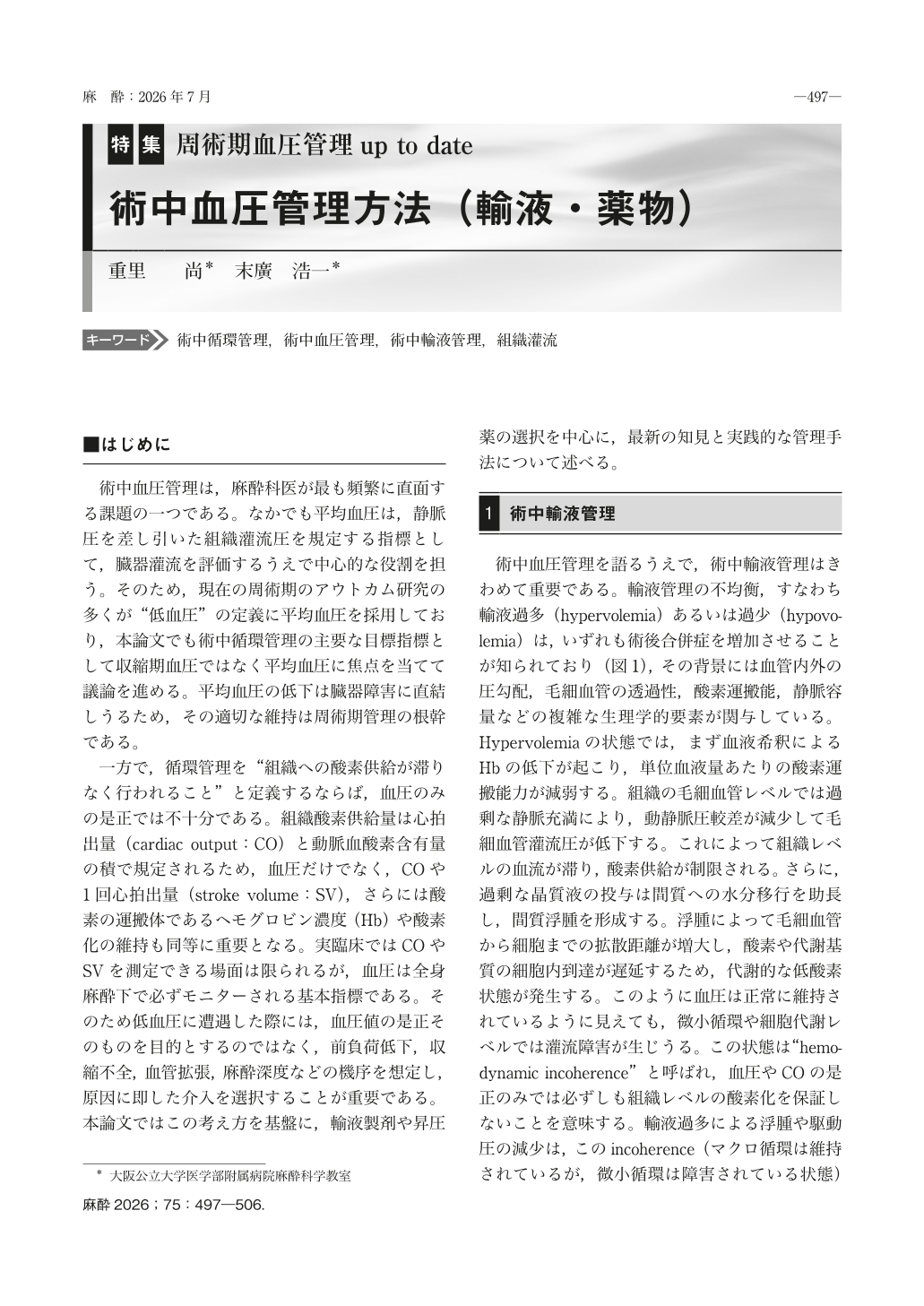
術中血圧管理は,麻酔科医が最も頻繁に直面する課題の一つである。なかでも平均血圧は,静脈圧を差し引いた組織灌流圧を規定する指標として,臓器灌流を評価するうえで中心的な役割を担う。そのため,現在の周術期のアウトカム研究の多くが “低血圧” の定義に平均血圧を採用しており,本論文でも術中循環管理の主要な目標指標として収縮期血圧ではなく平均血圧に焦点を当てて議論を進める。平均血圧の低下は臓器障害に直結しうるため,その適切な維持は周術期管理の根幹である。
一方で,循環管理を “組織への酸素供給が滞りなく行われること” と定義するならば,血圧のみの是正では不十分である。組織酸素供給量は心拍出量(cardiac output:CO)と動脈血酸素含有量の積で規定されるため,血圧だけでなく,COや1回心拍出量(stroke volume:SV),さらには酸素の運搬体であるヘモグロビン濃度(Hb)や酸素化の維持も同等に重要となる。実臨床ではCOやSVを測定できる場面は限られるが,血圧は全身麻酔下で必ずモニターされる基本指標である。そのため低血圧に遭遇した際には,血圧値の是正そのものを目的とするのではなく,前負荷低下,収縮不全,血管拡張,麻酔深度などの機序を想定し,原因に即した介入を選択することが重要である。本論文ではこの考え方を基盤に,輸液製剤や昇圧薬の選択を中心に,最新の知見と実践的な管理手法について述べる。
Intraoperative blood pressure management should prioritize the preservation of organ perfusion and oxygen delivery rather than the correction of numbers alone. Care should be mechanism-based, addressing the preload, myocardial contractility, and afterload. In fluid therapy, both over- and under-resuscitation can cause organ dysfunction;the intensity of monitoring and treatment should match the patient and procedural risks, using high-quality standard care for low-risk cases and goal-directed therapy(GDT)for higher-risk patients. Crystalloids are the default, with the formulation tailored to individual pathophysiology. When vasopressors are required, high-risk patients should generally have mean arterial pressure maintained at≥60mmHg, with higher targets considered, for example during laparoscopic surgery―while accounting for each agent’s distinct effects on renal blood flow and cardiac output. Ultimately, organ protection depends on optimizing microcirculatory perfusion and cardiac output, not blood pressure alone;rational, mechanism-driven decisions are key to reducing complications.
Copyright © 2026 KOKUSEIDO CO., LTD. All Rights Reserved.