Japanese
English
- 有料閲覧
- Abstract 文献概要
- 1ページ目 Look Inside
- 参考文献 Reference
はじめに
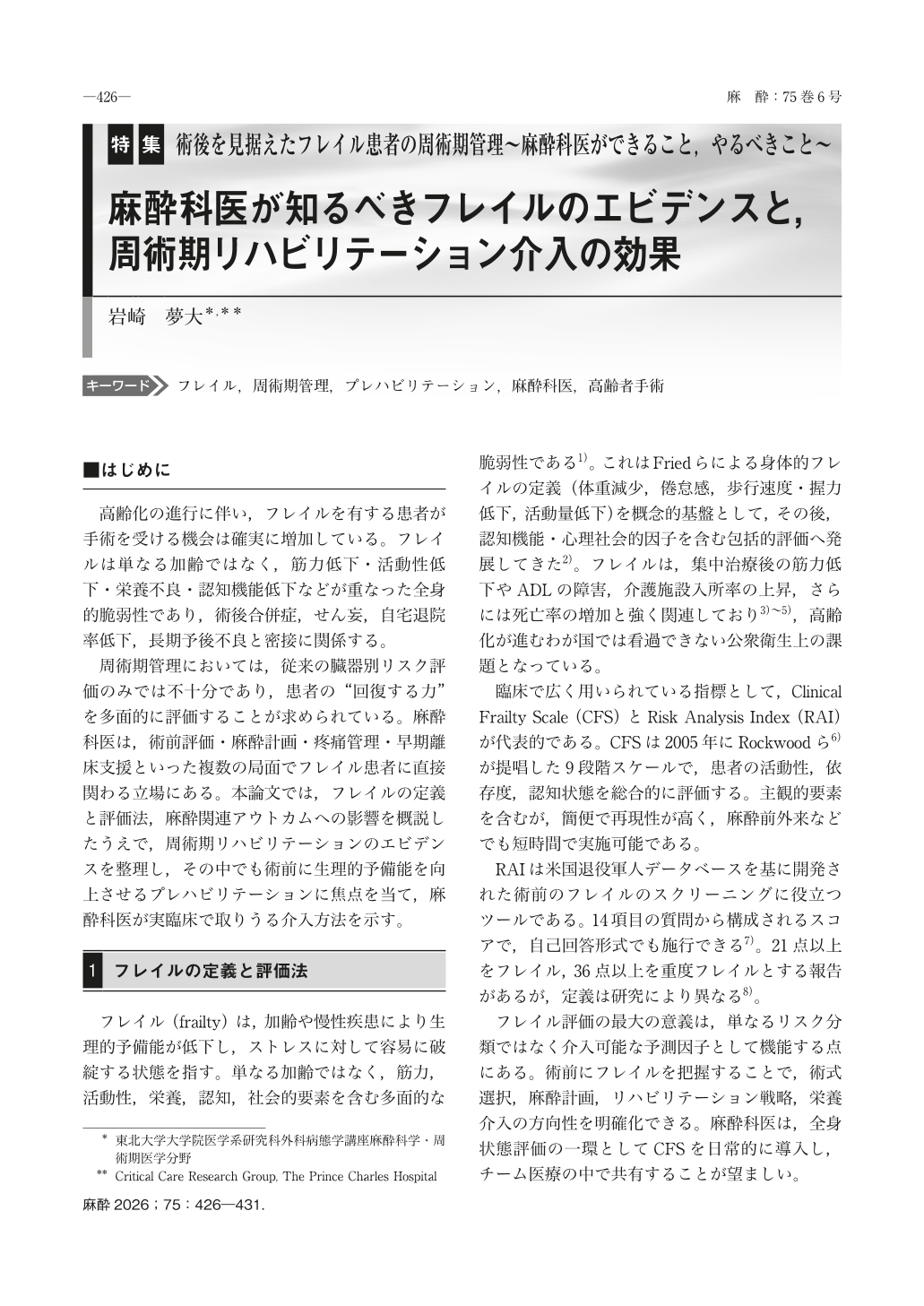
高齢化の進行に伴い,フレイルを有する患者が手術を受ける機会は確実に増加している。フレイルは単なる加齢ではなく,筋力低下・活動性低下・栄養不良・認知機能低下などが重なった全身的脆弱性であり,術後合併症,せん妄,自宅退院率低下,長期予後不良と密接に関係する。
周術期管理においては,従来の臓器別リスク評価のみでは不十分であり,患者の “回復する力” を多面的に評価することが求められている。麻酔科医は,術前評価・麻酔計画・疼痛管理・早期離床支援といった複数の局面でフレイル患者に直接関わる立場にある。本論文では,フレイルの定義と評価法,麻酔関連アウトカムへの影響を概説したうえで,周術期リハビリテーションのエビデンスを整理し,その中でも術前に生理的予備能を向上させるプレハビリテーションに焦点を当て,麻酔科医が実臨床で取りうる介入方法を示す。
Frailty has emerged as a critical determinant of postoperative outcomes, contributing to increased complications, prolonged recovery, and reduced functional independence among older surgical patients. Anesthesiologists play a pivotal role in addressing frailty through comprehensive perioperative management encompassing prehabilitation, anesthesia selection, and postoperative recovery planning.
Recent evidence supports multimodal prehabilitation―including exercise, nutritional, and psychological interventions―as a promising approach to enhance the physiological reserve and accelerate recovery in frail patients. Regional anesthesia and multimodal analgesia can reduce perioperative opioid requirements and support safer analgesic strategies in frail patients. In addition, coordinated pain management through anesthesiologist-led Acute Pain Services(APS)facilitates the early mobilization of patients and may contribute to improved postoperative recovery.
Emerging evidence suggests that integrating prehabilitation concepts into anesthetic planning may further optimize perioperative analgesia strategies and patients’ functional recovery. Future directions include incorporating a frailty assessment into routine preoperative evaluations, expanding multidisciplinary collaborations, and refining anesthesia strategies that align with early rehabilitation goals. Through these combined efforts, anesthesiologists can actively contribute to safer surgery and sustained recovery in an aging population.
Copyright © 2026 KOKUSEIDO CO., LTD. All Rights Reserved.